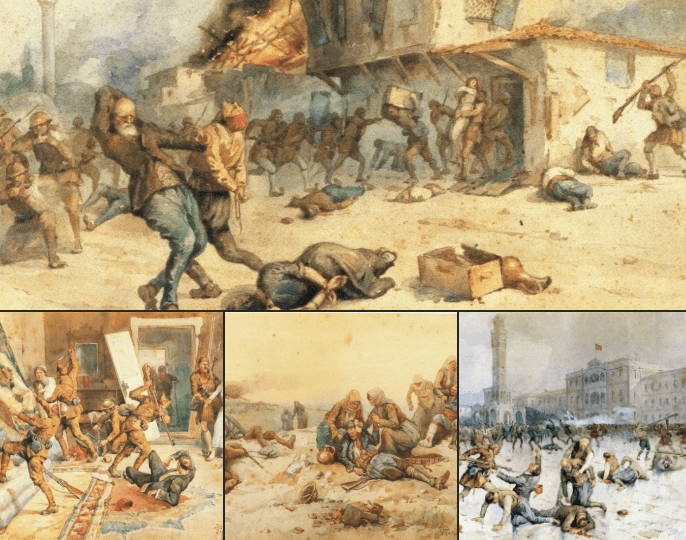

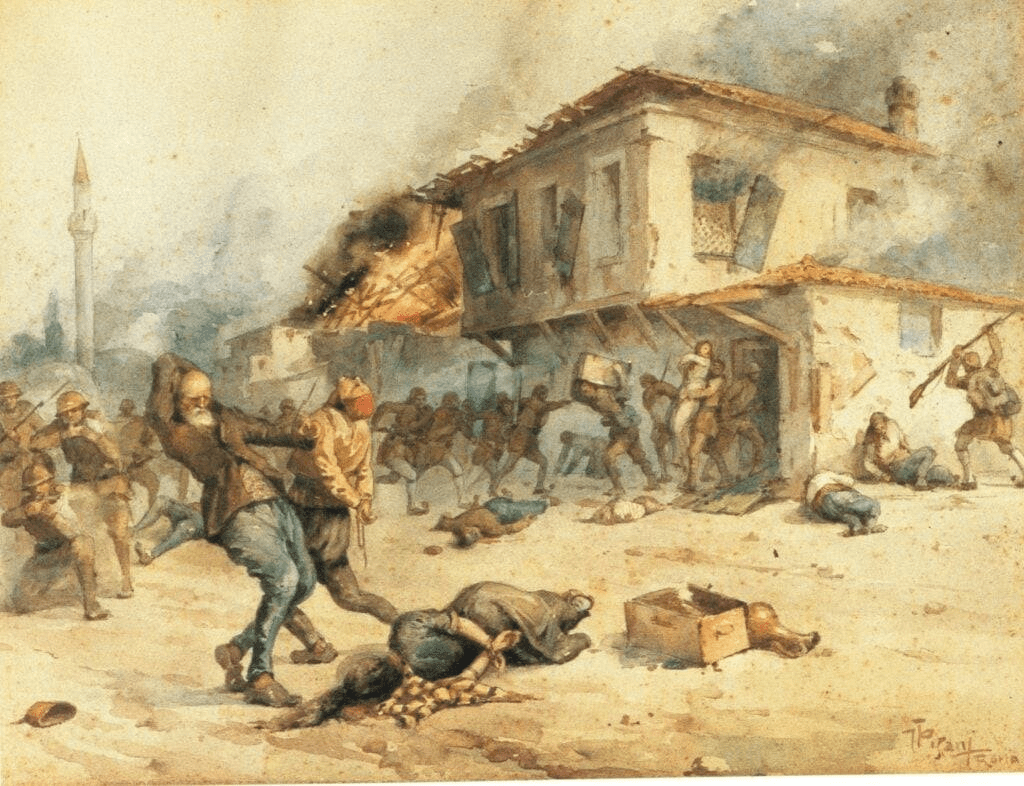
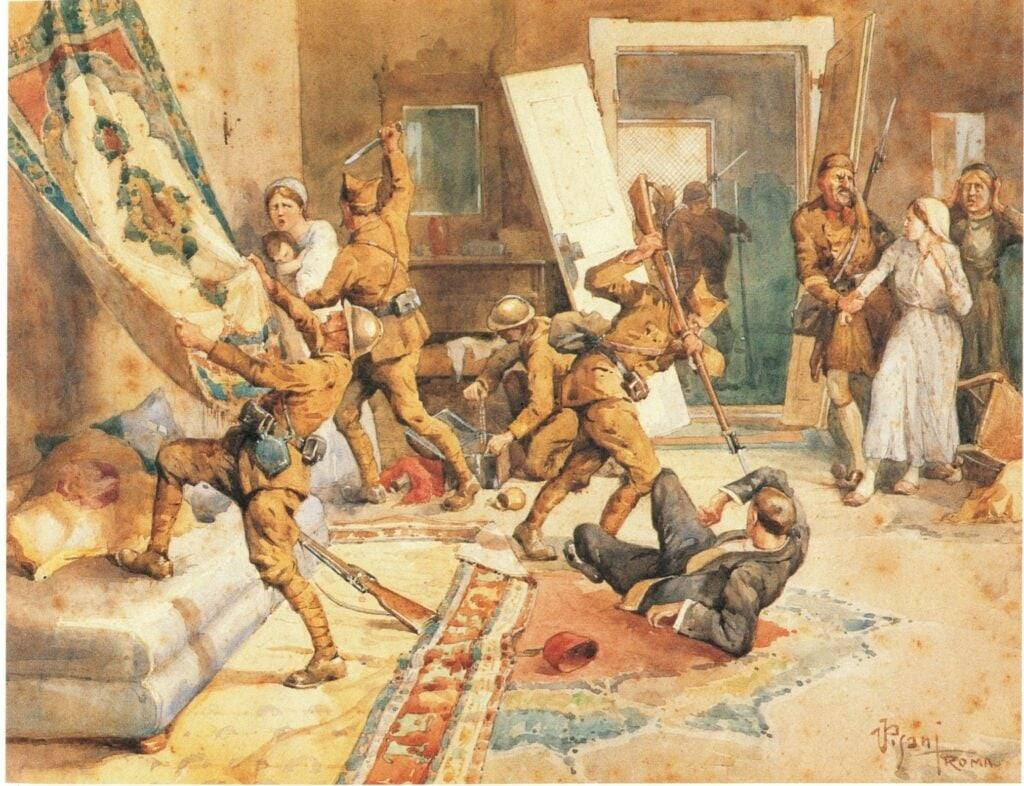
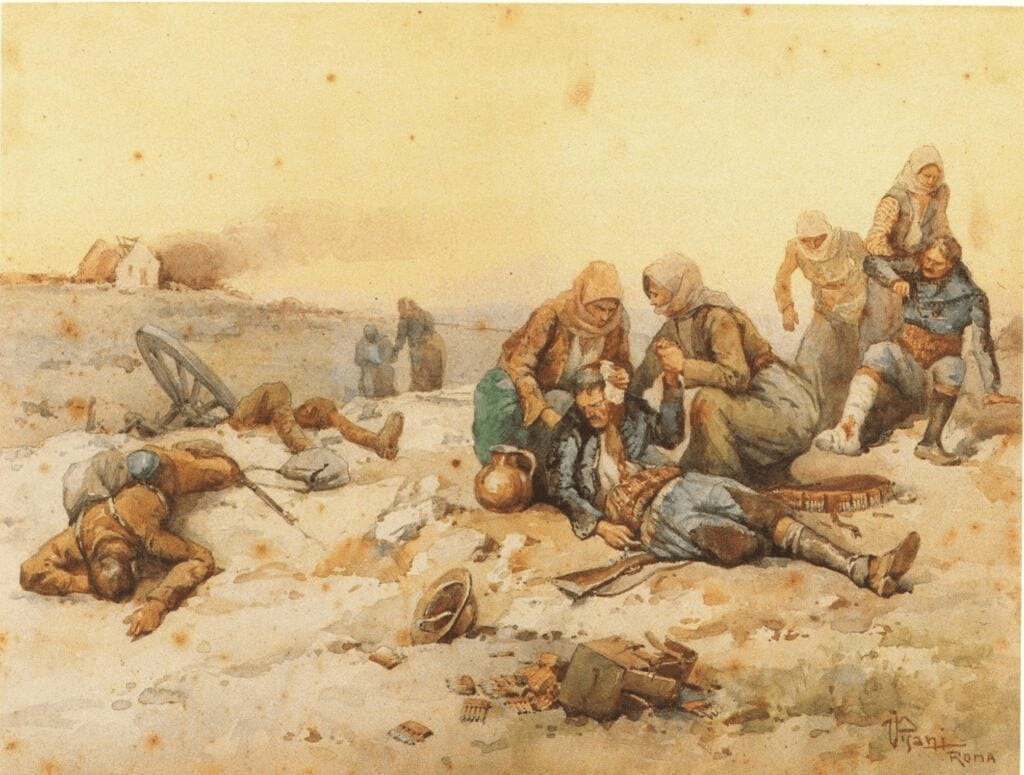
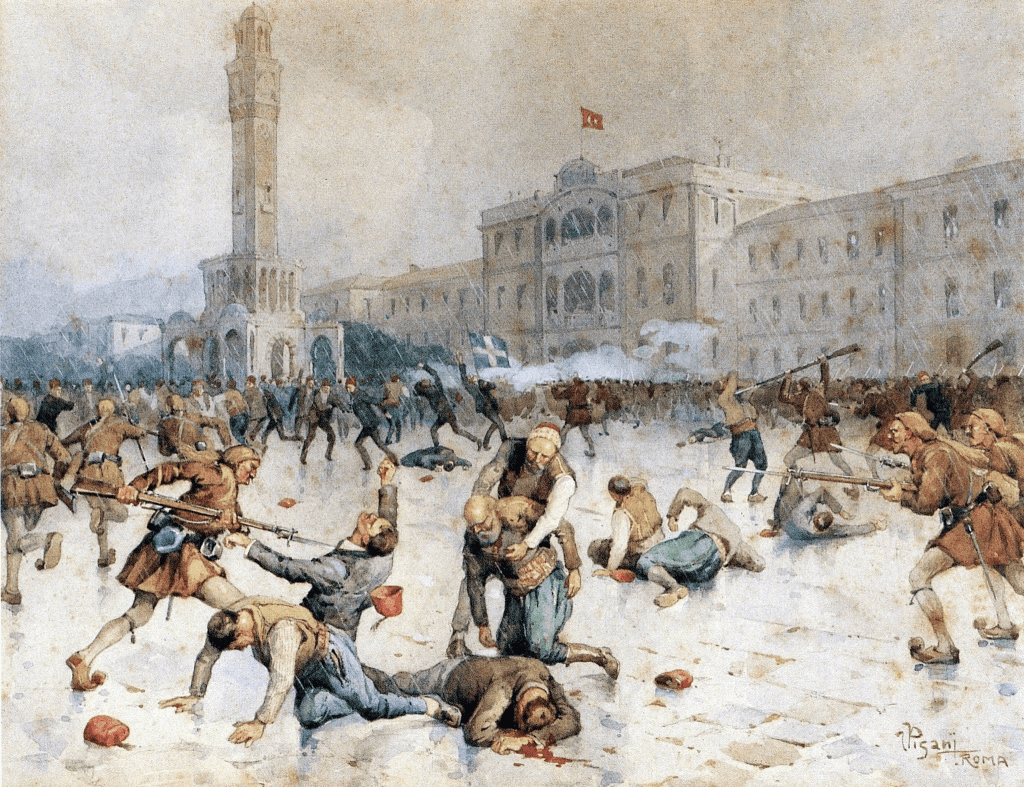
These are paintings by Italian artist Vittorio Pisani, who witnessed the massacres committed by the Greek army during the occupation of Izmir on May 15, 1919.
Italian painter Vittorio Pisani produced a series of watercolors and paintings documenting the violent aftermath of the Greek military occupation of İzmir (Smyrna) that began on 15 May 1919. Pisani, who lived in Smyrna for a significant period and whose family background included Greek heritage, witnessed the initial phases of the Greek landing and its impact on the local civilian population. The Greek landing marked the beginning of the Greco-Turkish War (1919–1922), when Greek troops, backed by Allied naval forces, disembarked in the city under the terms of the post-World War I armistice.
Pisani’s paintings serve as visual testimony to the mass violence and civilian suffering that accompanied the occupation. In a collection of works featured in Italian archival sources, his subjects include scenes such as the attack of Greek soldiers on Turkish civilians in urban settings like Konak Square, the plunder of homes, the destruction in rural villages, and the displacement of refugees seeking shelter. These works were documented in Italian archival publications and accompany primary source testimony of the period.
From an art-historical perspective, Pisani’s oeuvre intersects with the broader cultural response to conflict in the early twentieth century: artists often functioned as informal war correspondents, translating eyewitness experience into visual narrative. His depictions provide material evidence that complements written accounts of the ethnic violence and civilian casualties reported in Smyrna immediately following the Greek landing.
While mainstream scholarship on the Greco-Turkish War debates the scale and nature of atrocities committed by all belligerents, these paintings remain valuable for understanding how contemporary observers interpreted and represented the traumatic events of May 1919.
In sum, Vittorio Pisani’s paintings are not merely artistic representations but constitute historical witness documents that reflect the complex interplay of military occupation, civilian victimization, and the politics of memory in the aftermath of the Greek landings in western Anatolia.


 Balkan Academia