
by Fato Beka.
Abstract
This commemorative text marks the 80th anniversary of the execution of Mulla Ilaz Spahija-Broja (1893–1946), a prominent figure in Albanian resistance movements in Kosovo during the first half of the twentieth century. Drawing on a first-person testimony preserved in a 1995 video narration by his son, Ibrahim Spahija, the account reconstructs the final days of Mulla Ilaz and his collaborator Ahmet Babaj. It situates their deaths within a broader historical context, from the Kaçak movement to the Drenica uprising and the network of nationalist figures with whom he was associated. The narrative emphasizes the circumstances of their arrest, surrender to protect civilians, interrogation, and execution by Serbian OZN forces on February 8, 1946. It also recounts the immediate reactions among resistance leaders and the subsequent acts of retaliation. The text functions both as a family memory and as a historical reflection on repression, loyalty, and sacrifice during a turbulent political era.
First-person narrative by Fahredin Spahija – grandson of Mulla Ilaz Spahija-Broja:
In a 12-hour video-narration of my father Ibrahim Spahisa (made by Professor Haxhi Birinxhiku in February 1995) where he talks about the biography of his father and my grandfather Mulla Ilaz Spahisa as well as his personal biography, among other things, there is this part where he describes the execution of him, one of the central personalities of the resistance against the Serbian invaders since the time of the Kaçake Movement, (contacts with Nak Berisha and Azem Bejta) up to the Drenica Uprising known as the Shaban Polluzha War, where my grandfather held important positions in the command hierarchy of that resistance, being in close relations with Ferat Draga, Bedri Pejani, Ilaz Agushi, Asim Luzha, Ymer Berisha, Ndue Përlleshi, Mehmet Agë Rashkoci, Shaban Polluzha and many other patriots part of the NDSH and the National Faith:
…“Now the difficult moment has come for me and I must confess to the arrest and execution of my father Mulla Ilaz Broja and his friend and collaborator Ahmet Babaj by the Serbian NCO Unit, which had been following them, foot by foot, for some time now.
On February 7, 1946, my father, together with his friend Ahmet Babaj from Llausha, went to seek refuge with our nephew Sokol Ymeri in Leçinë. In fact, the nephew had sheltered Hoxha several times before, whenever he felt the need to go underground.
Since then, we have never been able to figure out who exposed our father’s whereabouts. It is known that Serbian units surrounded our grandson’s house and that Sokol had gone to the mountains an hour earlier to cut wood for the family’s needs.
After Mulla Ilaz Broja and Ahmet Babaj realized that Sokol Ymer’s house was surrounded by Serbian units, they had a conversation between them, which lasted several minutes. The purpose of the conversation between them was the dilemma of whether to resist against the Serbian forces, or to surrender?
Finally, Mulla Ilazi addresses Ahmet Babaj:
– Look at these little children! (and points towards Sokol’s children). – Their lives are more precious than ours. If God has granted us life, we will continue to live, and if not, then we must accept it as His will!
The commander who led the OZN Unit and had surrounded the house where Mulla Ilazi and his friend Ahmeti were staying, called out to Mulla Ilazi:
– If you surrender without resistance, we will take you to court!
After the words of the Commander, who led the operation, Mulla Ilazi and his friend Ahmet Babaj surrendered. The soldiers tied them both up and ordered them to mount their horses, to head towards the Peja Court. While they were traveling under the strict control of the OZN Unit, on the way they met the owner of the house, Sokol. Without any explanation, the Serbian Unit shot Sokol Ymeri on the road.
Along the way, darkness had begun to fall and the members of the Serbian OZN, together with the two arrested, stopped in Zllakuqan in Klina to spend the night with an Albanian Catholic family. In that house, Mulla Ilazi and Ahmet Babaj were interrogated by OZN officers all night and were physically tortured. In the early morning of the next day, February 8, 1946, OZN officers took Mulla Ilazi and Ahmet Babaj out to a field in Zllakuqan and executed them.
The execution of Mulla Ilazi and Ahmet Babaj caused a great stir not only in Drenica.
When Professor Ymer Berisha, the head of the National Alliance, learned of the execution of Mulla Ilazi and Ahmet Babaj, he called his close associates to an urgent meeting and said to them: I swear by the alliance of the Albanians and by the Creator that we will very soon avenge the murder of Mulla Ilazi. My comrades-in-arms have the duty to eliminate people such as Radoshi, the dangerous member of the OZN in the Istog region, and Mehmet, a member of the OZN in Skenderaj.
Less than two months after the execution of Mulla Ilazi, Professor Ymer Berisha tasked Ndue Përlleshi and his group with physically eliminating the two aforementioned individuals. In April 1945, Ndue Përlleshi and his armed group went to the village of Zallç. They hid behind the bushes and set up an ambush. They didn’t wait long and Radoshi appeared on the road, riding his horse, who had set off for Zllakuqan. Ndue Përlleshi and his two friends opened fire on Radoshi, who immediately fell from his horse and fell to the ground.
After a while, the brave Ndue Përlleshi, who was known as one of Mulla Ilazi’s close friends, in revenge for his friend, committed another political murder. One day, when the collaborator of the Serbs, Beqir Mehmeti, was going from Skënderaj to Turiçefc to collect the surplus, he was ambushed at a place called Kryqi i Popit.
It was Ndue Përlleshi again, together with the three Rogani brothers from Jashanica, who shot Beqir Mehmeti with a hail of bullets. Beqir died on the way, while they were sending him to give him first aid in Skënderaj.
The day Mulla Ilazi was executed, I was isolated in the Pristina Prison and for a while I did not know about the murder of my father. The news of his execution was brought to me by my uncle Ferat Spahija and Malushi, the son of uncle Adem. As they told me, only one wound was found on my father’s body and the bullet had penetrated through the navel, which was fatal.
They also told me about the execution of Ahmet Babaj, who had been hit with several bullets by the Serbian Unit, since he had resisted the gunfire longer. After carrying out the criminal activity, the Execution Unit left for Pristina to inform their superiors about the elimination of Mulla Ilaz Broja and his friend, Ahmet Babaj.
The two bodies remained at the place where they were executed and the execution took place near a meadow, where the house of the great patriot Llesh Gjoni from Zllakuqan was located. The latter had also had a similar fate to Mulla Ilazi and was his great friend during his lifetime. Llesh Gjoni was immediately arrested by the communists, after the establishment of the so-called popular power.
He was arrested in Istog together with Col Bajraktar of Uça, Bajram Rama of Suhogërlë and Ukë Zeneli of Gjurgjevik. On January 10, 1945, the Serbian partisan-Chetniks also arrested Ukë and Rrustë Rugova, who were the father and grandfather of our current leader Dr. Ibrahim Rugova, whose traces have never been found…”
——————-
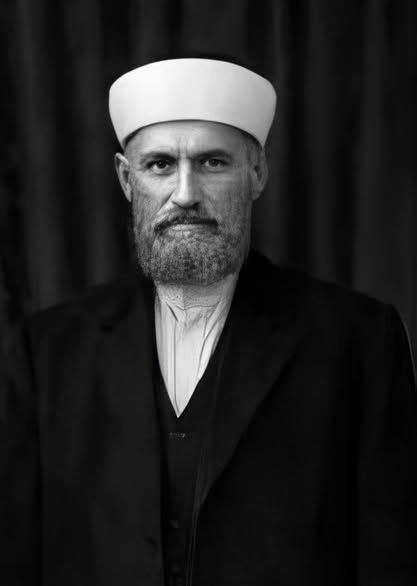
Photo 1. Portrait of my grandfather Mulla Ilaz Spahija-Broja (1939)
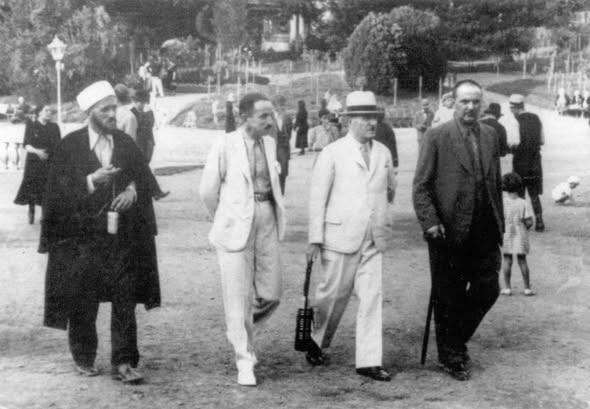
Photo 2. My grandfather Mulla Ilaz Spahija – Broja in the company of the main Albanian political leaders of the time: Ferat Draga, Ilaz Agushi and Bedri Pejani. Tirana, in 1943.
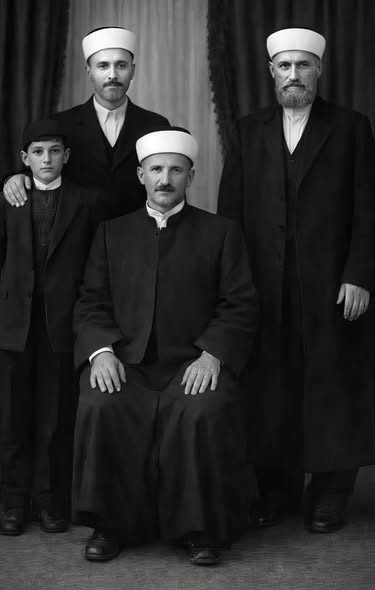
Photo 3. My grandfather Mulla Ilaz Spahija-Broja photographed with Hasan Effendi Nahi, the first Albanian translator of the Quran, and with his friend, Mulla Sadik Hoxha of Uça, together with his son Abdurrahim, photographed in Gjakova in 1939.
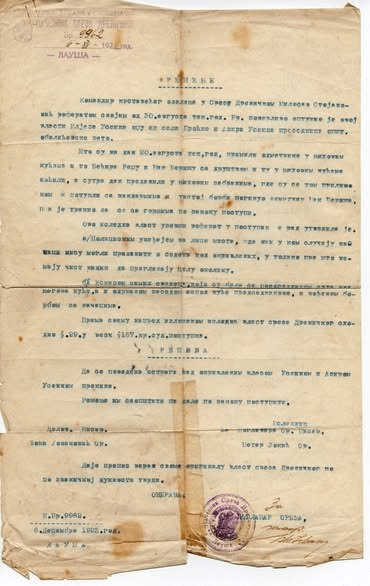
Photo 4. The oldest document in our family archive, dated December 6, 1925, which proves the accusation against the imam Ilaz Hyseni (Cena) from Broja because on August 20, 1925, the Kaçaks Beqir Rexha and Nak Berisha with other members of the group stayed in his house.
The same, the next day (August 21, 1925) clashed and fought with the gendarmes (Serbs), in which the Kaçak Nak Berisha fell and died.


 Balkan Academia