
by Fahri Xharra
Abstract
This article analyzes the concept of the “Albanization of Kosovo” as an ideological construct emerging from Serbian nationalist thought in the late nineteenth and early twentieth centuries. It argues that works portraying Kosovo as having undergone a unilateral ethnic transformation are rooted in romantic nationalist historiography that instrumentalized history for territorial legitimation. Drawing on Ottoman archival evidence and modern historical methodology, the article challenges assumptions of prior ethnic homogeneity and forced replacement. It examines how narratives of victimization, religious categorization, and state-sponsored colonization projects shaped political discourse. The study concludes that the term “Albanization” functions primarily as rhetorical mobilization rather than as a neutral analytical category.
Fahri Xharra
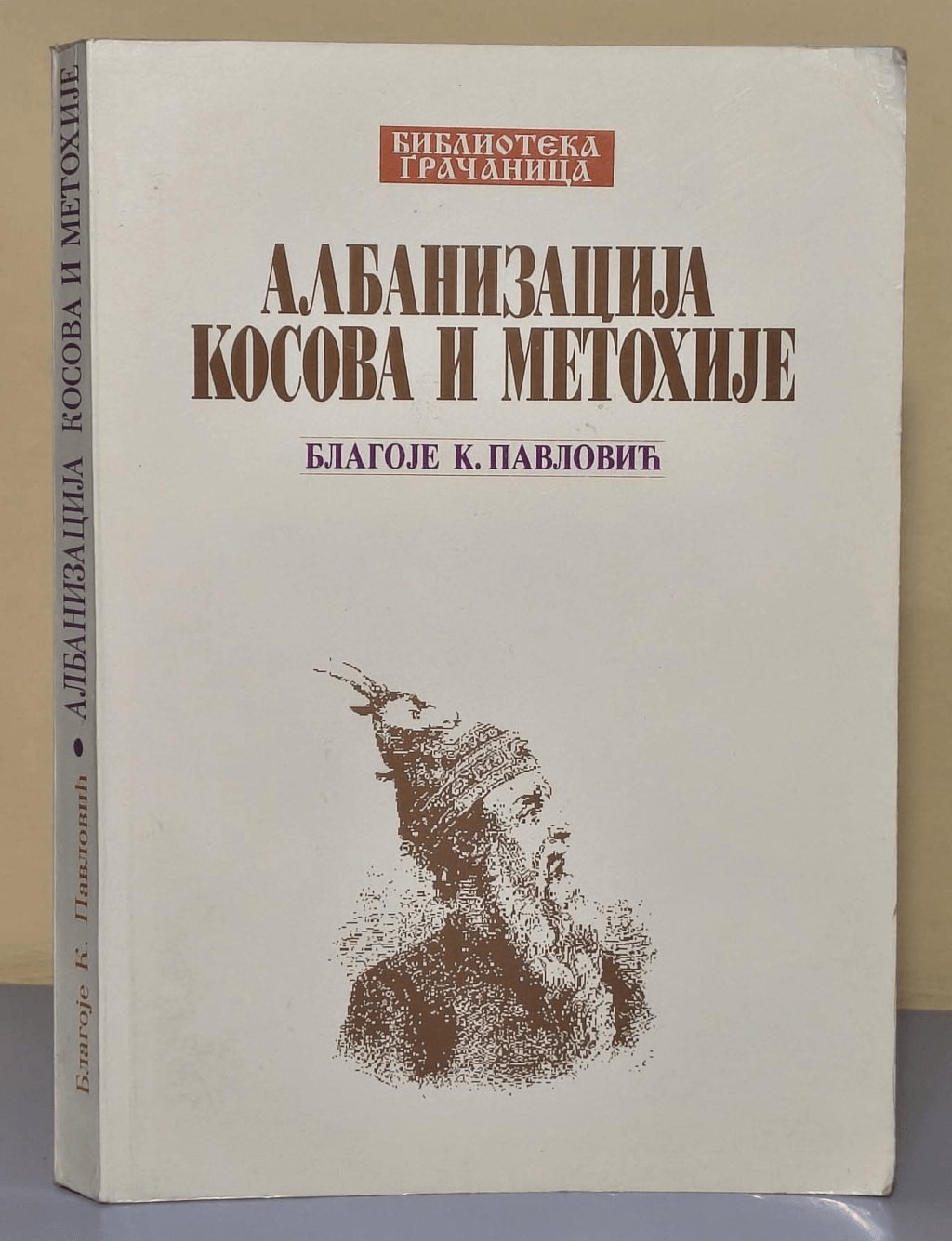
Works such as “Albanization of Kosovo and Metohija” are not neutral historical studies. They are products of a school of thought formed during the era of romantic nationalism, when history was transformed into an tool for territorial legitimation.
The term “Albanization” is inherently problematic. It presupposes three assumptions:
- that a prior ethnic homogeneity existed;
- that an ethnic replacement occurred;
- that this process was unilateral and directed.
None of these claims is substantiated by impartial international documentation.
1. The Narrative of Victimization as Political Strategy
In the late nineteenth and early twentieth centuries, the Balkans witnessed the emergence of ideologies seeking ethnically homogeneous states. Within this context, the thesis that Kosovo was “lost” due to a process of Albanization was constructed.
This narrative served several political purposes:
- political mobilization,
- organized state colonization,
- the legitimization of demographic cleansing policies,
- the creation of a mobilizing national myth.
Thus, what emerges is not objective history, but a constructed form of collective psychology.
2. Ottoman Documents Indicate Continuity, Not Replacement
Ottoman archival records do not demonstrate any mass disappearance of one population followed by its replacement by another. Instead, they reveal natural processes of migration and movement typical throughout the Ottoman Empire.
Migration is not synonymous with “Albanization.” Migration is a universal historical phenomenon.
3. Religious Identity as an Instrument of Manipulation
In the nineteenth century, religious identity increasingly began to be translated into national identity. This represents a modern interpretive framework. During the Ottoman period, populations were registered according to religion rather than nationality.
Therefore, the equation:
Orthodox = Serb
is itself a nineteenth-century construct.
4. Twentieth-Century Colonization Projects
Rather than evidence of “Albanization,” twentieth-century documentation points to:
- state-sponsored colonization projects,
- plans for population displacement,
- explicit policies aimed at altering ethnic composition.
These facts are documented in international archival sources. The narrative of “Albanization” was frequently used to justify such policies.
5. Why Is the Term “Albanization” Used?
Because it generates three psychological effects:
- it portrays the Albanian population as usurpers;
- it frames the territory as “lost”;
- it creates a sense of mission to reclaim it.
This is mobilizing language, not scientific terminology.
6. What Should the Albanian Public Understand?
There is no need to deny the presence of other communities. However, ideological labeling should not be accepted uncritically.
Kosovo was not “Albanized.” In the documented modern period, it was and remained a space with an Albanian majority.
Words function as instruments of power, and the term “Albanization” operates as a rhetorical weapon.
7. A Message to Albanians Who Have Forgotten Themselves
Identity is not preserved through loud assertion, but through knowledge, archives, and argument.
The survival of the Jewish people was not secured by shouting, but by documentation, scholarship, and the preservation of memory.
The same approach is required:
- to read,
- to analyze,
- to respond with evidence,
- to resist emotional traps.
Propaganda feeds on emotion. History is sustained by documentation.


 Balkan Academia