
Abstract
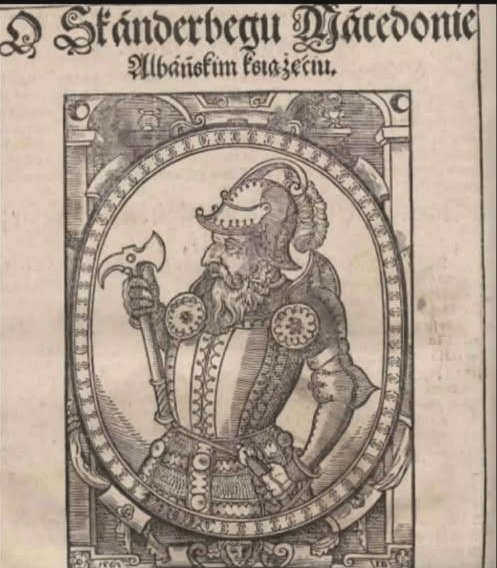
This paper examines a sixteenth-century engraving of Skanderbeg published in Marcin Bielski’s Kronika wszystkiego świata (Chronicles of the World, 1551) as evidence of early modern European perceptions of Balkan identity. The depiction, which associates Skanderbeg with Macedonia and Albania, reflects the fluid geographical and ethnographic terminology characteristic of Renaissance historiography. By situating the engraving within the intellectual context of Polish humanist scholarship, the study explores how early printed chronicles contributed to shaping transregional understandings of Southeastern Europe. The image illustrates how historical figures were integrated into broader European narratives, revealing the interpretive frameworks through which Renaissance authors categorized peoples and territories.
Source
Bielski, Marcin. Kronika wszystkiego świata [Chronicles of the World]. Kraków: 1551. Sixteenth-century Polish universal chronicle containing an engraved portrait of Skanderbeg.


 Balkan Academia