
Taken form Konaku Loku.
Abstract
The Kotlinë massacre occurred on March 24, 1999, when Serbian–Yugoslav military and police forces surrounded the village of Kotlinë in Kosovo. Civilians gathered peacefully to show they were unarmed, yet several elderly men were killed and the population was separated. Women, children, and the elderly were deported, while men and youths were abused and taken toward nearby wells. Twenty-two hostages were thrown into the wells, dead or alive, creating a mass grave later uncovered in September 1999. In total, 26 Albanian men were killed. Although international courts later convicted senior officials, no direct perpetrators have been prosecuted for the massacre.
In the early morning of March 24, 1999, Serbian-Yugoslav police and military forces (the 243rd Mechanized Brigade of the VJ in cooperation with the Ministry of Internal Affairs, including special police units) surrounded the village of Kotlinë in Kaçanik with armored vehicles and tanks.¹
The residents, mainly women, children and the elderly, gathered in the center of the village to show that they were unarmed civilians, and even raised white clothes as a sign of surrender.²Initially, Yugoslav Serb forces, after mistreating them, killed three elderly men.³ The bodies of two of them were later found charred in a burned-out house.⁴Around noon, these forces loaded the women, children, and elders of the village onto trucks and took them to Kaçanik.⁵
The men were taken to Ferizaj/Uroševac, where they were mistreated for two days, and then driven back to Macedonia.⁶ In the village, they burned down almost all the houses, the school, and the ambulance.⁷ In the upper part of the village, they gathered 35 young men and, after beating them with wooden sticks with nails stuck in them, sent them towards the nearby forest, where there were two wells.
Of the hostages, 13 managed to escape up the mountain, dodging the bullets. Vehbi Kuçi, one of the escapees, interviewed immediately after the war, recounts:“We were about 200-250 meters away from the villagers who had captured them. We heard them shooting and people screaming. From 10:30 to 18:00 we lay down to listen. There, around 18:00, a huge explosion was heard.
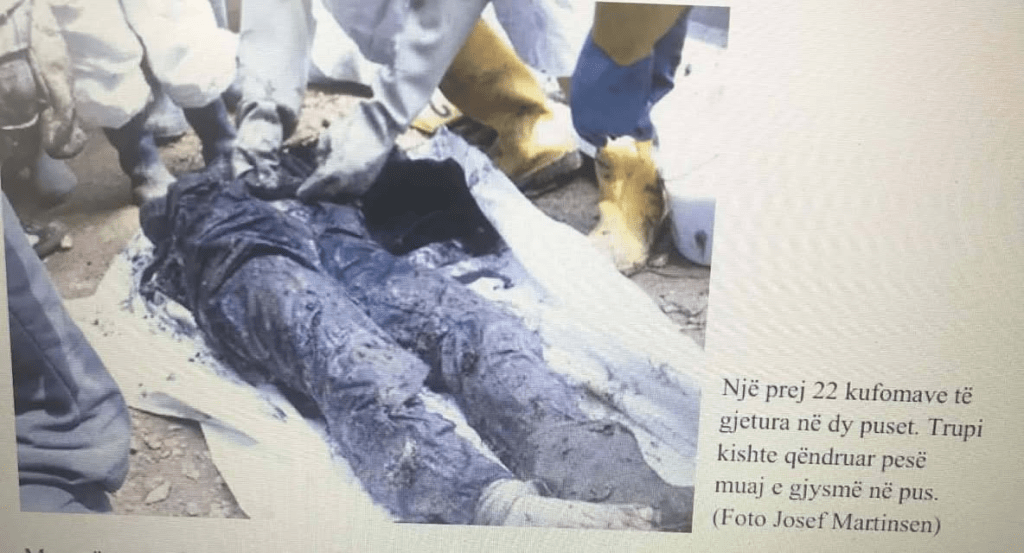
Suddenly, everything went silent. When the Serbian troops left, around 19:00 we approached the wells. We saw a lot of clothes scattered in pieces around the wells and in the branches of the oak trees. The wells had been destroyed with explosives.”⁸The Serbian-Yugoslav forces had thrown, alive or dead, 22 hostages into the two wells – 16 in one, about seven meters deep, and six in the other, about five meters deep.⁹
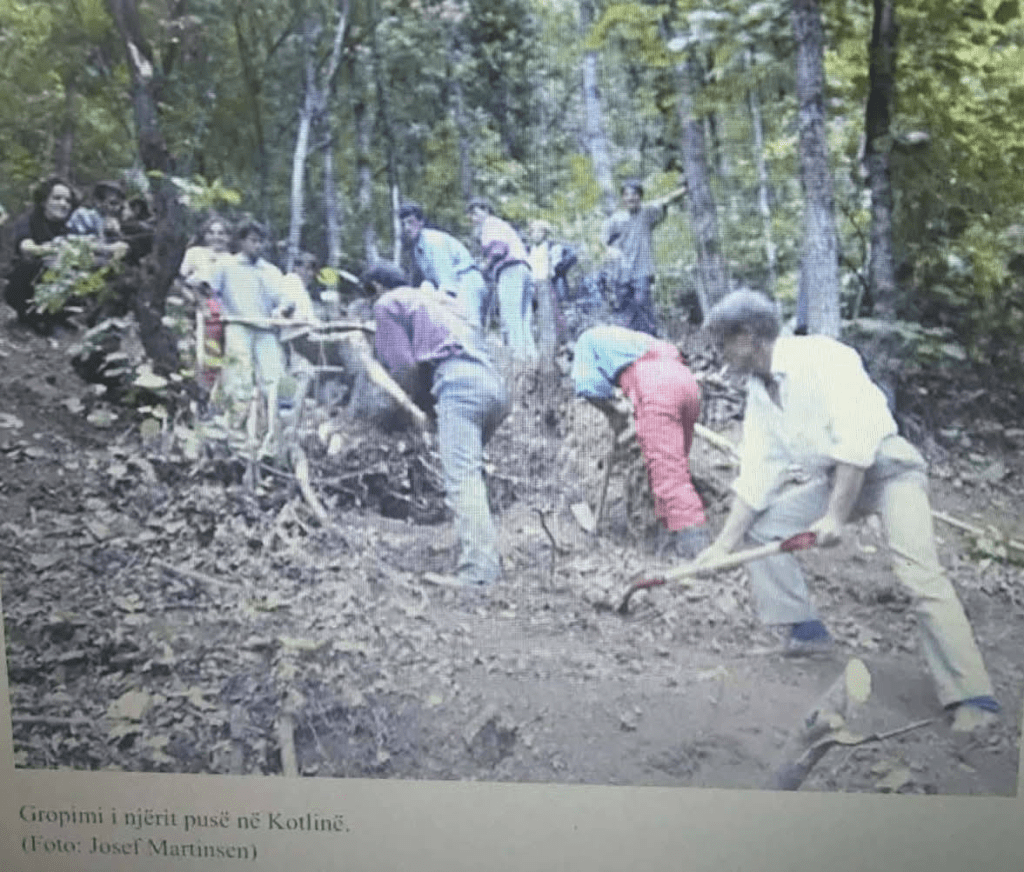
After about six months, in September 1999, at the request of the families and on the initiative of the ICTY forensic team, the wells were opened and mass graves were identified.¹⁰According to the HLC, on 24 March 1999, Yugoslav Serb forces in Kotlinë killed a total of 26 Albanian men (one from the Rexha family, two from the Vlashi family, seven from the Kuçi family, and 16 from the Loku family).
All were from the village of Kotlinë, except for one from the neighboring village of Ivajë; three were 16-17 years old, and only one was over 65 years old.¹¹ According to the HLC, 11 of those killed were members of the KLA, but the OSCE says that these were likely members of the KLA, but unarmed and in civilian clothes.¹²
On 23 February 2011, the ICTY found Vlastimir Đorđević, head of the Department of Public Security in the Serbian Ministry of Internal Affairs, guilty of five counts, the fourth of which charged him with committing the crime of murder, as a crime against humanity, through participation in a joint criminal enterprise, as well as aiding and abetting the murder of Kosovo Albanians, including in Kotlinë/Kotlinë, and sentenced him to 27 years in prison,¹³ while on 27 January 2014 the ICTY Appeals Chamber reduced his sentence to 18 years.¹⁴
To date, none of the executioners have been convicted or even tried for this massacre. The text and 1 photo are taken from the book:Massacres in Kosovo-Shkëlzen GashiPages 158 to 167, While 4 photos are by the author:Josef Martinsen, who is also the author of the book:Wells of Death in Kosovo, which through photographs and numerous witnesses of Kotlina in 2001, that is, through their testimonies, describes the massacre in Kotlina.
One of the testimonies in J. Martinsen’s book:My name is Hava Kuqi (84 years old). I live in the valley. On March 24, 1999, Serbian soldiers came and surrounded the village. They gathered the women and children and ordered them to go towards the center of the village where they held us for a long time.
The men forced them to go higher into the forest. I told the other women – this is our end. One of the victims drowned in the well is my son. Three others were my nephews. The military, paramilitaries and police forces participated in the attack. The youngest victim was a sixteen-year-old boy.


 Balkan Academia