
Summary
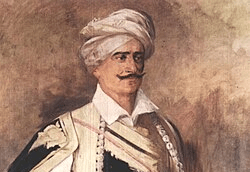
Vasos Mavrovouniotis, born Vaso Brajović, is traditionally identified as a Montenegrin Serb general of the Greek War of Independence. However, a closer examination of Balkan tribal history and onomastics suggests that he could plausibly have had Albanian origins. The name “Brajović” may derive from an earlier “Braja,” consistent with Albanian naming patterns, while the Bjelopavlići (Palabardhët) region from which he came had documented Albanian elements. Given the fluid identities of the eighteenth- and early nineteenth-century Balkans, it is historically reasonable to argue that Vaso Brajović may have belonged to the intertwined Albanian-Slavic frontier world — and possibly to the Albanian side of it.
Abstract
The historical figure known as Vasos Mavrovouniotis (born Vaso Brajović) has traditionally been described as a Montenegrin Serb who played a distinguished role in the Greek War of Independence. However, the complex ethnolinguistic landscape of the western Balkans during the late eighteenth and early nineteenth centuries invites a more nuanced examination of his origins. This article explores the possibility that Vaso Brajović may equally have been of Albanian origin. Through an onomastic analysis of his birth name, consideration of the ethnographic character of the Bjelopavlići (Palabardhët) region, and a reassessment of clan identities in Montenegro, the study argues that an Albanian background cannot be excluded and, in some respects, may be linguistically and historically plausible.
The Problem of Balkan Identities in the Early 19th Century
In the late eighteenth century, Montenegro and northern Albania were not rigidly divided by the national categories familiar today. Tribal affiliation, clan identity, and regional loyalty frequently carried more weight than modern ethnic designations. Individuals moved across linguistic and confessional boundaries, and identities were often fluid.
Within this context, figures later claimed by emerging national historiographies may have had more complex backgrounds than retrospective narratives suggest. Vaso Brajović, later known in Greece as “Mavrovouniotis” (“the Montenegrin”), fits squarely within this frontier world.
Onomastics: From “Vaso Brajović” to “Vaso Braja”
The birth name Vaso Brajović invites closer linguistic scrutiny.
The patronymic suffix -vić is Slavic, denoting “son of.” Removing it leaves the core form:
Brajovic = Brajo / Braja
In Albanian onomastic patterns, the name Braja is entirely consistent as a clan or family name. The form “Vaso Braja” emerges naturally if one considers the possibility of Slavic administrative or ecclesiastical adaptation of an earlier Albanian name. The transformation of Albanian names into Slavic patronymics was not uncommon in border regions where ecclesiastical registers and official records were kept in Slavic forms.
Moreover, the given name Vaso itself is not ethnically exclusive. It appears among Slavic, Greek, and Albanian populations alike, often as a diminutive of names such as Vasil or Vasilios. Thus, neither the first nor the last name definitively anchors him within a single ethnolinguistic tradition.
The onomastic structure “Vaso Braja” therefore aligns comfortably within Albanian naming conventions, raising the possibility that “Brajović” represents a Slavicized rendering of an earlier Albanian form
Vasojević and Albanian Naming Patterns
The tribal name Vasojeviq (Vasojevići), associated with a major Montenegrin clan, has traditionally been understood as Slavic. However, the morphology itself warrants reconsideration. If derived from a personal name “Vaso,” the clan name signifies “the descendants of Vaso.”
In a region where Albanian and Slavic populations coexisted and intermarried, the presence of a Slavic suffix does not necessarily preclude Albanian roots. In fact, numerous clans in Montenegro exhibit layered identities, with oral traditions, linguistic traces, and historical migrations suggesting Albanian ancestry subsequently integrated into Slavic-speaking polities.
The argument is not that Vasojević is only Albanian, but rather that its formation does not eliminate Albanian origin as a possibility. The ethnogenesis of many Montenegrin tribes reflects centuries of interaction between Albanian highland clans and Slavic populations.
Bjelopavlići (Palabardhët)
Vaso Brajović was reportedly born either in Mojdež or in the plain of Bjelopavlići, a region in modern Montenegro. In Albanian, this area was known as Palabardhët.
The Bjelopavlići tribe itself has been subject to scholarly debate regarding its origins. Several historical and ethnographic studies suggest that parts of the population may have had Albanian roots before gradual Slavicization. In the early modern period, tribal identities were porous, and shifts in language and confession were common.
If Vaso Brajović originated from Bjelopavlići/Palabardhët, he emerged from precisely the kind of frontier society in which Albanian and Slavic identities overlapped. The existence of Albanian-speaking elements in the region strengthens the plausibility that his family background may not have been exclusively Slavic.
The Greek Nickname: “Mavrovouniotis”
Upon arriving in Greece, Vaso Brajović became known as Mavrovouniotis, meaning “the Montenegrin.” This designation, however, reflects geographic origin rather than ethnic self-identification.
For Greek contemporaries, “Montenegrin” functioned as a regional descriptor for warriors from the mountainous northwest Balkans. It did not distinguish between Serb, Albanian, or mixed-background individuals from Montenegro’s tribal zones. Thus, his Greek sobriquet cannot serve as decisive evidence of exclusive Slavic ethnicity
Service and Legacy in Greece
As a general during the Greek War of Independence, Vasos Mavrovouniotis distinguished himself in numerous battles, ultimately becoming an adjutant to King Otto of Greece. His identity in Greek memory centers on his contribution to the revolutionary cause, not on the precise ethnolinguistic composition of his ancestry.
The monument erected in Podgorica and the preservation of his dagger in the National Museum of Athens testify to a legacy that transcends rigid national categories. Indeed, his life exemplifies the transnational warrior culture of the Balkans in the age of revolutions.
Conclusion
This article does not claim definitive proof that Vaso Brajović was of Albanian origin. Rather, it challenges the assumption that he must have been exclusively Slavic.
The onomastic transformation from “Brajović” to a possible earlier “Braja,” the fluid ethnographic character of Bjelopavlići/Palabardhët, and the layered history of Montenegrin tribal formations collectively demonstrate that an Albanian origin is entirely plausible.
In a frontier society where identities were negotiated rather than fixed, Vaso Brajović may just as easily have been Vaso Braja — a man shaped by the intertwined Albanian and Slavic worlds of the western Balkans.


 Balkan Academia