
Abstract
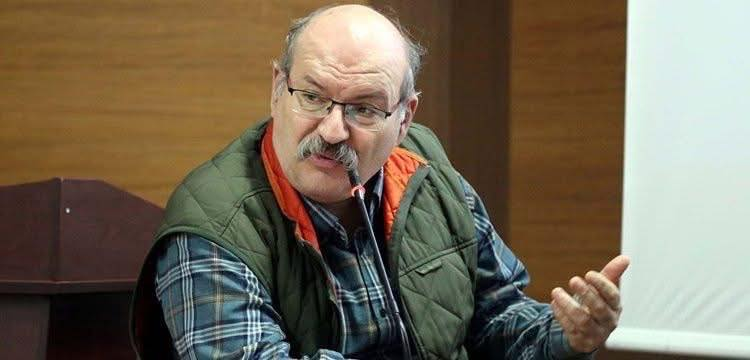
This article examines the views of Engin Beksaç, professor at Trakya University, regarding the cultural and civilizational role of Illyrian and Thracian populations in the Balkans. Beksaç challenges dominant historiographical narratives that attribute the origins of European civilization primarily to the Near East, arguing instead for the centrality and continuity of a Thraco-Illyrian cultural complex. Drawing on archaeological, ethnological, and folkloric evidence, he proposes that Illyrian culture was foundational, geographically extensive, and resilient in the face of Roman and Greek influence. The article situates these claims within broader debates on archaeology, historiography, and the politics of cultural interpretation in Southeastern Europe.
Engin Beksaç and the Thraco-Illyrians
According to Turkish archaeologist and Thracologist Engin Beksaç of Trakya University, prevailing Western historiography has overstated the Near Eastern origins of European civilization while underestimating the indigenous cultural formations of the Balkans. Based on extensive archaeological research into ancient Thrace and the broader Balkan region, Beksaç argues that Illyrian culture constituted a major civilizational force during the Bronze and Iron Ages, extending beyond the western Balkans and influencing adjacent regions.

Beksaç maintains that the distinction between Illyria and Thrace is archaeologically difficult to define. In his interpretation, material culture across the Balkans reveals substantial continuity, suggesting the existence of a Thraco-Illyrian cultural complex rather than sharply demarcated ethnic territories. He emphasizes that Illyrian cultural elements persisted despite the expansion of Greek and Roman political power, remaining visible in ethnological traditions, folklore, and archaeological strata.
Challenging diffusionist models, Beksaç contends that many features commonly attributed exclusively to the Near East are also present in the Balkans, particularly within Bronze Age contexts. He proposes that the Balkans formed a central zone of cultural development in prehistoric Europe and that political narratives have sometimes distorted archaeological interpretation.

In geographical terms, Beksaç suggests that Illyrian populations extended beyond the Dinaric Alps, including parts of southeastern Italy and areas around the Adriatic. He further notes the difficulty of establishing precise ethnic boundaries in antiquity, as archaeological data may be interpreted as either Thracian or Illyrian depending on methodological assumptions. From this perspective, he argues for recognizing a shared Thraco-Illyrian cultural substrate.
Beksaç also addresses questions concerning ancient Macedonian and Paionian identities, proposing that these groups should not be simplistically subsumed under later Hellenic frameworks. He emphasizes that cultural continuity in the Balkans is observable not only archaeologically but also in shared folkloric traditions, which he views as evidence of deep historical interconnectedness.
Overall, Beksaç’s position reframes Balkan antiquity as a dynamic and internally generative civilizational sphere, challenging narratives that marginalize indigenous cultural developments.
Footnotes
- Engin Beksaç, interview by Mimoza Elezi.
- Engin Beksaç, Thrace and the Ancient Balkans: Archaeological Perspectives (Istanbul)
- Colin Renfrew, Archaeology and Language: The Puzzle of Indo-European Origins (London: Jonathan Cape, 1987).

