
Abstract
The article discusses the historical migration of Montenegrin clans to northern Kosovo and how Kosovo’s failure to officially recognize Montenegrins distorts their cultural identity. The work suggests that recognizing Montenegrins could contribute to regional stability and diminish Serbia’s political influence.
Serbs of Kosovo are mostly Slavicized Albanians from Montenegro
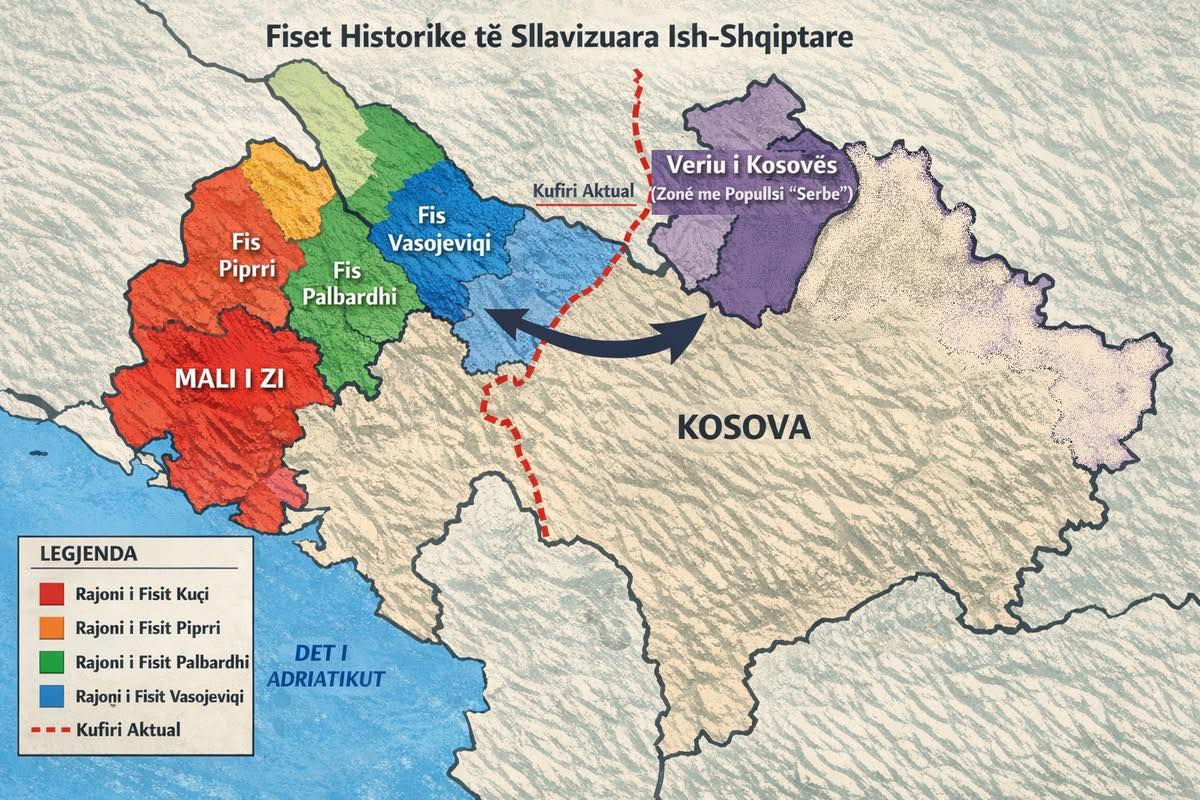
Most of the Serbs living today in northern Kosovo do not have direct roots from Serbia, but come from Montenegro, primarily from several former Albanian clans that were Slavicized, such as Kuči, Vasojevići, Pipri, and Palbardhi. These clans, historically Albanian and Montenegrin, expanded into northern Kosovo during the 19th and 20th centuries. Since Kosovo has not officially recognized the Montenegrin minority, they were all registered as Serbs.
This has allowed Serbia to instrumentalize the community for political purposes and has distorted the true picture of the minority. Official recognition of Montenegrins and the creation of institutional links with Montenegro would strengthen their true identity, distance them from Serbia’s political influence, and improve stability in the north.
Historical maps show the origin of these clans and their migration, illustrating that many of today’s inhabitants are descendants of Montenegrin and Albanian communities that share cultural and historical ties with Montenegro. Their recognition is not just a matter of statistics, but a step toward respecting their identity and preserving regional stability.

