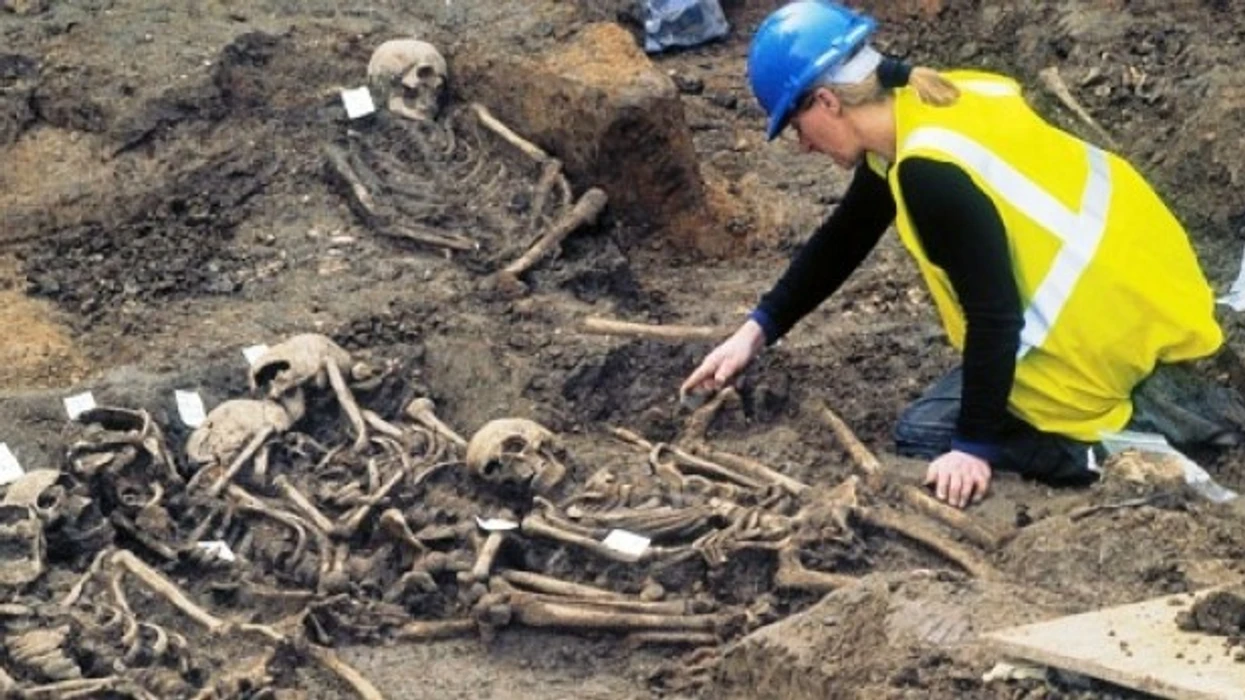

Recently, criticism has been directed against a Serbian filmmaker who is being accused of spreading propaganda through the new film “Harvest”. The movie “Žetva” portrays Kosovo Albanians as organ traffickers, reviving the “Yellow House” narrative. No evidence was ever found in international investigations. However, interestingly, there are reports of the reversed; Serbian armed criminals and paramilitaries who harvested organs from dead Albanians. The following can be read on a couple of articles:
Forensic expert Gërxhaliu: Mass graves were opened by Serbs, organs were removed from murdered Albanians
Referring to a report by the International Commission on Missing Persons, prepared by anthropologist Mark Skinner, serious suspicions are raised about the removal of organs from victims who had been taken hostage by Serbian forces in Kosovo.
Forensic expert in Kosovo, Arsim Gërxhaliu, confirmed this report circulating in the media, adding that mass graves were opened by Serbs and that organs were removed from murdered Albanians.
“They were exhumed by Serbs and transferred to mass graves in Batajnica. There, immediately after 1999, Serbian experts opened these graves themselves, without the presence of anyone else. According to Mark Skinner’s report, there is evidence for 82 individuals whose organs may have been removed.”

Tasholli: Serbia carried out organ transplants using organs of Albanian children, women, and men
According to statements made in a televised discussion, there are strong claims and indications that Serbian authorities conducted organ transplants using organs taken from Albanian victims during and after the war in Kosovo.
It was stated that Serbia has had the medical capacity to perform organ transplants since the 1970s, and that this capability raises serious concerns in relation to what may have happened to Albanian civilians who were taken during the war.
Tasholli emphasized that there are elements and circumstances suggesting that organ transplants were carried out using organs from Albanian children, women, and men.
He added that these issues have not been sufficiently addressed or discussed publicly, despite their seriousness and the implications they carry.
The international anthropologist speaks: During the war in Kosovo, Serbs removed the organs of hundreds of Albanians.
In the report of the International Commission on Missing Persons, it is stated that during the war in Kosovo, among the civilian victims found in mass graves in Serbia, serious suspicions were raised about the removal of organs from Albanian civilians who had been taken hostage by Serbian forces in Kosovo.
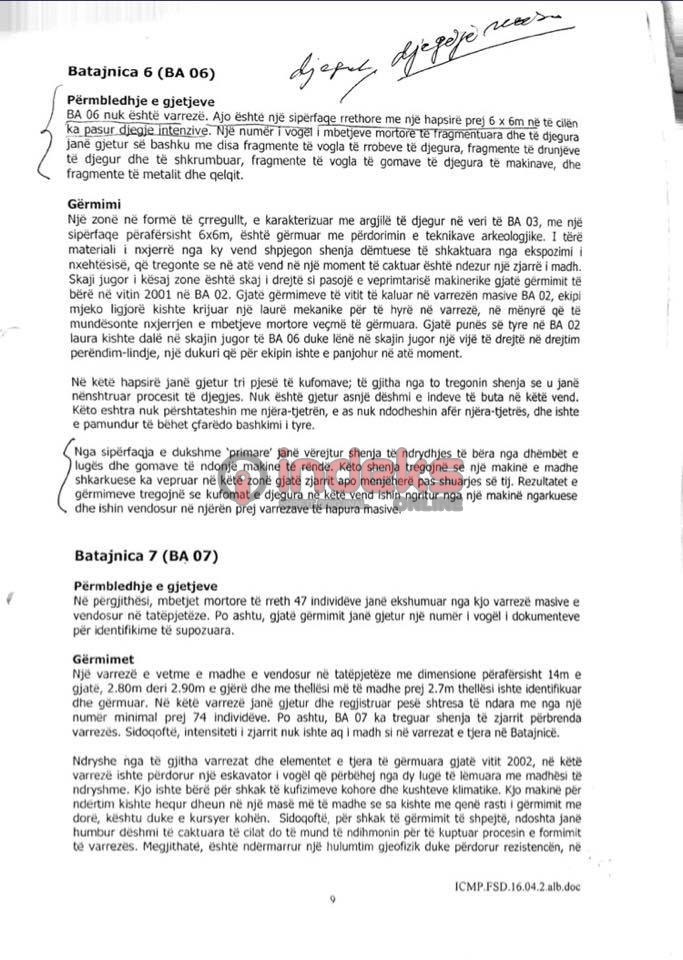
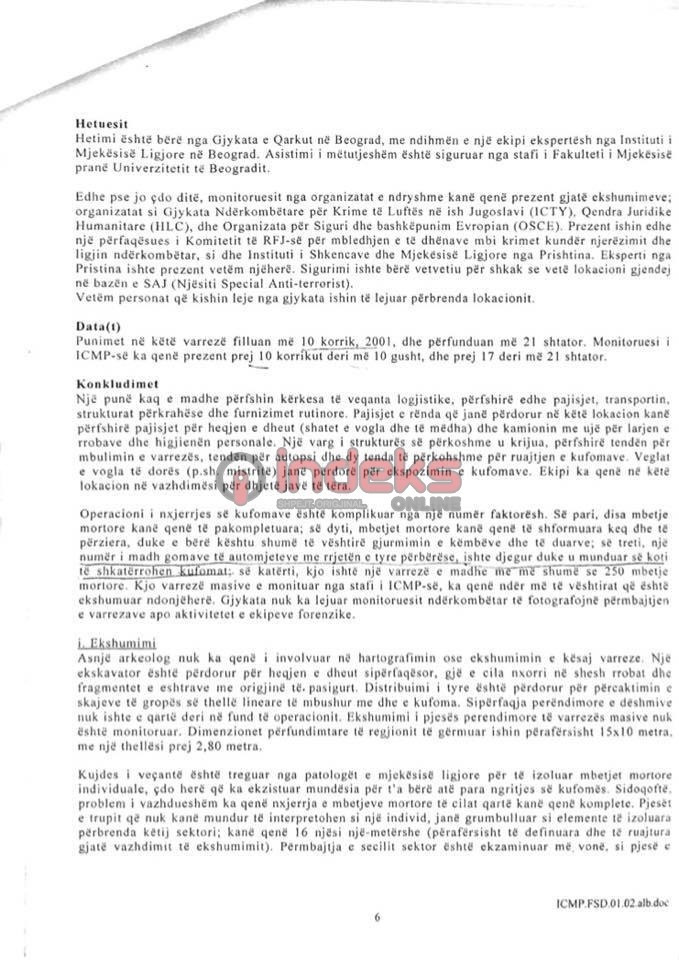
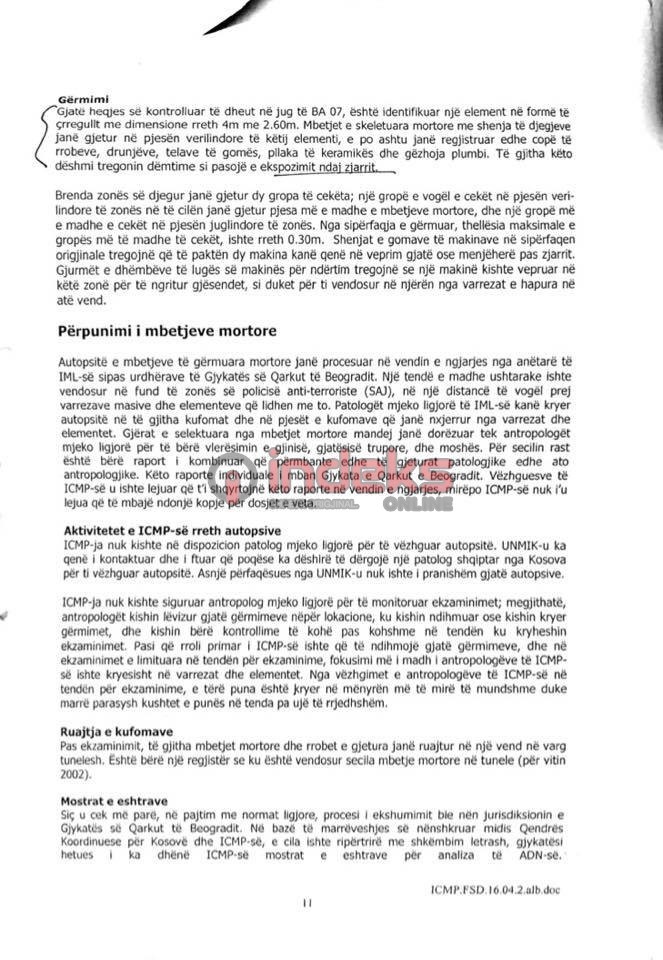
This report was compiled by ICMP’s senior forensic anthropologist, Dr. Mark Skinner, according to whom these suspicions are focused on 82 individuals who were transported alive to Serbia, where they were later buried in coffins and labeled bags in the mass graves of Raška, Batajnica, and Petrovo Selo.
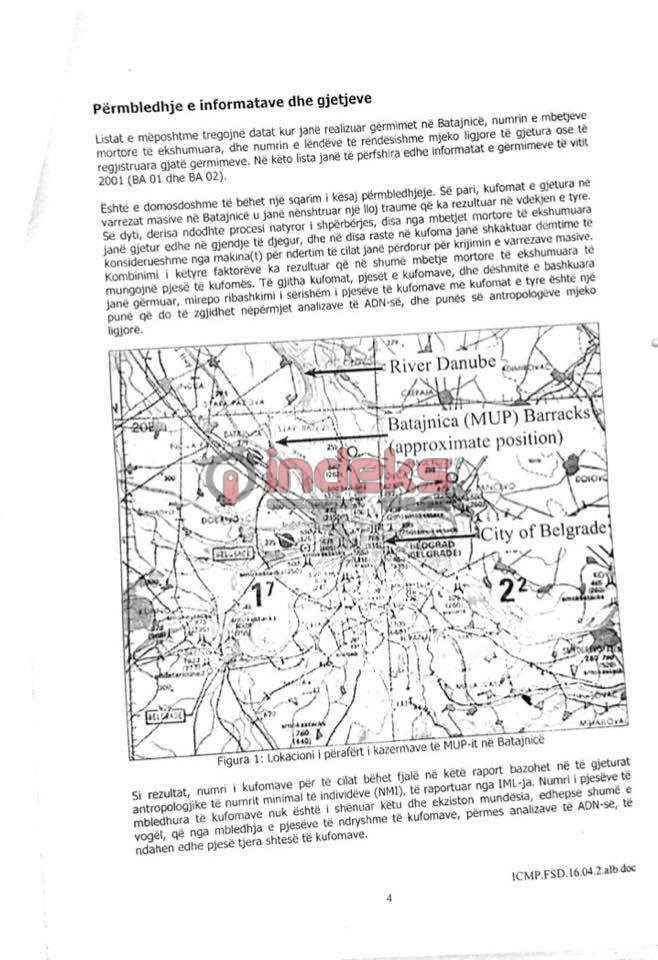
The forensic examination confirmed that these bodies had not been executed by gunshots or killed by other typical means; their deaths were of an entirely different nature, Dr. Skinner wrote in the report, emphasizing that in Batajnica there were 8 locations where these exhumations were carried out.
All locations in the report are marked with abbreviations such as BA 1, BA 2, up to BA 8. From the exhumations at these sites, 705 complete bodies were recovered.
Serbia was not so humane as to execute the victims and then ensure their proper burial. Among these victims suspected of having had their organs removed were 13 males, 14 females, and 9 children.
Albanian organs sold
There are strong suspicions that during the period 1998–1999, during the war in Kosovo, Serbs—through Macedonia—engaged in trafficking human organs taken from killed Kosovo Albanians, sources told the Macedonian newspaper “Lajm.”
According to these sources, Serbs, through Macedonia and Bulgaria, traded these human organs, which later ended up in Russia.
These suspicions are further reinforced by the presence of Russian “white coats” (doctors) in Macedonia during the time of the Kosovo war. “During that time, a large number of Russian doctors were observed in Macedonia,” the newspaper’s sources state.
These suspicions have also attracted significant interest among certain circles in Kosovo, and the possibility of launching investigations to uncover the truth is not ruled out, the newspaper emphasizes.
The Ministry of Internal Affairs of Macedonia has stated that it does not possess such information. Police spokesperson Ivo Kotevski said that so far, no request has been submitted to the Ministry to initiate an investigation into such matters.
Kosovo authorities, even to this day, do not know the whereabouts of thousands of missing Albanians who have had no trace since the time of the war.
Meanwhile, a week ago, the Government Commission on Missing Persons in Kosovo announced that around 20 Albanians from Kosovo, who were killed, are suspected to have been buried in cemeteries in Butel, Skopje.
According to the head of this commission, Prenkë Gjetaj, it is suspected that these bodies, after being killed by Serbian forces in 1999, were thrown into the Lepenc River, which then carried them into Macedonia.
“We have information that these bodies were thrown into the Lepenc River in 1999, and we have informed the Ministry of Foreign Affairs so that they address this issue with their counterparts in Macedonia, in order to allow us access to those cemeteries,” said Gjetaj.
Following this reaction from official Pristina, the Ministry of Foreign Affairs of Macedonia stated that it is ready to cooperate with Kosovo in locating the bodies of around 20 Kosovo Albanians suspected to be buried in the Butel cemetery in Skopje.
The Minister of Foreign Affairs, Antonio Milošoski, said they are ready for cooperation if such a request is made by the Kosovar side.
Serbian crimes during the war in Kosovo: 82 Albanian civilians suspected of having their organs removed (Documents)
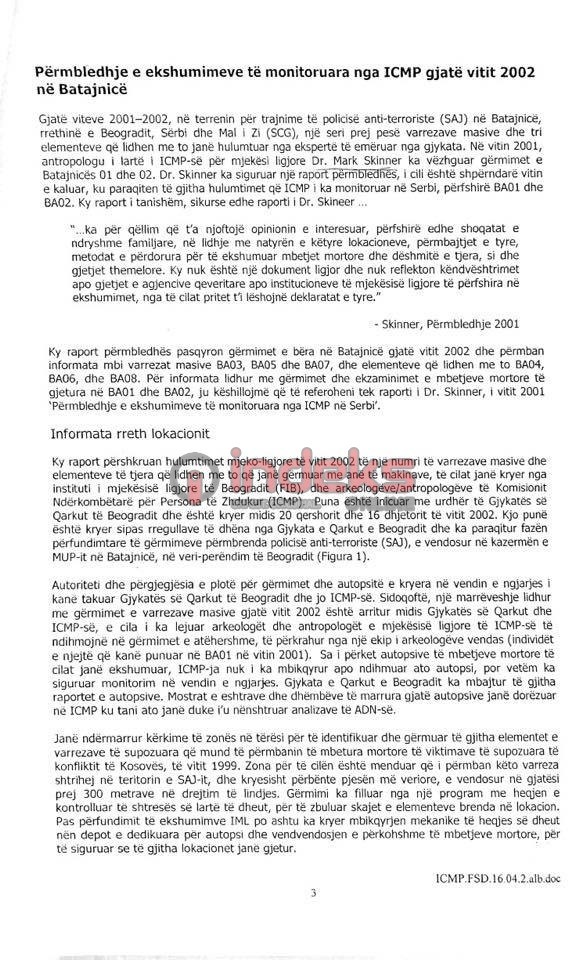
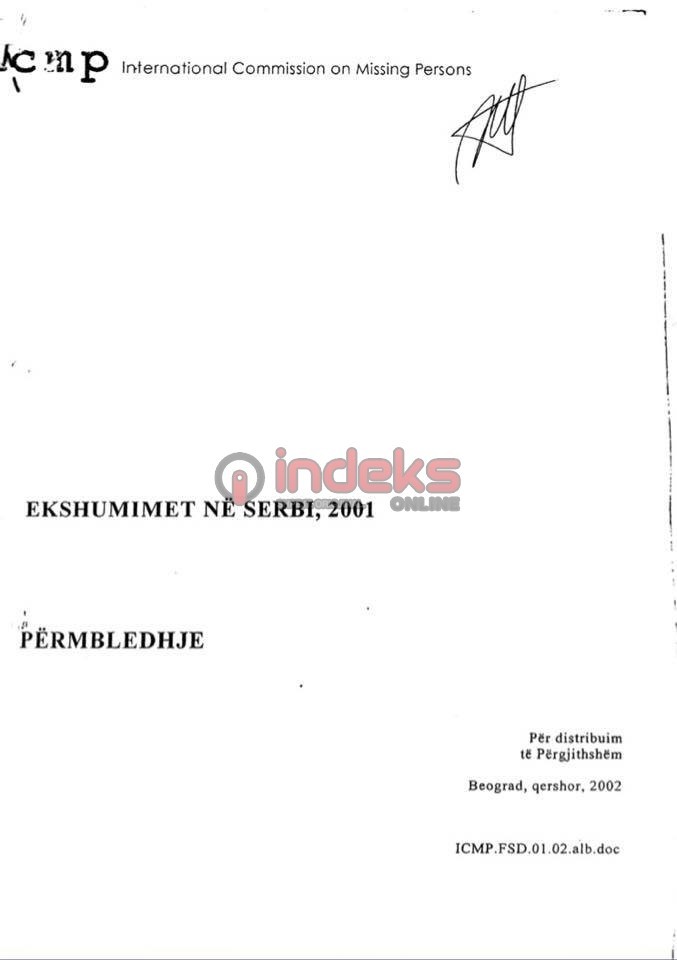
During the last war in Kosovo, among the civilian victims found in mass graves in Serbia, serious suspicions were raised about the removal of organs from Albanian civilians who had been taken hostage by Serbian forces in Kosovo, according to a report by the International Commission on Missing Persons.
This report was compiled by ICMP’s senior forensic anthropologist, Dr. Mark Skinner, according to whom these suspicions are focused on 82 individuals who were transported alive to Serbia, where they were later buried in coffins and labeled bags in the mass graves of Raška, Batajnica, and Petrovo Selo.
The forensic examination confirmed that these bodies had not been executed by gunshots or killed by other means; their deaths were of an entirely different nature, Dr. Skinner wrote in the report, emphasizing that in Batajnica there were 8 locations where these exhumations were carried out.
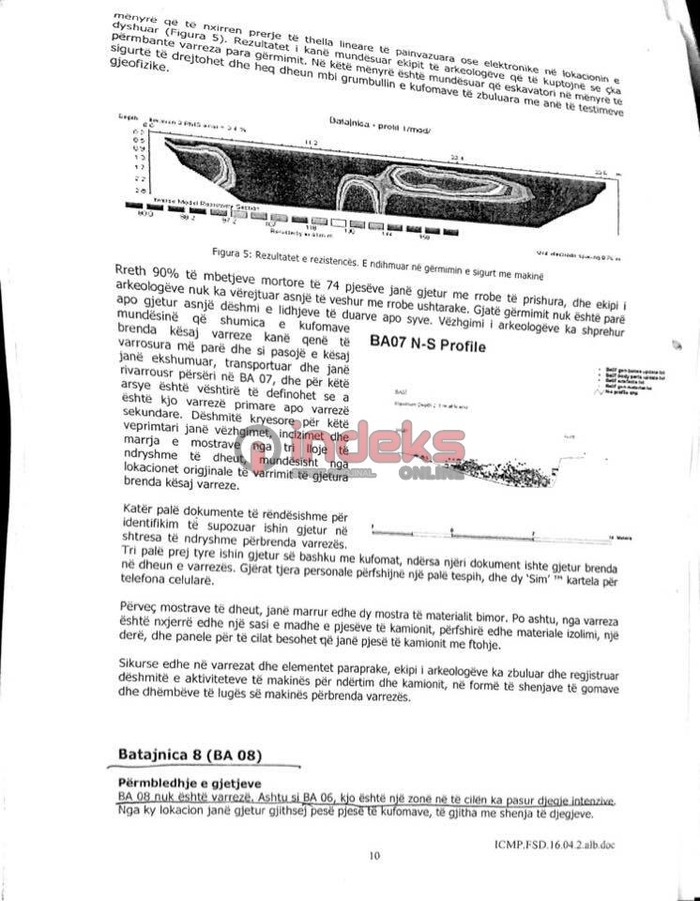
All locations in this report are marked with abbreviations such as BA 1, BA 2, up to BA 8. From the exhumations at these sites, 705 complete bodies were recovered.
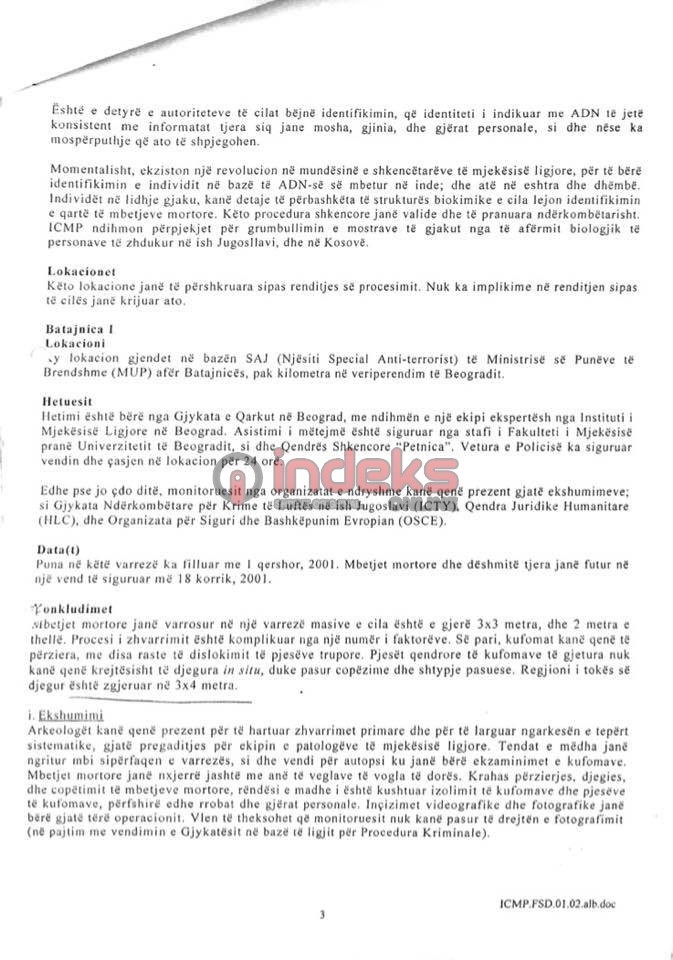
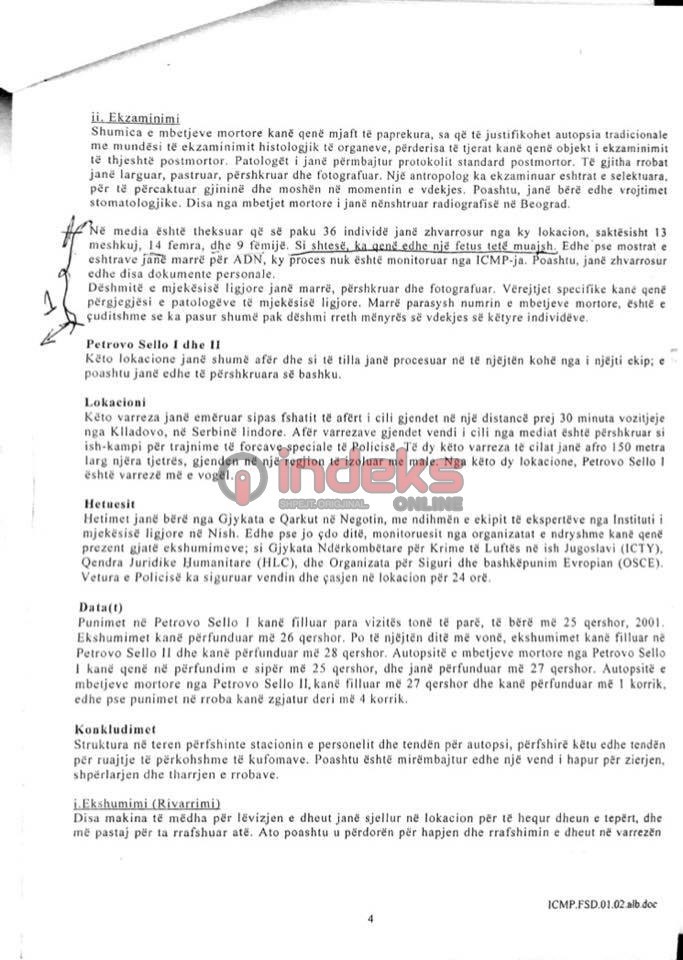
BA.01 – It is stated that at least 36 individuals were exhumed from this location, specifically 13 males, 14 females, and 9 children. Additionally, there was an eight-month-old fetus. Medical evidence was collected and photographed. Specific observations were the responsibility of forensic pathologists. Considering the number of remains, it is unusual that there was very little evidence regarding the manner of death of these individuals, the report states.
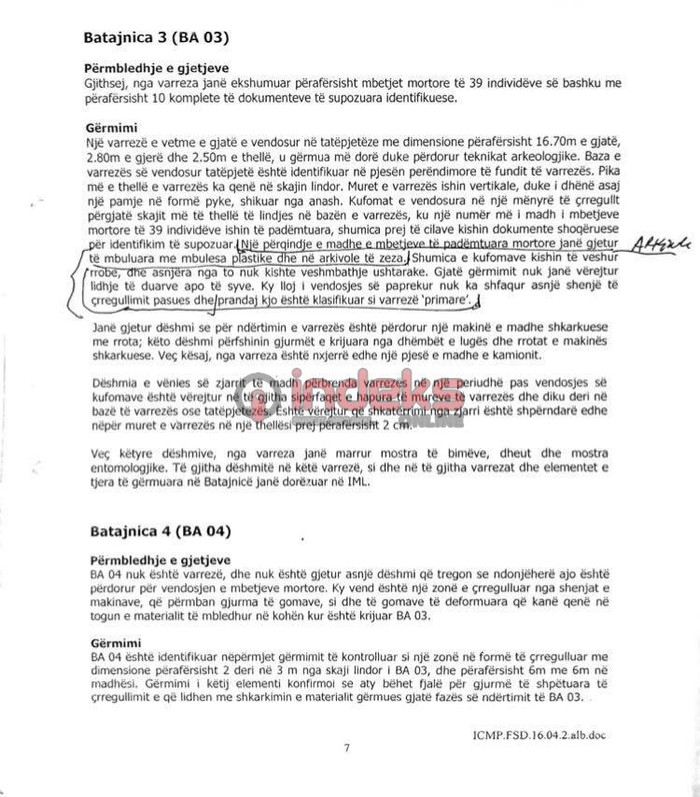
BA.03 – The remains were damaged, most of which had accompanying documents for presumed identification.
At this burial site, it is stated that a large percentage of the remains were found covered with plastic sheets and placed in black coffins.
No signs of tied hands or blindfolds were observed. This undisturbed type of burial showed no signs of subsequent disturbance and was therefore classified as a primary grave, according to the report.
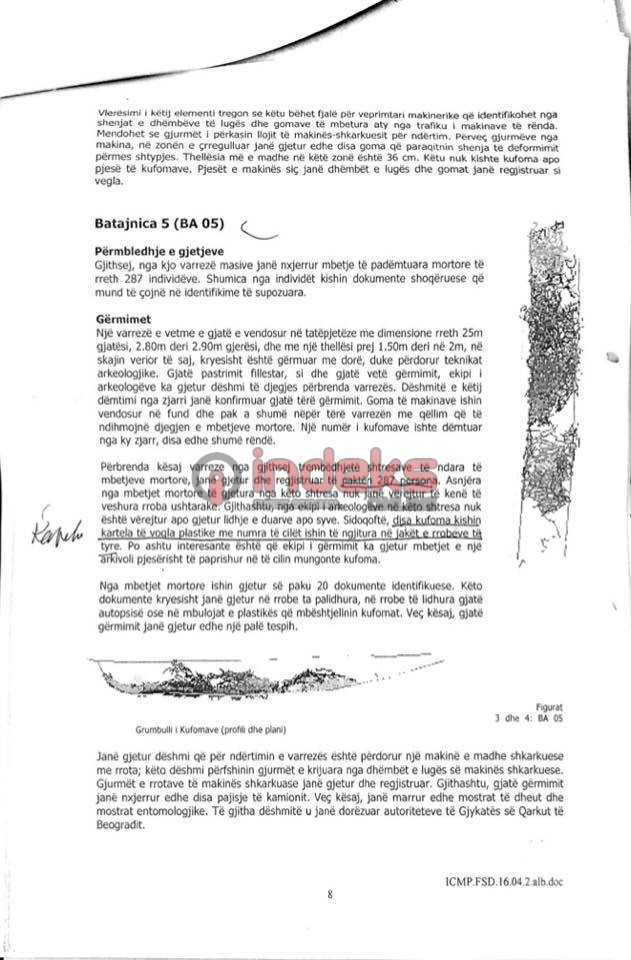
BA.05 – At least 287 bodies were found at this site. Some of these bodies had small plastic tags with numbers attached to the collars of their clothing. It is also noted as significant that the excavation team found the remains of a partially intact coffin in which the body was missing, the report states.
Latif Mehmeti, from the association of families of missing persons and war victims “Përkorë,” stated in an interview for Indeksonline that, based on facts, the Serbian army took people alive in Kosovo and transported them to Serbia.
According to him, the first piece of evidence is the case of the killing of the Bytyqi brothers; the second is testimony from a prosecutor of Serbia’s Special War Crimes Prosecution, who states that 82 Albanians were executed in the mass graves of Raška.
“This means that Albanian civilians arrived in Raška alive. Similar facts have also been found for the graves in Batajnica and Petrovo Selo, which provide sufficient elements indicating that Albanian civilians were alive at the moment they were brought to those burial sites,” he said.
According to Mehmeti, grave number 5 in Batajnica indicates that the victims were buried in coffins in an orderly manner, and that the victims were labeled with tags from hospitals or similar institutions.
“Serbia was not so humane as to send the victims for execution and then take care of their burial in an orderly manner. Among these victims suspected of having had their organs removed were 13 males, 14 females, and 9 children,” Mehmeti said.
Documents from Albanian authorities investigating the crimes
Ahmet Grajqevci from the Council of Families of the Missing.
The claim that there was trafficking of organs of Albanian civilians by the Serbian army is also stated by Ahmet Grajqevci from the Council of Families of the Missing.
“These people who were taken were of different ages. Most were young, including minors. The last time such a large number of kidnapped individuals was seen was in Prokuplje. We have cases where people went and saw their imprisoned relatives, and today they are nowhere to be found. This makes it even more horrifying.
In this process, I believe that Mr. Mark Skinner, in his report, says that during investigations in Batajnica there were also removals of organs from the bodies of Albanians, and this issue has never been raised for Albanians. It is unfortunate that neither the Albanian side nor the international community has initiated an investigation—even though we do not have the power to do so ourselves.
But the European Union should act, since an international expert has confirmed this, and this is where suspicions arise that organ transplants were indeed carried out on Albanians. I can say that around 80% of the bodies returned from Serbia—who were taken alive from Kosovo—came back without any documentation on the causes of death, and this leads one to think and suspect that organ trafficking most likely took place,” Ahmet Grajqevci told “InDoks.”
References

