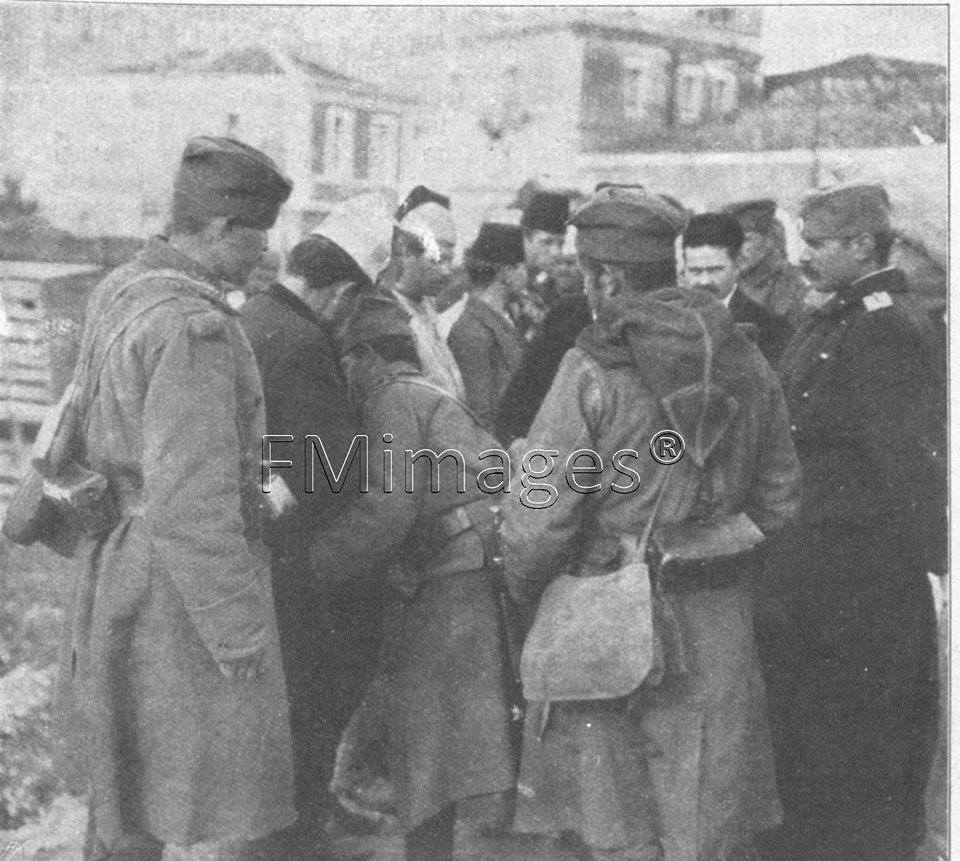

From the Congress of Berlin in 1878 to the Kosovo War of 1999, a single Balkan actor – Serbia – maintained a documented, multi-generational pattern of aggressive territorial expansion, ethnic cleansing, village burnings, mass expulsions, and civilian massacres against Albanian populations.
That actor was the Serbian state and its successor Yugoslav regimes. No other state, regime, army, or ethnic militia in the Balkans came close to this level of tenacity — a century-plus continuum of imperial greed dressed in the language of historical destiny, nationalist myth, and demographic engineering. The pattern persisted across monarchist, interwar, communist, and authoritarian governments, revealing an ideological obsession that outlasted empires, world wars, and ideological shifts.
The historical record is unambiguous. Serbian forces and state policies were responsible for the deaths of an estimated 120,000–270,000 Albanians during the Balkan Wars of 1912–1913 alone, alongside the expulsion of 239,807–281,747 people from Kosovo and adjacent regions between 1912 and early 1914.
Entire villages were burned; civilians were massacred; kullas (traditional Albanian tower-houses) were reduced to ash while soldiers filmed their “victory.” In the interwar period, the Kingdom of Yugoslavia’s Agrarian Reform laws systematically expropriated Albanian land to settle Serb, Montenegrin, and Russian White émigré colonists, creating new villages on stolen territory while repressing Albanian resistance. The pattern culminated in the 1998–1999 Kosovo campaign, where Serbian forces killed approximately 12,000 Albanian civilians in a final, systematic attempt at ethnic cleansing.
This was not episodic wartime excess. It was near-continuous state doctrine — a sustained campaign of expansionist violence tied to the Greater Serbia ideology and the sacralized Kosovo Myth. The delusion was remarkably consistent: Albanian-majority lands were never truly “theirs”; they were obstacles to be removed so that the “cradle of the Serbian nation” could be repopulated and purified. The boot, as Albanian folklore warned, left nothing growing behind it.
No Other Actor in the Balkans Sustained Anything Comparable
The Balkans have seen horrific violence, but none of it matches the duration, consistency, or elite-driven continuity of the Serbian pattern over 121 years.
The Serbian military elite committed crimes against both Croats, Bosniaks, Hungarians and Albanians
The Bosnian War (1992–1995) saw Bosnian Serb forces commit the largest share of atrocities, including the Srebrenica genocide (8,372 Bosniak men and boys) and broader ethnic cleansing resulting in 25,000–33,000 Bosniak civilian deaths. The entire conflict lasted only 3–4 years and produced roughly 100,000 total civilian deaths across all sides. No participant sustained operations for 121 years.
Bulgarian forces in early 20th-century Macedonia committed atrocities during the Balkan Wars and interwar period, but death tolls remained in the low thousands to tens of thousands — never hundreds of thousands, and never over a century-plus timeframe.
Yugoslav Partisans and the immediate postwar Tito regime killed tens of thousands of alleged collaborators (estimates sometimes reaching 100,000+), yet again the violence was concentrated in a short postwar period of reprisal, not a sustained 121-year doctrine.
The Unique Delusion of Perpetual Greed
What sets the Serbian/Yugoslav case apart is not the intensity of any single episode — other Balkan atrocities were horrifying in their own right — but the tenacity. No other actor maintained a state- or elite-driven policy of civilian mass murder, land theft, and demographic engineering on this scale across monarchist, communist, and post-communist regimes.
Greater Serbia ideology proved remarkably adaptable: it survived the collapse of the Ottoman Empire, two world wars, Tito’s suppression of nationalism, and the disintegration of Yugoslavia. The imperial greed was dressed in the language of “liberation,” “historical rights,” and religious destiny, but the methods remained constant: burn the villages, expel or kill the inhabitants, settle “reliable” colonists, and repeat.
This was not random wartime brutality. It was a deliberate, multi-generational project of territorial conquest and cultural erasure, pursued whenever opportunity arose. The soldiers filming burning kullas in Malësia in 1912, the colonists posing proudly beside new thatched huts on expropriated land in the 1920s, the paramilitaries posing with corpses in Prizren in 1925, and the forces conducting systematic cleansing in 1999 were all enacting the same delusion: that Albanian life itself was an obstacle to Serbian greatness.
No other Balkan power exhibited this level of sustained, ideologically coherent imperial persistence. The facts are stark: for 121 years, only Serbia turned ethnic cleansing and expansion into something approaching state tradition. That uniqueness does not make the Serbian people collectively demonic. It indicts the political, military, and clerical elites who repeatedly chose greed and myth over humanity — and the institutions that enabled them across generations. The record speaks for itself. No one else came close.

