
The parish church ‘Zoja Rruzare’ in the village of Bishtazhin, Gjakova, and the memorial for the martyrs of this Albanian religious community.
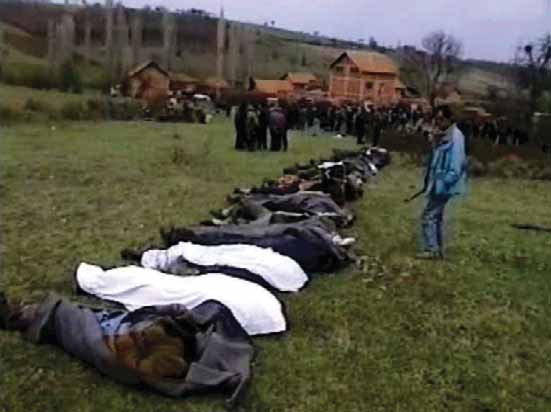
In the month of April in the year 1941, precisely on April 13, 14, and 15, on Good Friday, Holy Saturday, and Easter Sunday, the barbaric killing and massacre of Albanian Catholics from the villages of the ecclesiastical community of Bishtazhin in Gjakova took place.
Martyrs are a sign of the greatest love for God and humanity; they are witnesses who have willingly walked in the footsteps of Christ to the point of giving their lives to affirm the truth of the Gospel, to preserve national identity, and to defend their homeland.
The killings, massacres of 72 Albanian Catholic believers, particularly in the parish of ‘Zoja Rruzare’ in Bishtazhin, were well-organized and planned by the adversaries of Albanian Catholics and those opposed to interfaith coexistence among believers of different faiths in those areas, driven by hatred towards the Catholic Christian faith “in odium fidei,” and to destabilize social coexistence in Gjakova and Kosovo. In addition to villages within the parish of ‘Zoja Rruzare,’ there were also killings in other villages of the municipality of Gjakova.
The notification and denunciation of the murder of Albanian Catholic believers from the parish of ‘Zoja Rruzare’ in the village of Bishtazhin, especially during that time, were made by the parish priest of that community, the pastor Dom Lukë Filiqi. The contribution of this dedicated priest in the path of God and in service to his people and country, in shedding light on the truth of this terrible event, is extraordinary and even decisive.
The few testimonies of this tragedy should perhaps be kept in the archives of the parish office of ‘Zoja Rruzare’ in the village of Bishtazhin, Gjakova municipality, in the Book of the Deceased for the year 1941, numbers 28-78, pages 94-100. Here, the names of the slain and massacred Albanian Catholic believers are recorded, but according to valuable testimonies from residents who witnessed those killings and massacres, the number of victims is much higher. In the village of Rugovë alone, 67 people were killed in the mosque. Unfortunately, other valuable testimonies were not preserved by those who inherited the data and testimonies. Similarly, it should be noted that the state archives of that time have not been investigated.
On November 6, 2016, in the village of Smaq, Gjakova, a small church dedicated to the Martyrs of the Saints and Blessed was inaugurated with the celebration of Mass. Also in 2016, on the occasion of the 90th anniversary of the establishment of the parish of ‘Zoja Rruzare’ in Bishtazhin and the massacre of the 72 believers of this Albanian Catholic church community in 1941, with the initiative of the parish priest of the ‘Zoja Rruzare’ parish committee in Bishtazhin, Father Marjan Demaj, and with the generous cooperation of many members of this church community, a Memorial Commemoration was erected in the courtyard of the parish of ‘Zoja Rruzare’ in the village of Bishtazhin. Thus, the above-mentioned martyrs have a sign of public remembrance and honor, at least from the community of the ‘Zoja Rruzare’ parish. It would be valuable if the testimony and blood of these martyrs, who gave their lives for Faith and Homeland, were also considered at the level of the Diocese of Prizren-Prishtina.
Here is the list of the 72 martyrs killed in 1941.
- Ton Lushi, Head of the Holy Eucharist Society, son of Ndue Nikolla, born in 1904 in Bishtazhin, where he also lived. At the age of 37, on Good Friday, April 11, 1941, he was brutally murdered by Serbian terrorists due to his Catholic faith. They used bayonets on him in the mosque of Rogovë. He had confessed and received communion on Sunday, April 6, 1941. His birth is recorded in Birth Register No. 659 for the year 1904. He was buried in Talec on April 18, 1941, by the undersigned Dom Luka Filiq, the parish priest.
- Gjoni, son of Mark Noka, with the Catholic faith, born in 1889 in Bishtazhin, residing in Bishtazhin, on Good Friday, April 11, 1941, due to hatred of the faith “in odium fidei” by Serbian terrorists, was brutally murdered in the mosque of Rogovë with bayonets. His birth is recorded in the Birth Register No. 545 for the year 1889. He was buried in Talec on April 18, 1941, by the undersigned Dom Luka Filiq, the parish priest.
- Marku, son of Çup Hili, with the Catholic faith, born in Smaq in the year 1891, residing in Bishtazhin, on Good Friday, April 11, 1941, due to hatred of the faith “in odium fidei” by Serbian terrorists, was brutally murdered in the mosque of Rogovë with bayonets. His birth is recorded in the Birth Register No. 615 for the year 1891. He was buried in Talec on April 18, 1941, by the parish priest Dom Luka Filiq.
- Mikeli, son of Çup Hili, with the Catholic faith, born in Fshaj in the year 1906, residing in Bishtazhin, on Good Friday, April 11, 1941, due to hatred of the faith “in odium fidei” by Serbian terrorists, was brutally mutilated in the mosque of Rogovë with bayonets. His birth is recorded in the Birth Register No. 615 for the year 1906. He was buried in Talec on April 18, 1941, by the undersigned Dom Luka Filiq, the parish priest.
- Lleshi, the son of Gjin Prenqi, of the Catholic faith, born in Romajë in 1885, residing in Smaq, on Good Friday, April 11, 1941, due to his faith “in odium fidei,” was brutally murdered by Serb terrorists in the Rogovë mosque with bayonets. He is recorded in the birth register, entry number 485, for the year 1885. On April 18, 1941, he was buried in Talec, officiated by the undersigned Dom Luka Filiq, the parish priest.
- Nou, the son of Mark Vorfi, of the Catholic faith, born in Marmull in 1906, residing in Fshaj, on Good Friday, April 11, 1941, due to his faith “in odium fidei,” was brutally murdered by Serb terrorists in the Rogovë mosque with bayonets. He confessed and received the sacraments on Palm Sunday, April 6, 1941. He is recorded in the birth register, entry number 465, for the year 1906. On April 18, 1941, he was buried in Talec, officiated by the undersigned Dom Luka Filiq, the parish priest.
- Zefi, the son of Gegë Pjetër Radi, of the Catholic faith, born in 1900 in Smaq, residing in Bishtazhin, on Good Friday, April 11, in 1941, due to his faith “in odium fidei,” was brutally murdered by Serb terrorists in the Rogovë mosque with bayonets, his head severed. He is recorded in the birth register, entry number 573, for the year 1900. On April 18, 1941, he was buried in Talec, officiated by the undersigned Dom Luka Filiq, the parish priest.
- Marku, the son of Zef Ndout, of the Catholic faith, born on March 2, 1910, in Bishtazhin, where he also resided, on Good Friday, April 11, due to his faith “in odium fidei,” was brutally murdered by Serb terrorists in the Rogovë mosque, tied hands and feet, with bayonets. He is recorded in the birth register, entry number 561, for the year 1910. On April 18, 1941, he was buried in Talec, officiated by the undersigned Dom Luka Filiq, the parish priest.
- Pali, the son of Zef Nout, of the Catholic faith, born in the year 1913, in Lower Novosellë, residing in Bishtazhin, on Good Friday, April 11, due to his faith “in odium fidei,” was brutally murdered by Serb terrorists in the Rogovë mosque, tied hands and feet, with bayonets. He is recorded in the birth register, entry number 561, for the year 1913. On April 18, 1941, he was buried in Talec, officiated by the undersigned Dom Luka Filiq, the parish priest.
- Nou, the son of Mark Çupi, of the Catholic faith, born in Smaq in 1895, residing in Bishtazhin, on Good Friday, April 11, due to his faith “in odium fidei,” was brutally murdered by Serb terrorists in the Rogovë mosque, with bayonets. He is recorded in the birth register, entry number 603, for the year 1895. On April 18, 1941, he was buried in Talec, officiated by the undersigned Dom Luka Filiq, the parish priest.
- Llesh Mark Gjoka (Fshaj), killed on April 11, 1941, in Kodër of Gradisht, of the Catholic faith.
These individuals were killed and brutally massacred in the most heinous manner in the Rogovë mosque on Good Friday, April 11, 1941.
On the dates April 12, 13, and 14, another 53 Albanians were killed. Here are their names:
- Gjergj Mark Çupi (Bishtazhin)
- Binak Nikollë Gjoka (Lushi), Bishtazhin
- Pren Binak Lasku (Bishtazhin)
- Zef Kolë Gjoka (Smaq)
- Pashk Kolë Gjoka (Smaq)
- Prenk Frrok Kola (Lasku), Smaq
- Nue Gjin Kola (Lasku), Smaq
- Gjon Gjin Kola (Lasku), Smaq
- Tun Gjin Kola (Lasku), Bishtazhin
- Nikollë Gjin Kola (Lasku), Smaq
- Musë Gjin Kola (Lasku), Smaq
- Palush Ukë Noci (Bezhi), Dol
- Nue Frrok Preni, Kushavec
- Dedë Nue Preni, Kushavec
- Nikollë Pren Nikolla (Biçi), Dol
- Martin Zef Mark Leka (Dol)
- Prenkë Gjin Bardhoku (Dol)
- Musë Nue Prenka (Dol)
- Nikollë Mark Biba (Dol)
- Lëkë Mark Biba (Dol)
- Tomë Noc Bezhi (Dol)
- Nue Prenkë Tahiri (Dol)
- Nrecë Prenkë Tahiri (Dol)
- Tomë Nrekë Gjini (Dol)
- Tunë Prenkë Gjini (Dol)
- Gjokë Nikollë Leka (Dol)
- Gjokë Prenkë Lleshi (Dol)
- Nrecë Dedë Bardheci (Marmull)
- Mark Gjin Marku (Marmull)
- Gjergj Mark Nikollë Rrasi (Marmull)
- Ukë Nrecë Marku (Marmull)
- Nikollë Nrecë Marku (Marmull)
- Prenkë Palok Lleshi (Marmull)
- Hil Nikollë Deda (Marmull)
- Nue Prenkë Nikolla (Marmull)
- Zef Nue Prenkë Nikolla (Marmull)
- Pjetër Llesh Nou (Marmull)
- Nrecë Mark Sherri (Marmull)
- Mark Pren Nreca (Bërdosanë)
- Pren Bibë Pren Karaqi (Bërdosanë)
- Bibë Pren Biba (Bërdosanë)
- Gjokë Pren Bibë Karaqi (Bërdosanë)
- Dedë Jak Nrecë Kola (Marmull)
- Zef Pashk Mark Nou (Troshan), infant
- Pashke Gjon Prenk Kola, infant from Ujzi.
These individuals were victims of violence during this period.
The passage describes the tragic events of Easter in 1941 when a large number of Albanians, particularly Catholics, were brutally killed in various villages around Gjakova. The narrator, Pjetër Domgjoni, recounts the horrors witnessed during those days.
During these three days of Easter in 1941, all Catholics in the Gjakova district experienced immense suffering, as they were subjected to violence, bloodshed, and tears. Pjetër’s mother, who was only 13 years old at the time, shared her harrowing memories. A man named Petki forcibly removed a crucifix from her chest, demanding to know the whereabouts of the men. In fear, she began to cry, and Petki, raising his voice even louder, threatened to kill her. Another soldier arrived and ordered Petki to remove the crucifix, telling him not to harm the child. However, the soldiers, together with others, captured Pjetër’s father and 15 other men, including a father with his 16-year-old son. They took them to the Kabashi Bridge, lined them up, and first killed the 16-year-old boy, followed by the others. The bodies were left there, and the women of Markagjini were buried in the Kodërnezha cemetery.
Other men, along with their wives, children, and livestock, tried to escape and find refuge with Muslim neighbors, who were their blood brothers. These massacres, carried out with firearms, occurred in the village of Marmull on Easter Sunday, April 15, 1941. In Bishtazhin village, according to archive records, a group of men, but according to locals, many more, were taken to the Rugova mosque. They were first forced to pray and then bayoneted and dismembered. Another group, similarly, was taken to the Rugova mosque, forced to pray, and then shot with a hail of bullets. From that group, Marka Çupi survived and returned to his birthplace, Bishtazhin.
These mass killings and massacres occurred on Good Friday, April 13, 1941, in various villages, including NOUN, GJONI, TUNA, NIKOLLË, MUSË, and PALUSHI. All the sons of GJIN KOLË LASKU from the village of Smaç, along with other men from that family, were killed on Holy Saturday, April 14, 1941. There were reports that a pregnant woman in that family later gave birth to a son, essentially reviving the family. In the village of Ujzë, after killing all the members of the Gjon Prenkë Kola family, they also killed PASHKA, a six-day-old baby. Similarly, in the village of Pjetrashan, after killing all the members of the Pashk Mark Ndou communist family, they killed ZEFI, a one-day-old baby. Massacres and killings occurred in other villages as well, including Kusar, Dol, Fshajë, Kushavec, Raçë, Brdoasanë, Trravë, Moglicë, Dujakë, and others.
The reason for those killings and massacres during those three Easter days was that the communist forces from Gjakova wanted to expel us from the face of the earth. That was the reason. I don’t know of any other reason. When I returned from the war to my home, I found three men who had been killed by the Gjakova communists. An elderly 96-year-old man, Toma from the village of Marmull, answered my questions.
We remember these killings to never forget those faithful and true men like Hili and Nikollë Deda, as well as dozens and dozens of other Albanian believers who were killed and massacred by the Gjakova communists during those Bloody Easters, solely because they were Albanian Catholic believers. As a sign of respect and honor to these martyrs of faith and nation, may their memory be eternal.
It is unfortunate that no one has ever written about these massive killings and massacres organized by the Gjakova communists in collaboration with Serbian Chetniks against the Catholic believers of that region. However, it is admirable that Muslim Albanian believers came to the aid of their fellow countrymen of a different faith, Christians, and saved them from their imminent peril. The Gjakova communists may have aimed to sow hatred between the two faiths among Albanians, but their efforts were in vain.
During the recent war in Kosovo, the residents of Gexha, Radost, and other villages along the Drin River, along with their men, women, and children, crossed the Drin River and sought refuge in the village of Marmull. There are families and homes in Marmull that provided shelter and sustenance to Muslim Albanian brothers and sisters, numbering up to sixty people at times, even for days in a row, until they were forced to leave by Serbian Chetniks.
The Drin River separated or united Catholic Albanian believers with Muslim Albanian believers from the mentioned villages, and while the fields in certain areas were divided, it is never remembered that any incident, no matter how minor, ever occurred between those residents, and let alone any fighting among those residents.
Source: Martirët katolikë shqiptarë të komunitetit kishtar të Bishtazhinit të Gjakovës – Vatican News

