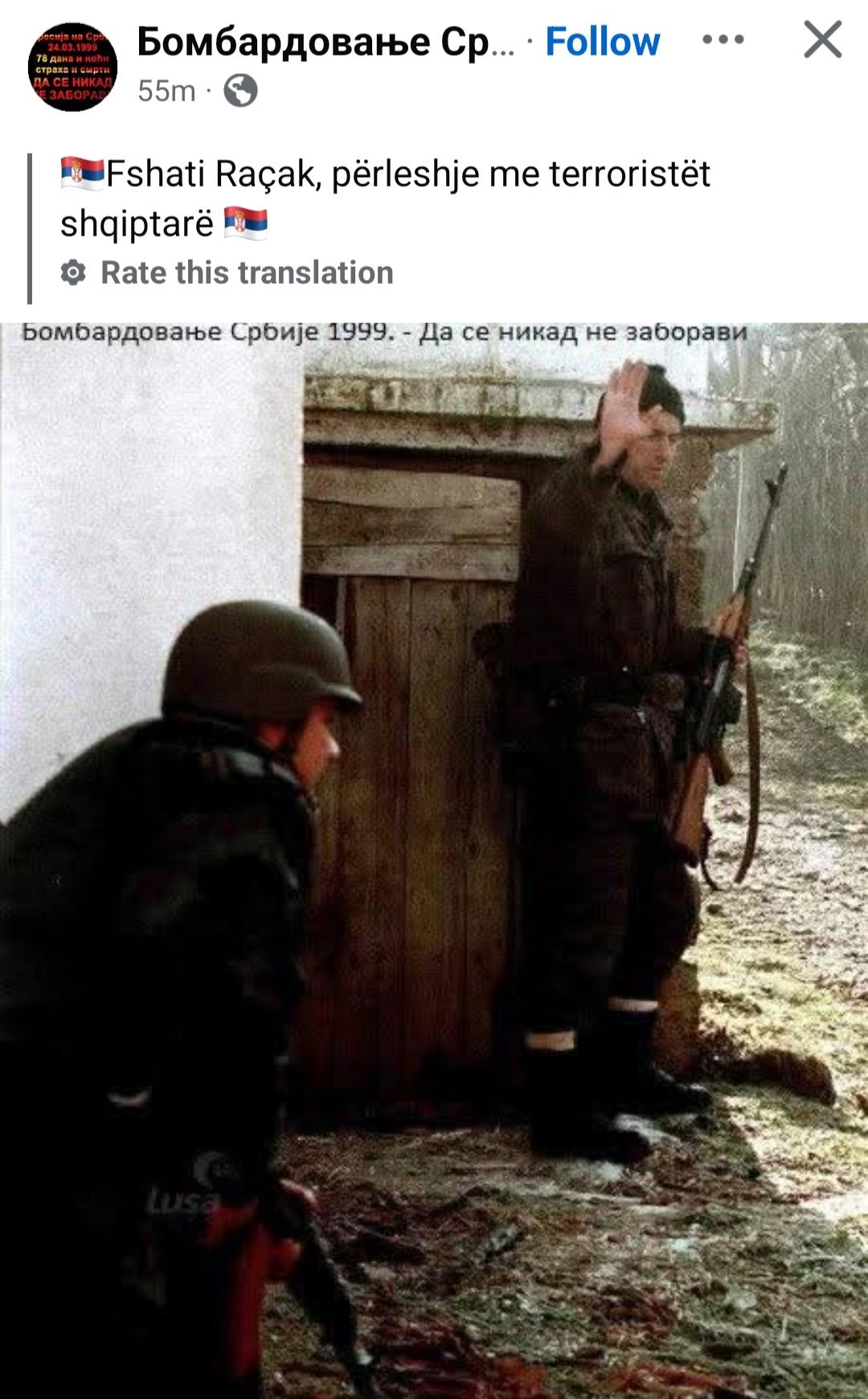

In the photo, the infamous Serbian militia, January 15 – 19 in Reçak.
Transcribed:
“Social media page:
Бомбардовање Ср
Post text:
(Translated to Albanian): “Fshati Raçak, përleshje me terroristët shqiptarë (Village of Recak, fighting against Albanian terrorists)”
Context
Glorifying Atrocity: How Serbian Nationalist Narratives Misrepresent the Račak Massacre
Article:
The social media post transcribed above is a troubling example of historical revisionism and the glorification of violence. The text labels the Račak village incident as a “clash with Albanian terrorists,” framing the victims—unarmed civilians who were massacred in January 1999—as combatants.
This misrepresentation is not only historically inaccurate but deeply offensive to survivors and the families of those murdered. International investigations, including by the Organization for Security and Co-operation in Europe (OSCE), conclusively documented that the event was a massacre of ethnic Albanians, not a legitimate military engagement.
By using nationalist symbols such as the Serbian flag and militarized imagery, the post promotes a narrative that valorizes perpetrators while erasing victimhood. The visual rhetoric—soldiers posed heroically with weapons—reinforces this dangerous mythologization. Such content functions as propaganda, shaping public perception to justify past aggression and delegitimize the historical suffering of ethnic Albanians in Kosovo.
Glorifying atrocities in this manner perpetuates ethnic hatred, undermines reconciliation efforts, and distorts collective memory. It is crucial to confront these narratives critically, to acknowledge the historical record, and to emphasize that remembering massacres responsibly means honoring victims rather than celebrating violence.

