
Recognition, Responsibility, and Credibility.
Abstract
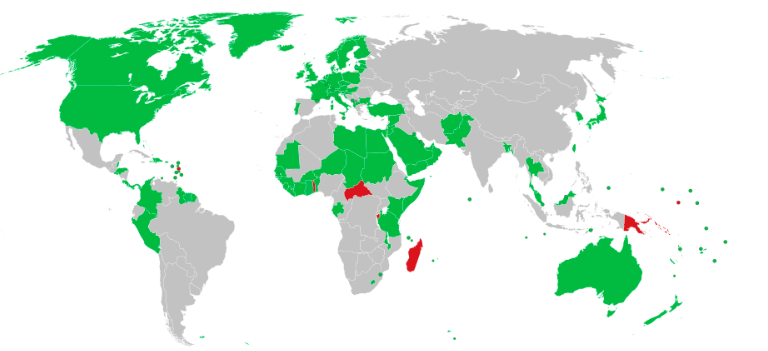
More than fifteen years after Kosovo’s declaration of independence, a small group of European Union member states continues to withhold recognition. This article argues that the refusal by these states—often justified by legal formalism, domestic concerns, or the desire to maintain good relations with Serbia—undermines their normative credibility. By privileging diplomatic relations with Serbia over historical accountability for systematic repression of Kosovo Albanians, these states weaken their commitment to human rights, international justice, and post-conflict reconciliation. The article contends that recognition of Kosovo is not only legally defensible but morally necessary, and that continued non-recognition constitutes an implicit normalization of authoritarian violence and ethnic repression.
Introduction
The question of Kosovo’s international recognition remains one of the most persistent challenges in contemporary European diplomacy. Although a majority of EU member states recognize Kosovo as a sovereign state, a minority continues to resist. This resistance is frequently framed as a neutral or principled legal position. However, neutrality in the face of prolonged injustice is itself a political stance. As scholars of transitional justice argue, failure to acknowledge historical wrongdoing risks perpetuating structural inequalities and undermining post-conflict legitimacy.[1]
Historical Context: Systematic Repression of Albanians
Following the revocation of Kosovo’s autonomy in 1989, Serbian state institutions implemented systematic policies of repression against ethnic Albanians. These included mass dismissals from public employment, closure of Albanian-language institutions, arbitrary arrests, and extensive police violence.[2] During the 1998–1999 conflict, Serbian and Yugoslav forces engaged in widespread forced displacement, killings of civilians, and destruction of property, leading to the displacement of approximately 800,000 Kosovo Albanians.[3]
International criminal tribunals later confirmed that these actions constituted crimes against humanity and war crimes.[4] The repression of Albanians was neither accidental nor episodic but embedded within state policy, making Kosovo a paradigmatic case of sustained denial of internal self-determination.
International Law and Remedial Secession
Although international law does not explicitly codify a general right to secession, it increasingly recognizes remedial secession in cases of extreme and persistent oppression.[5] Kosovo fits this framework due to the exhaustion of all meaningful avenues for internal self-determination under Serbian rule.
In its 2010 advisory opinion, the International Court of Justice concluded that Kosovo’s declaration of independence did not violate international law.[6] Continued non-recognition by certain states therefore reflects political discretion rather than legal obligation.
The Cost of Prioritizing Relations with Serbia
Several non-recognizing states justify their position by emphasizing the importance of maintaining stable diplomatic relations with Serbia. However, this approach carries significant normative costs. Serbia’s political leadership has not fully acknowledged responsibility for crimes committed against Kosovo Albanians, and denialism remains prevalent in public discourse.[7]
By prioritizing diplomatic accommodation over historical accountability, non-recognizing states risk signaling that mass repression and ethnic violence do not fundamentally affect international legitimacy. Such a stance weakens their authority when advocating for human rights and accountability in other global contexts.
Credibility, Consistency, and European Values
The European Union presents itself as a normative power grounded in human rights, rule of law, and reconciliation with the past.[8] Selective application of these principles undermines the Union’s moral coherence. Recognition of Kosovo would affirm that systematic repression has political consequences and that victimized populations are entitled to durable political solutions.
Non-recognition, by contrast, suggests that geopolitical caution outweighs ethical responsibility, eroding trust in European commitments to justice and equality.
Conclusion
Recognition of Kosovo is not merely a technical diplomatic act but a test of normative consistency. States that continue to withhold recognition in the name of legalism or bilateral relations with Serbia compromise their credibility and weaken the foundations of European normative politics. A durable peace in the Western Balkans requires acknowledgment of historical realities, support for legitimate statehood, and rejection of impunity for systemic oppression.
Footnotes
[1]: Teitel, R. (2000). Transitional Justice. Oxford University Press.
[2]: Malcolm, N. (1998). Kosovo: A Short History. New York University Press.
[3]: Human Rights Watch. (2001). Under Orders: War Crimes in Kosovo.
[4]: ICTY, Prosecutor v. Milutinović et al., Case No. IT-05-87.
[5]: Buchanan, A. (1997). “Theories of Secession.” Philosophy & Public Affairs, 26(1), 31–61.
[6]: International Court of Justice. (2010). Accordance with International Law of the Unilateral Declaration of Independence in Respect of Kosovo.
[7]: Bieber, F. (2018). Patterns of Competitive Authoritarianism in Serbia. East European Politics.
[8]: Manners, I. (2002). “Normative Power Europe.” Journal of Common Market Studies, 40(2), 235–258.
References
Bieber, F. (2018). Patterns of Competitive Authoritarianism in Serbia. East European Politics.
Buchanan, A. (1997). Theories of secession. Philosophy & Public Affairs, 26(1), 31–61.
Human Rights Watch. (2001). Under Orders: War Crimes in Kosovo.
International Court of Justice. (2010). Kosovo Advisory Opinion.
Malcolm, N. (1998). Kosovo: A Short History. NYU Press.
Manners, I. (2002). Normative Power Europe. JCMS, 40(2), 235–258.
Teitel, R. (2000). Transitional Justice. Oxford University Press.

