
by Dr. Qazim Namani
Abstract
This study by Qazim Namani examines archaeological remains around the historic city of Kassova in the region of present-day Kosovo. The article analyzes fortifications such as the Siçevo castle and nearby settlements, using field research, historical records, and cartographic sources. The author argues that the area shows continuous habitation from the Dardanian, Roman, Byzantine, and medieval periods. It also discusses the historical origin of the name Kosovo, suggesting that it developed from the medieval city of Kassova rather than Slavic etymology. According to the study, the region reflects an important center of mining, trade, and civilization in ancient Dardania.
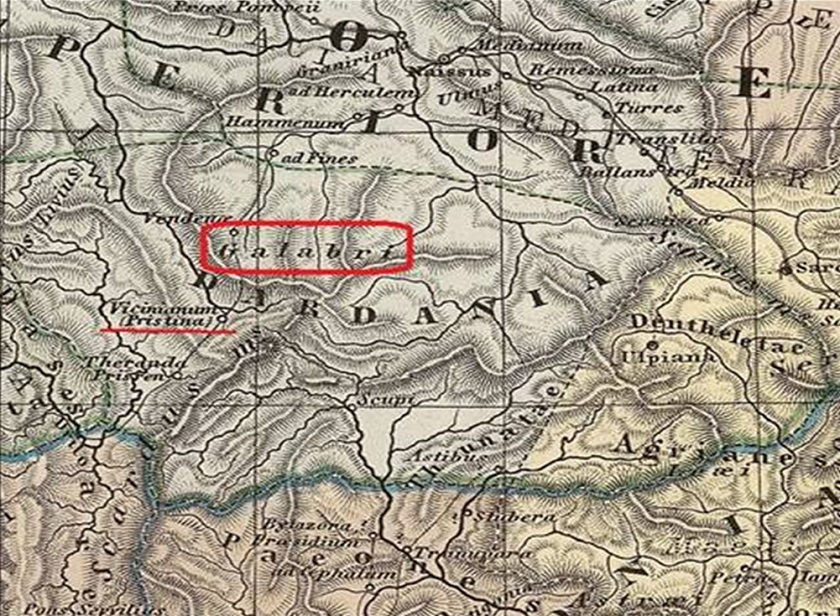
The Galab Highlands region lay between the developed cities of Niš and Ulpiana in antiquity.
From the sources of ancient authors we understand that the famous Dardanian tribe Galabroi lived in this region. During the time of Roman rule in this region at the foot of the hills rich in minerals, several important cities were built. At the time of the barbarian invasions during the Byzantine Empire, the local population, seeing the danger, began to move settlements from the plain to build defensive fortifications on hills with good strategic protection. After the fall of the cities of Ulpiana and Vendenis between these two settlements, somewhere about 15 km northeast of Prishtina, the Kastelion fortification was rebuilt.
During the Middle Ages, this fortification became an important center that controlled the mines to the northwest of the city of Artana, and the fertile fields in the valleys of the Llap rivers and the Sitnica river from the city of Lipjan to Vushtrri. This fortification in the Middle Ages was known by the name Kassova, so based on the name of this fortification, the fertile lands near these rivers were called the Kassova Plain.
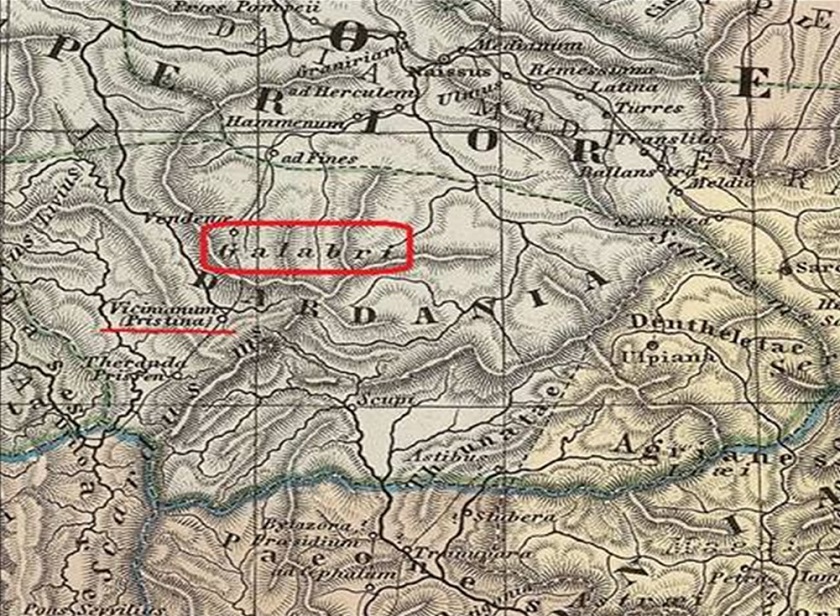
Map of Dardania showing the Galabroi tribe, created by Justhus Perthes in 1865
The last sources for this fortress city are found in the descriptions of Ottoman chroniclers of the 17th century, where it is mentioned as a city that had its own kadilliq. Being close to the city of Artana, we understand that this city had the law for the administration of a certain territory.
Based on field research, we have come to the conclusion that this city extended between the present-day fortress of the village of Siqevë and the village of Radashec, Sukë (Sulltan Tepe).
The Siqeva Fortification lies northeast of Pristina at a distance of about 10 km. The fortification rises on the northeast side of the village school, at an altitude of 780 m and with the coordinates: N 42°44’15.17″ E 21°12’40.41″.
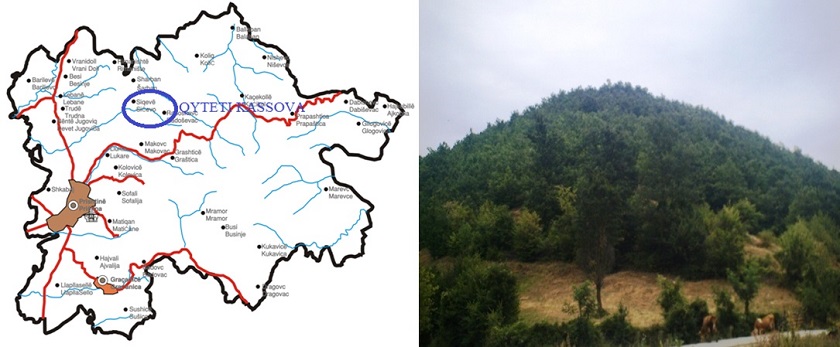
Fragments of walls, tiles, uncovered pillars, and the old church prove that we are dealing with an important archaeological site from the ancient and medieval periods.
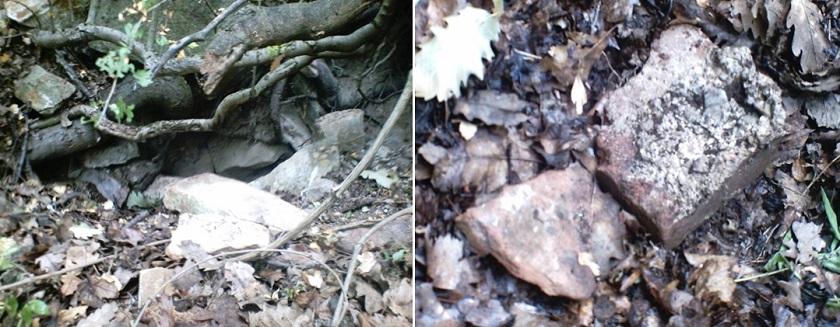
Traces of objects in the Siqeva Castle
On the eastern side of the Castle, on the hill called Kuna, the foundations of an old church and old tombs around it have been discovered. Also discovered in this locality were ceramics from the Roman, Byzantine and medieval periods, pillars of luxury buildings from the time similar to the pillars discovered in the city of Artana, the city of Trepça and several other settlements from the antiquity period, which prove that an important settlement existed in this area.
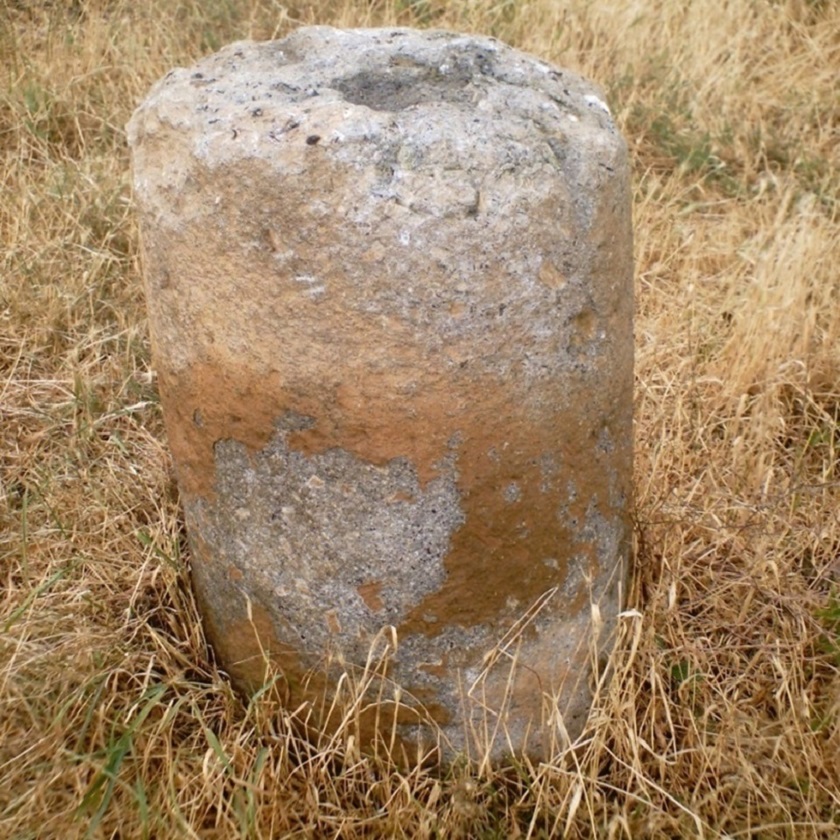
Pillar of ancient objects in the village of Sicevo
This settlement extended over a fairly large area and was surrounded by several other defensive fortifications around it. The geographical position of this settlement and archaeological discoveries in other nearby villages testify to the economic importance of this region, located near fertile fields and hills rich in minerals. This settlement lies to the northeast and a distance of about 3 km from Brrnica, which is known as the most famous archaeological site in Kosovo for an important culture from the Neolithic period to the Middle Ages. Between the Siceva castle and the village of Brnica there is one called “Stanet”, and it is thought that the settlement during the Middle Ages extended towards the village of Brnica. Traces of an ancient settlement have been discovered in the villages of Besi and Trudë. Traces of observation fortifications have also been identified in the “Qukat” of the villages of Trudë, Milec and Bardhoshë, through which the Kosovo Plain was observed on the southwest side from the Sićeva Castle, Suka (Sultan Tepja) in Radashec and the “Rogat e Prishtina” in the village of Rimanishtë.
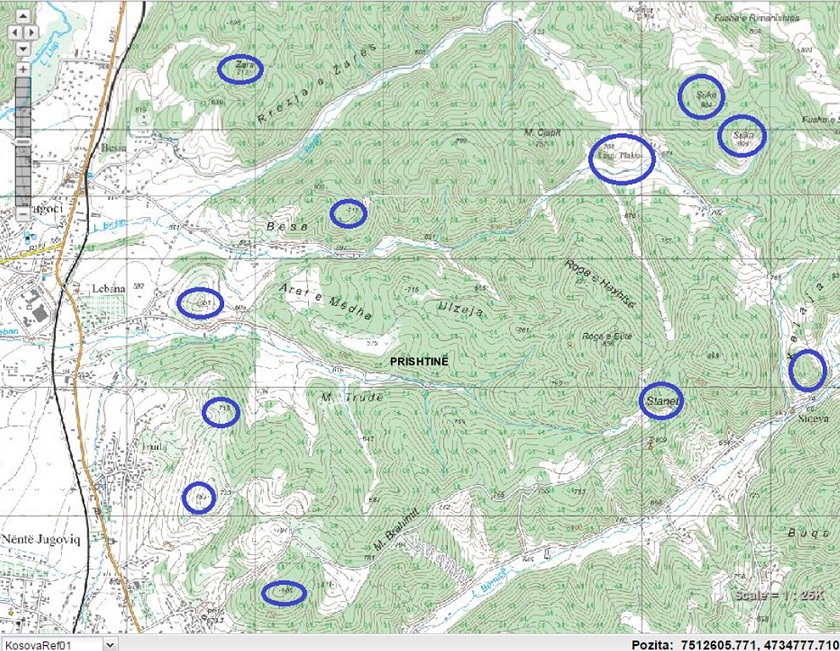
Watchtowers on the southwest side of Sicevo Castle
Opposite the Fortification at a distance of about 2 km is the Suka of Radashec-Grashticës, also known by the local population as: “Sultan Tepe”, east of the Suka in the village of Grashticë is the archaeological site “Arat e Rrafshit”, where cemeteries with urns from the Dardanian period have been discovered. Between the Siqeva fortification and to the north-west of the Suka of Radashec there are foundations of buildings and two churches.
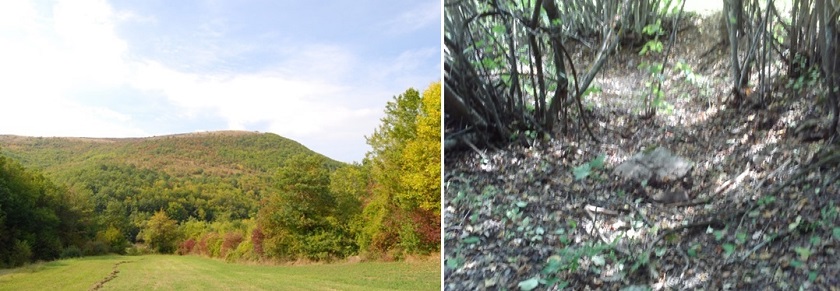
Suka and traces of the church foundation in the village of Radashec
Archaeological traces in the village of Rimanishte
On the north-eastern side in the village of Rimanishte, at a distance of about 2 km from the Siceva castle, two sukkahs, the archaeological site “Rogat e Prishtina” and two old churches were erected.
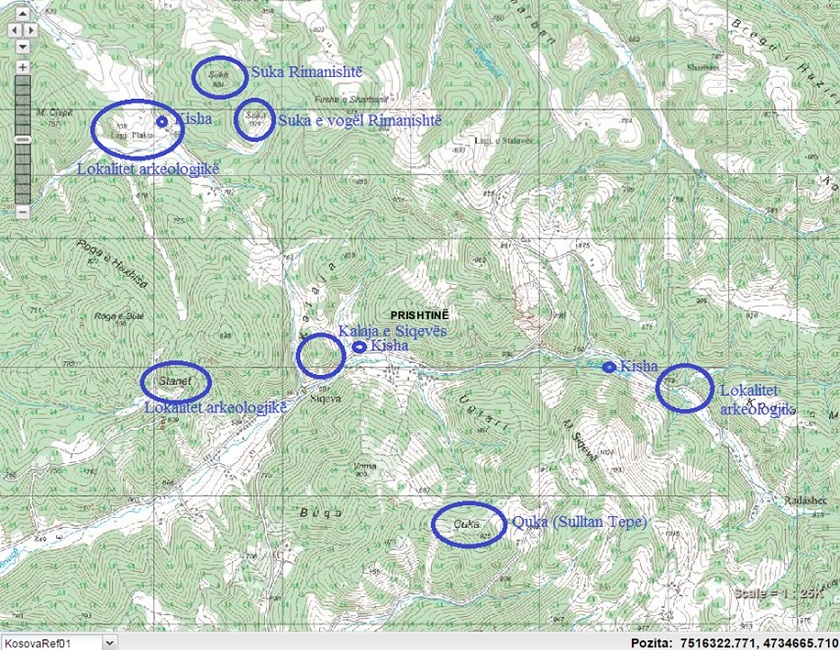
Siceva Castle and archaeological traces in the villages of Radashec and Rimanishte
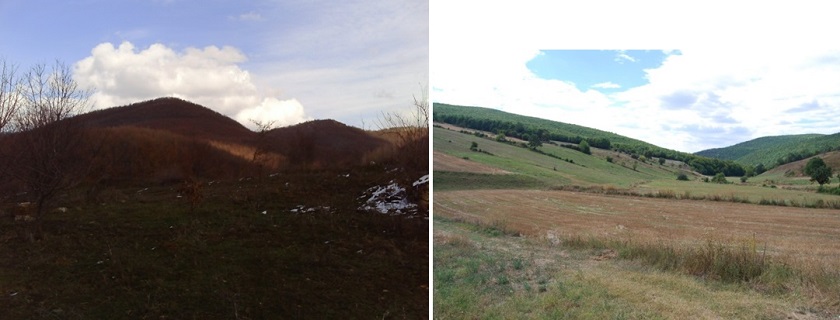
The Two Sukkahs and the Roga of Pristina in Rimanishte
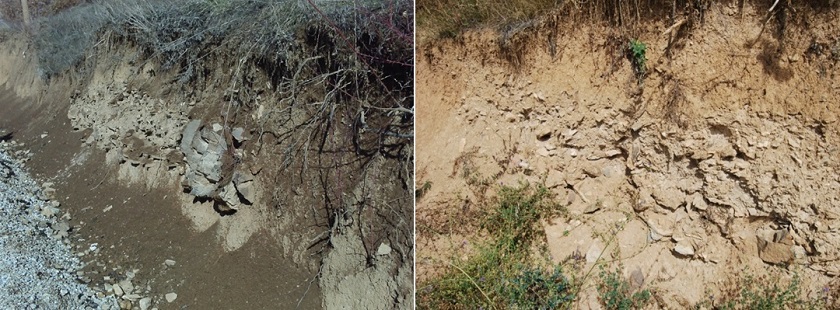
Traces of the settlement of Rogat e Prishtina in the village of Rimanishte
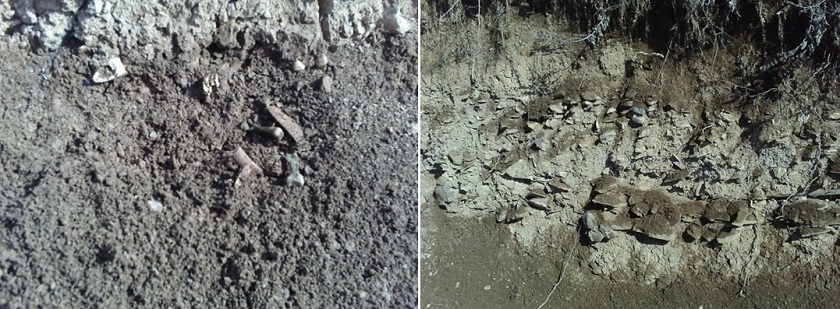
Cemetery and traces of settlement near the church in the village of Rimanishte
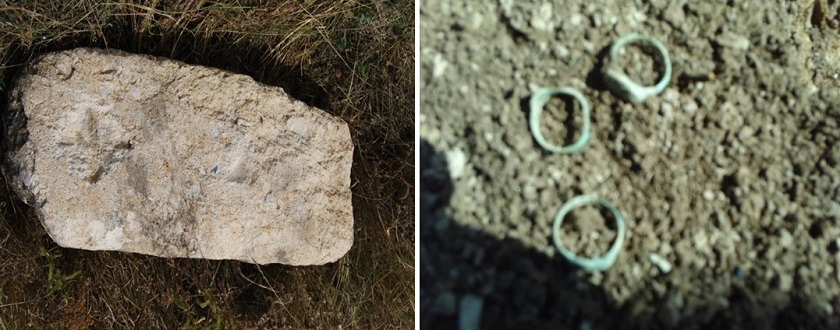
Stone with a cross and three rings found after the village road was widened at the site where the church and cemetery of Rimanisht were located .
On the northern side of this archaeological site at a distance of about 5 km is the Tenezhdollit Castle, also a well-researched and well-known archaeological site. Between the village of Rimanishte and the Tenezhdollit Castle is another Suka and from this Suka in the direction of the Llap River are two small observation fortifications.
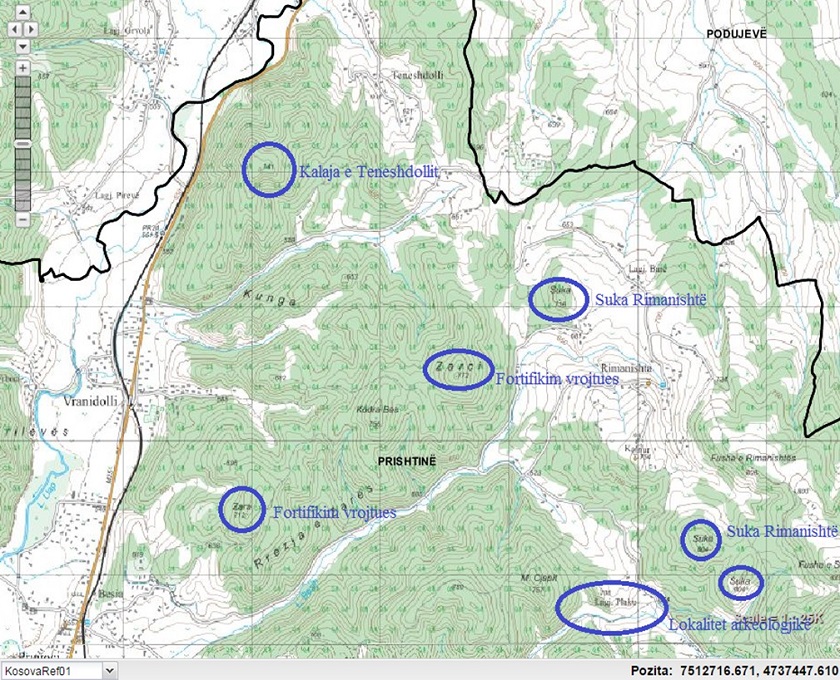
On the northern side, at a distance of about 5 km, lies the archaeological site “Nina Kola”, the old church and the fortification in the village of Sharban. On the south-western side of this fortification, the important ancient road Niš-Lezha passed, therefore this fortification and the other sites mentioned above that lie between the Kosovo Plain and the Llapi Plain and near the mines testify to a civilization and economic development of the Dardanian population.
THE CITY OF KASSOVA AND THE CREATION OF THE VILAYET OF KOSOVO
The issue of the name of the Vilayet of Kosovo has led many researchers to think that we are dealing with a geographical region that has Slavic etymology. The following topic will address the reasonable dilemmas of many researchers, who bring convincing evidence that the name of the Vilayet of osovo is the result of the great influence of Pan-Slavic politics in the Ottoman Empire itself.
The paper aims to shed light on the facts and arguments from the written sources of Albanian, Slavic, etc. authors, and to provide historical, cartographic and field data that prove that the name of the Vilayet of Kosovo was a historical-political name in order for the ancient and original name of the kingdom of Dardania, which approximately extended to the geographical areas of the Vilayet of Kosovo, to be replaced with the name Vilayet of Kosovo and later with the name Kosovo.
From numerous sources we can conclude that the current name of the state of Kosovo as an administrative and territorial unit should be understood as being late in history and dates from the second half of the 19th century, at the time when the Vilayet of Kosovo was created under the Ottoman Empire, which replaced the old name of the country, which today includes only part of the territory of Dardania.
The Vilayet of Kosovo covered a territory of approximately 30,000 km, while today Kosovo is recognized as a state with an area of 10,870 km.
Based on political circumstances and written sources, the name of the Vilayet of Kosovo was influenced by Russia and the Pan-Slavic policy that Russia implemented through the ambassador appointed in 1864 in Istanbul, Nikola Pavlović Ignatiev, who offered himself so much to the sultan that one day the Shah said: “I have no other true friend than the Russian ambassador” [1] .
At the same time, Russia appointed Ivan Stepanović Jastrebov to important diplomatic posts in Shkodra and Prizren [2] . In Sarajevo, Aleksandër Hilferding, one of the functionaries of the Slavic Benevolent Committee founded in 1856 in Moscow under the patronage of the Ministry of Internal Affairs and supported by the Orthodox Church, was appointed as a diplomat [3] .
Hilferding, although he was born in Warsaw, Poland, and had German or Jewish origins, was raised and educated in the spirit of Pan-Slavism and thus dedicated his entire activity to this policy . [4] This author put all his intellectual, scientific, etc. powers at the service of the deep Pan-Slavic policy, and was one of the six main ideologists of Pan-Slavism, along with Khomaykov, Danilevsky, Pogodin, Aksakovlev, and Lamanshin . [5]
The coordination of political and diplomatic activities between Ignatev, Hilferding, and the Russian diplomat Jastrebov, who operated in Albanian territories, inspired Serbian nationalism during the Eastern Crisis for the occupation of territories inhabited by the indigenous Albanian population.
The Pan-Slavic program drawn up by AS Khomaykov “On the Old and the New” , published in 1839, and then the project for the establishment of a Pan-Slavic empire drawn up by Nikolai Danilevski, which envisaged the proclamation of the Patriarch of Moscow as the person representing God on earth, were inspired by the Pan-Slavic ideas of Czartoryski and Franjo Zahu for the concentration of the Balkan Slavs in one empire . [6] Based on these projects and ideas, in 1844, Ilia Garashanin’s “Nacertanya” , the Greek “Megalo idea” by Jani Kola and the program of the Bulgarian “Otochenstvo” were compiled . [7]
Serbia included Kosovo in its national and propaganda plan after the approval of Garašanin’s “Nacertanje” project in 1844 [8] . Archival documents from this time show that Serbia, after Garašanin’s project, began to help the renovation of churches, monasteries and schools in Kosovo. In 1868, an educational council was formed to help Serbian schools and teachers in Albanian territories that were under the rule of the Ottoman Empire [9] .
Serbian secular schools in Kosovo, at that time, worked according to the curriculum of Serbian schools, using the same textbooks, organization, teaching methods and administration [10] . New schools were opened in Kosovo with teachers Nikola Mussolini, Milan Kovačević and Milan Popović. In these schools, students gained greater knowledge than in some schools in Serbia [11] .
In these circumstances, the Vilayet of Kosovo was formed in 1868 with its center in Prizren [12] . Kosovo as a geographical notion has its origins in the second half of the 19th century at the time of the creation of the Serbian myth about the battle near the city of Kassova in 1389, between the Ottomans and a coalition of the population and feudal lords of the region.
With the creation of the “myth of the Kosovo Plain” the Serbs came up with their claims for cultural dominance in the region at the time of the weakening of the Ottoman Empire [13] . In the 19th century, in addition to the name Kosovo, the term “Stara Serbia” (Old Serbia) began to be used both in official documents and in “scientific” literature, toponymic studies and maps by Slavic authors, making attempts to connect the origin of these names with the Slavic language and the Middle Ages.
This is also confirmed by Jevto Dedijer (1880-1918) in his book “Stara Serbija i Etnografska slika” published in 1912, where he writes that the name “Old Serbia” as a geographical notion has its origins in the 19th century, namely at the time of the creation of Serbian literature [14] . Spiridon Gopčević writes that, when it comes to “Stara Serbija” (Old Serbia) and the Pan-Slavic programs in the Balkans, then we should thank our Russian brothers [15] .
In the 19th century, based on the battle near the city of Kassova (Cassova), the entire region began to be called Kosovo, linking the name Kassova with some Slavic names Kosovo in the regions of some states, where Slavic influence previously existed.
In the Czech Republic, in the vicinity of Tabarsko, there is the village of Kosova Hora (Amschelberg). In Poland, east of the Haliç 53 km from Cologne, there is a place name Kossovë [16] . Klaiq writes that the name Kosovo in Latin written sources is found written from 1389 as Campus Turdurum and Campus Merularum, while in German written sources it was called Amselfeld (Ampschfeld), but it has not been proven that this name has been used by the people since ancient times and that it has Slavic origin [17] .
Today’s Kosovo in ancient Illyrian times was called the Kingdom of Dardania, in Roman times it was known as Campi Dardanici. During the time of Emperor Diocletian (284-305) the province of Dardania was created, which approximately extended to the geographical areas of the Vilayet of Kosovo [18] .
Many researchers of the name of today’s Kosovo believe that this name was formed by extending the Slavic name for the bird kos “mëllenjë” with the Slavic suffix “ova”, thinking that this bird was present around a swamp or lake in the Kosovo Plain. Archaeological discoveries in the village of Dardhishtë, in the upper reaches of the Sitnica River, refute all assumptions that there has been a lake since Neolithic times until now in the area between Lipjan and Vushtrri, which is popularly called the Kassovës Plain.
The suffix “ova” is also found in Latin, Turkish, and Bulgarian, so the Latins did not take it from the Slavs, e.g. Terranova, Padua, Genoa cannot have Slavic etymology.
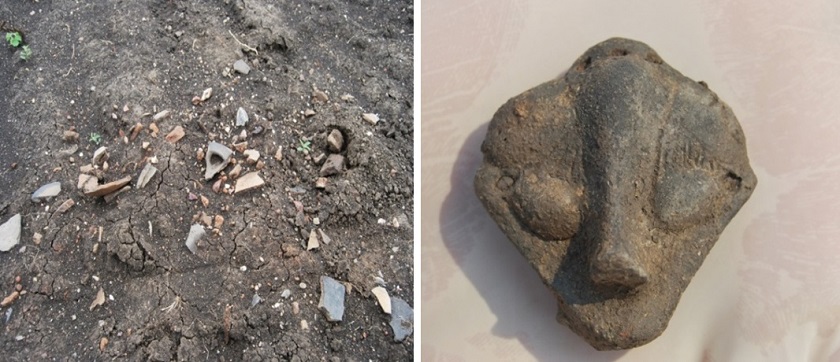
Fig 1-Neolithic settlement in the village of Dardhishte, Kastriot, Fig 2- Anthropomorphic figurine.
The author Vj. Klaiq in his book “Slike slavenske povjesti” published in Zagreb in 1903, although he describes the territory of the Vilayet of Kosovo according to the politics of the time, the highly developed Pan-Slavic political movement and numerous publications about the Serbian myth created for Kosovo, among other things, writes that in the Kosovo Plain and in other regions of the present-day Vilayet of Kosovo lived the ancestors of today’s Albanians with the old name Illyrian. The most famous Illyrian tribes of these parts were the Dardans and the Autoriats [19] .
Skender Gashi has also spent a long time discussing the name Kosovo, and he has addressed this issue in many scientific publications, including the article entitled: About the names Kosovo, Metohia and Dardania. Among other things, Skender Gashi writes that the name Dardania for Kosovo was also known to the Ragusan humanist Alovsius Cervinus Tubero, who in his work published in Frankfurt in 1603, when writing about the Battle of Kosovo, reports that Dardanians, Illyrians and Macedonians participated in that battle. In another Greek chronicle by the author Jeraks-i Logothetis, it is written that Akonts from Arvanitia (Albania), i.e. from the regions of Dardania (Kosovo), participated in the Battle of Kosovo. [20]
The oldest evidence for the name Kosovo that we know to this day comes from the biography of Stefan Lazar, translated in the 15th century from Greek to Slavic. V. Jagic mentions the name Kosovo twice [21]
Skender Gashi also writes that the word “Kos” in the Slavic language means the bird ” Merula “, the thrush bird and the white thrush ” Turdus Iliacus “, in this form it was also found on some of the maps of the 17th-18th centuries and translations into Italian, German and Greek languages, such as: Campus Merlinus ” Field of the Thrushes ” in (1775); Kassova oder Amse Feld ” Kassova or Field of the Thrushes ” (in 1793 and 1788); Kossypjopedion “Fusha e Mëllenjave” (1840) [22]
Taking these facts into account, Skender Gashi explains that we can claim that we are dealing with a Slavic translation of a Latin or Dardanian name when it is known that in the Roman period, in the anthroponymy of girls in the area of Dardania, the personal name Merula ( Mëllenjë ) is frequently attested and as further evidence that the Slavic word Kos for this bird has not entered the Albanian language. [23]
This author also believes that the name Kosovo may have named only a microregion between the present-day cities of Prishtina, Vushtrri and Podujeva. This name came from the name of the settlement called in 1455 Kosovci “inhabitants of the country of Kosovo ”. [24]
The Romanian historian Nicolae Denonsusn, in his book “Historia Dacia, Part 7-Ch.XLI.10.I. Elements of barbarian language” , writes about a castle Kasaera ( Caseera ) in the Rhodope Mountains, which was repaired in the time of Justinian. According to him, Casaria was also called the place where casul ( cheese ) was prepared or sold. In the old Macedonian language Casari (earrings ), in the Latin language casearia ( Officina ), claiming that in the region of present-day Romania a number of places bear the name Casarie [25] .
Denonsusn also provides data that, according to Herodotus, the ancient metallurgical terminology is of barbarian origin, Chassiteros, white lead, Lat. stannum, cassiterus, Rom Cositoriu [26] . From what was said above, we believe that the words that have the base Kass and Cass should not necessarily be seen as having Slavic origins, but we should leave room to think that they could also be pre-Roman.
Kosovo as a geographical notion entered history also because near the place where the battle of 1389 took place, at the foot of the Galab Mountains, in the valley of the Alb River ( Lab, Llab ), was the metallurgical mining town of Kassova. According to the French researcher, Philippe Mezier, the battle of 1389 took place in Albany.
Since the battle took place in the field of the city of Kassova, gradually in the following centuries and especially in the 19th century, the field in the vicinity of Pristina began to be called the Field of Kassova. Since the city of Kassova lay in the mountains between Pristina and Podujevo, the plain of the Llab River also began to be called “Little Kassova” .
According to 18th-century Italian sources, this field was called “Pianure di Cassovia” and that it was in this field that Sultan Murad was killed by an Albanian [27] .
There is information from many scholars about the location of the medieval city of CASCOVA [28] . Some believe that the name Kosovo has Slavic etymology, where the word “Kos” in Serbian means “thrush”. Branislav Nushiqi believes that the name Kosovo comes from the word kosit , because according to him the Kosovo plain was truly “the meadow of God” [29] .
In Kosovo there are several settlements registered with this name, which we also find in the Ottoman registers of the 15th century. For a village named Kosovc, Ilaz Rexha thinks that it was the katun Kosovicë in the Gallap highlands. The name Kosovicë is borne by a present-day neighborhood of the village of Strezofc.
Some scholars think that this locality should be sought in the vicinity of Ferizaj, in the village of Kosinë or in Varosh. Martin Segoni from Novobërda, who from 1474 lived in Padua, Italy, and was bishop in Ulcinj, writing about Artana (Novobërda), mentions a valley-place named Kosovicë, where on one side of this valley lies Prishtina, and on the other side Novobërda [30] .
Based on the data of Segoni, who knew the terrain well, we can affirm that this is the course of the present-day Prishtina River, because this river comes from the Gallapi Mountains and is considered a branch of the Llab River. Also, since according to Segoni the city of Kosovo was in the course of the Llab River, I think that this valley could have been the valley of the villages of Grashticë and Mramuer, where from this valley on one side remains Prishtina, and on the other side Novobërda.
This position is also confirmed by the name of the village of Kosino, which is mentioned together with the present-day village of Busi, today the neighborhood of Mramuer, as well as the village of Xhylkova, today Kilkov between the villages of Marec and Mramuer.
Regarding the Ottoman conquest of Kosovo, contemporary records from the 15th century Turkish writer Mehmet Neshri show that Ali Pasha, the eldest son of Candrali Kara Hali (Hajredin Pasha), after conquering Gerinxhe ( Gjezixhe ), sent men to the ruler of Kosovo and demanded that he submit to him.
The ruler of Kosovo ignored the pasha’s words and replied: “We will not rebel against our prince and we will not obey the Ottomans”. Ali Pasha sent Pazarlu Dogan Beg to burn, plunder, take women and boys captive and destroy Kosovo. Pazarlu Dogan Beg attacked and destroyed the Kosovo fortress, took women and boys captive.
The infidels came and begged the pasha to release the prisoners taken in the war in exchange for the surrender of the Kosovo fortress. The Pasha took the captives captured by the Ottoman soldiers, handed them over to the infidels, and took the fortress of Kosovo. After settling in the fortress, he ordered the captives to be returned to the Ottomans.
The Ottomans took the captives back from the hands of the infidels. The Pasha, who had captured the fortress of Kosovo, moved from there and went towards Tërnovo, the capital of Shishman [31] . From this information we understand that at that time there was a fortress named Kasova in the territory of present-day Kosovo.
The written sources regarding the above-mentioned names, which begin with the syllable “KOS”, are late, published in the 19th century and reprinted during the 20th century. Furthermore, the Ragusan humanist, Alovsius Cervinus Tubero, also mentions Cassova in his work published in 1603, where, writing about the Battle of Cassova, he shows that Dardanians, Illyrians and Macedonians participated in that battle.
This is also stated in a 16th century chronicle by Jerax, the great Logothete of the Patriarchate of Istanbul, who describes that archons from Arvanitia (Albania) and from the regions called Dardania participated in that battle [32] . A source from the 15th century shows that merchants going from Pristina to Vushtrri had to pass through forests or bushes, i.e. through the “Baschi di Cassova” [33] .
From this information we understand that we are indeed dealing with the name of a castle (city) that had under its own legal and administrative control a certain region in the mountains surrounding Pristina, Vushtrri and the Kosovo plain. Westerners considered this region as rich land, so I think that Kassova as well as Artana (Nyenbergu-Novamanta-Novobërda), being castles ( cities ) close to each other, had their own mining laws that administered separate territories in the geographical space of Dardania.
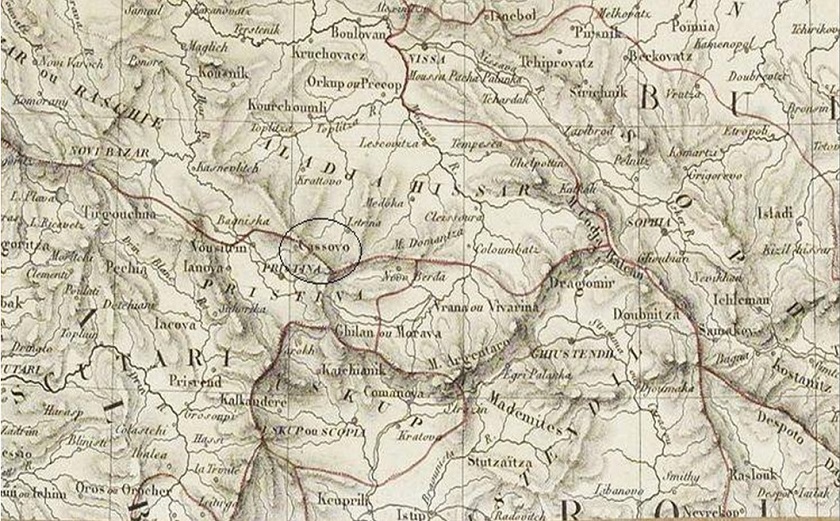
Fig. 3- Map of European Turkey, drawn by Pierre Lapie and published in Paris in 1827
According to the author Stojan Novakovic, the city of Kassova was imaginary, but even if it existed, it must have been Janjeva. This author denied the statement of the Turkish geographer Haxhi Kallfa, who in the 17th century described the city of Kassova as a kadillek [34] . According to Haxhi Kallfa, Kosovo was also called Pallashima [35] . Georg von Hahn proposed that the city of Kosovo should be sought an hour’s drive south of Janjeva [36] .
The Archbishop of the Diocese of Skopje, Don Mihal Suma, wrote in 1632 that the settlement of Kosovo belonged to the parish of Janjeva [37] . In the writings of the 18th century, when writing about the Battle of Kosovo in the microregion of Kosovo, Zvečani, Gračanica, Fusha e Kosova, Prishtina, Lipiani, etc. are also mentioned. [38]
The Kosovo Plain, surrounded by a series of castles such as: Veletini, Gadimja, Surqina, Zhitia, Kaçanik, Burrniku, Petriqi, Jezerci, Suka in Kreshtë të vokël near Koshara, Halilaqi, Bardh i Madh, the city castle in Vushtrri, Dubovci, Strofci, Kolla, Zveqani, the city of Trepça (Mazhiq – Rashan – Smrekonicë), Banja, Barileva, Sićeva, Teneqdolli, Grashtica, etc., I think provide sufficient elements to understand that the Kosovo Plain is not a field of blackbirds, as has been written in Slavic and foreign literature on its influence, but is a field of castles, the field of a civilization long before the arrival of the Slavs in these areas.
Likewise, the Llab plain in the municipality of Podujevo is called “Little Kosovo” by the indigenous Albanian population only because the city of Kassova was located between Pristina and Podujevo, and the entire Llab river plain is surrounded by a series of castles and towns rich in well-known mines, such as Bellasica and Bervenik, then the castles of Braine, Balloc, Tenezhdoll, Lupqi, Koliqi, Glamnik, Sharban, etc.
Kosovica, as a neighborhood of Strezoci mentioned above, is bordered by a series of castles around, such as: Novobërda, Kulina e Dardana, Kulina e Krilevës, Grexhenik, Busovata, Kremenata, but it could also be Strezoci itself since it has been proven as an important archaeological site, etc., which testify to a region of castles.
We also encounter such a characteristic in the region of Ferizaj, Vushtrri, Mitrovica, Lipjan and other municipalities in Kosovo, in which a series of castles have been identified. In addition to the construction of castles on the hills and mountains surrounding the Kosovo plain, there were castles on the Kosovo plain itself, such as: Ulpiana City (Justiniana secunda), Lipjan i vjetër (Justiniana Poli), Vushtrri, Prishtina, Surqina, then the old foundations in Pestovo (Municipality of Vushtrri), etc., which suggest that they had large properties in the Kosovo plain.
Avni Këpuska in his book “The Essence of the Territory and Indigenous Ethnic Borders of Kosovo” writes that we encounter Kosovo in different written variants, but the most common are: Kasava, Kasova, Kosuva and Kosovo. If we consider the earliest forms of the name Kasava or Kasova, the segmentation of their composition gives kas-a and va, both geographical terms.
The first geographical interpretation of the name “Kosova” was made by academic Josip Rogliq, who says that they are terminology of the Illyrian language. According to Rogliq’s interpretation and Muharrem Carrabreg’s study “The Key to the Illyrian Geographical Name System” , the term Kas-a contains the meaning of a hill, mountain or rock. In Dalmatia there are two characteristic areas called Kosovo, for which Pop Duklanini says that their etymology has its roots since Illyrian times. Based on the geographical term Kas are also the names: Cassel, Castel, Cashtel, Castelli [39] .
Among the indigenous Albanian population in the Illyrian Peninsula, the term with the Kas base is also found for tribal, family and place names, such as: the Kastrat clan, the Kasa family in Mitrovica, Kastriot, Kasaj, the surname Kosova today in Prizren and Prishtina, etc. Among the Albanian population of Kosovo until the middle of the 20th century, the word Kosova was pronounced as Kassova, which proves that the name Kosova and Metohija are very recent.
In the village of Maxherë in the municipality of Preševo, an old neighborhood of the village is still called Kassovtë [40] . Based on written sources, it has been proven that the name Kastrat is related to the Latin word “Castrum” . Also, based on written documents about Dubrovnik, it is noted that the aristocratic family “Casica” (Kasica), who lived in that city, was originally from Artana (Novamonte-Novobërda) [41] . These data are sufficient facts to understand that, after the destruction of the Kassova castle, many families who moved to other parts of the Peninsula have preserved the surname Kassova.
One of the well-known Albanian historians, Skënder Riza, also thinks that the word Kosovo must be an ancient word, perhaps Illyrian or Thracian, because the name Kosovo is found in many parts of the Balkan Peninsula: in Bosnia there is a place called Fushë Kosovë, in the district of Dibra there is the village of Kosovë, in Dalmatia to the south-east of the Knin plain, there is a plain called Kosovo through which the Kosovnica river flows. To the south-east of Elbasan there is the village of Kosovë, and also in the vicinity of Gjirokastra there is the village of Kosovica, etc. [42]
The data mentioned above prove that the etymology of the name Kosovo should be sought from the Latin word for castle Casstel = Castle and the Turkish suffix “Ova” = “Field” which means the field of castles. From this version the name for Presheva also came, as Presh and the Turkish suffix “Ova” which means “Field of leek”, then Gjakova (Jakova) which means “Field of Jakut” etc.
It is very likely that the word Castle is pre-Roman and that the Latin word Casstel has its source in the Pelasgian-Illyrian word Castle (you have surrounded) the settlement with walls. From this meaning it is observed that the Kosovo Field was also surrounded (encircled) by a number of castles, therefore I think it should be connected by the ancient Illyrian word: You have surrounded the settlement with walls (encircled settlement) = Castle = Casstel = Cassova = Cascova = Cassoua = Kassova = Field of Castles. Based on the sources mentioned above, I consider that our researchers should leave aside the Slavic writings and those of other authors regarding the naming of this locality in the Middle Ages, providing new scientific versions.
Furthermore, the city of Kassova should be sought on the north-eastern side of the present-day city of Pristina. The famous historian Skënder Riza, thinks that this city is Bellasica in the upper reaches of the Llab River. In addition to Kassova, on the Llab River he also mentions two important ore towns, Belairi and Koburniku [43] .
From this source I think that the town of Belairi was Belasica, while Kassova was another town. Belasica must be the Belas castle rebuilt at the time of Emperor Justinian, which is mentioned by Procopius of Caesarea, which is located near the villages of Zhiti and Murgull in the municipality of Podujeva.
In the territory of these villages there are metal slag and traces of old civilization. This locality is about 70 km away from Pristina. Based on the data so far on Kassova as a medieval settlement-city, I think that this locality should be sought closer to the place where the Battle of Kosovo took place and the name of the locality Kassova has to do with a Dardanian castle, but adapted into the Slavic language to later create the myth about Kosovo.
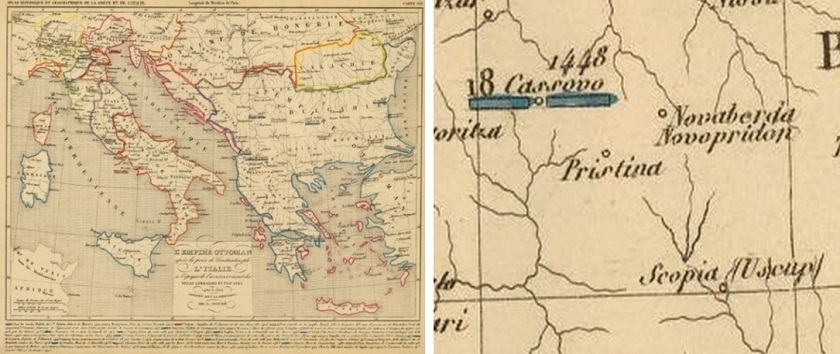
Fig. 4 and 5- The map is a collection of David Rumsev, author, Houze Antoine Plilippe, published Chez P.Dumenil, Paris, in 1844, with the title L’Empire Ottoman, L’ Italie. [44]
It is very likely that the name of the castles CASTELONA and KASTELION [45] described in the list of reconstructions of castles in Dardania by Procopius of Caesarea, has been distorted into the variant CASSOVA-CASOVA-KOSOVO. Therefore, this issue should be dealt with by our historical and linguistic researchers.
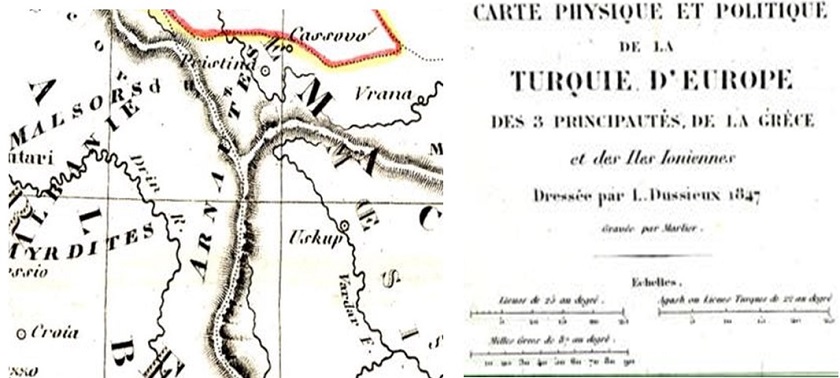
Fig. 6 and 7- Map of the Ottoman Empire from 1847 with the name of the city of Cassovo northeast of Pristina
After the Battle of the Maritsa River (1371), the Ottomans continued their conquests. In 1375, they captured the city of Niš and offered themselves to the territories controlled by the local princes , who, seeing the danger, organized an alliance in which, in addition to the Albanians from Kosovo, Albanian princes from other Albanian territories also participated.
The battle took place at Pločnik (1386). After this battle, Sultan Murad I brought reinforcements from Asia Minor, but also from the Balkan Peninsula, where Serbian vassals, such as Konstantin Dejanović , King Marko , as well as some Albanians from Epirus and Thessaly, also participated on the sultan’s side . The battle took place in Kosovo [46] .
Kosovo is mentioned as an old mining locality in 1423, and had its own codified law on 22 March 1488. This law is divided into 16 paragraphs and regulated all economic, political and social issues of the country. Cassova (Kosova) is also marked as a settlement on maps of Europe from the end of the 15th century.
Also in the “Tabela Moderna, Polonia, Ungarie….” of Bontentance in 1507, Kasova (Cascova) is marked as a locality. Also, Gasteldi in 1548, in Venice published “Tavole nouva di schiavonia” , where he presents Kasova as a locality. From 1570-1580, Kosovo as a settlement is mentioned in three fermanas related to tax collection, and in four fermanas from 1579/80, 1588, 1595 related to counterfeiting of coins and riots [47] .
In the mineral law of the reign of Sulejman Kanuni (the Lawgiver), Kosovo is included among the main minerals of the Ottoman Empire. In 1565, Kosovo was looking for experts for mining, where, according to the 1574 firman, the rent for the Kosovo ore was 300,000 akçe.
According to Haxhi Kallfë in 1650, Kosovo was located between Pristina and Kusumlija and was 19 days’ journey from Istanbul. A merchant from Dubrovnik mentions Kosovo in 1660 and 1661, as a location from which the Dubrovnik people transported wool. Kosovo is last mentioned in 1689, when it fell into the hands of the Austrians . [48]
From this information about the Kassovo castle, I think that this castle during the Middle Ages was a continuation of civilization and the center of civic life for the Pristina and Podujevo region after the destruction of Vendenis in late antiquity.
According to the notes of an English author cited by S. Rizaj, Kassova was located 7 miles north-east of Pristina. In the vicinity of this city the Battle of Kosovo took place in which the Turks under the command of Sultan Murat I, on 15 June 1389, won against the Balkan coalition . [49]
Based on the notes of the English author and the field data mentioned above, the location of the city of Kassova was north-east of Pristina and could be the localities Grashticë-Mramur which corresponds to the mentioned distance of 7 miles and is also located in the north-eastern part of Pristina. In favor of this position, we can prove that in the village of Grashticë we find traces of the castle and the settlement as well as the toponyms “lugu i gjjetetit”, “lugu i kishës” and metal slags that remained from the mineral foundries, etc. Also, in the village of Mramur we find the toponyms “Lugu i Manastirit” and we find traces of the remains of the foundations of the buildings.
The existence of this city is also evidenced by the preservation of the surname Kosovo by some residents of Prishtina and Prizren to this day. The hill called Suka that separates the borders of the villages of Radashec and Grashticë is popularly known as “Sultan tepe”. “The Sultan’s Hill”, and a hill in this locality is still called Kroi i nerzit today, which leads us to think that it was precisely on this hill that Sultan Murat I himself was stationed, who observed the situation in the Battle of Kosovo.
It is important to note that from this hill you can see the place where the Battle of Kosovo is said to have taken place. Not far from the Suka of Radashec-Grashticë is the Siqeva Castle, whose walls and buildings can be seen. Also, on the Kuna hill, which is located near the Siqeva Castle, are the foundations of a church.
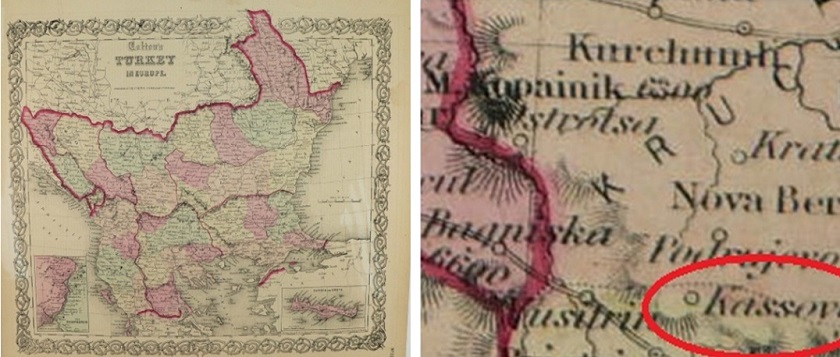
Fig. 8 and 9- Map of the Ottoman Empire from 1854 with the name of the city of Kassova northeast of Pristina
In both of these locations, floor tiles with decorative ornaments from the Roman period have been found. In addition to the traces northeast of Pristina, there is also the Tenezhdollit castle, which has been proven to have had an ancient civilization.
Remains of the old civilization have also been found in the villages of Rimanishte, Sharban and Koliq, where there are traces of settlement and cult objects. In the territory between Pristina and Podujevo, another ancient city known as Gllamnik is also known, which has been proven by numerous finds of early traces of civilization.
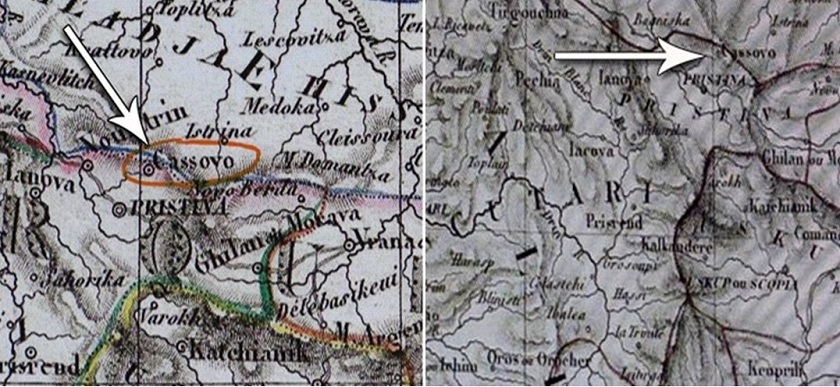
The town of Kassova, northeast of Pristina, shown on maps
In conclusion, we can conclude that the city of Kassova should be sought in the territory mentioned above, that is, northeast of Pristina, and that the name Kosovo comes from the name of the city of Kassova as a result of the Pan-Slavic political influence and the myth created in the 19th century about the Battle of Kosovo. The name Kosovo cannot replace the name of the Kingdom of Dardania, therefore the new state of Kosovo should be called Dardania, in today’s historical-current dispute over the all-encompassing term Albania.
Literature:
[1] Sylejman Kylçe, “ Albania and Ottoman history”, Tirana, 2004
[2] Vladimir Bovan, “ Jastrebov u Prizrenu”, “Jedinstvo” , Prishtina, 1983, pp. 34 -77
[3] Mark Krasniqi, “Traces and Traces”,Pristina, 1979
[4] Hakif Bajrami, “ How Serbia occupied Kosovo in 1912”, Prishtina, 2003
[5] Jagosh K. Gjillas, “Serbian Schools in Kosovo from 1856-1912”, Prishtina, 1969
[6]Shukri Rahimi, “ Vilayet of Kosovo”, Pristina, 1969
[7]Stefan Karastefanov, “ Kosovo a geopolitical analysis”, Skopje, 2007
[8]Jevto Dedijer, ” Stara Serbia geografska i ethnografska slika”, Sarajevo, 1912
[9]Milan Kasumovi?, ” Stara Serbia i Makedonija”, od Spiridona Gopqeviqa, preveo, Belgrade, 1890
[10]Year Klai?, ” Slike iz Slavenske Povjesti”, Zagreb, 1903
[11]Skender Gashi, “ Interview”, Association for the Development of the Gala “ Galabri ”, Pristina
[12]Nicolae Denonsusn, ” Dacian History”, part 7-ch.XlI.10.I. “ Elements of Barbarians
Language”.
[13] Filippo Angeliko Becchetti, Tomo Primo, “Istoria Degliultimi Quattro Secoli DELLA
CHURCH ”,
Rome, 1788,
[14] Skender Rizaj, Kosovo Archives, “Yearbook XXIX-XXX”,Prishtina, 2003
[15] Branislav Nusi?, “Kosovo opis zemlje i naroda, izdanje sa spikama”,“I sveska”,Novi Sad, 1902
[16] Skender Rizaj, “Kosovo during the XV, XVI and XVII centuries” Prishtina, 1982
[17] Mihailo Dini?, “Za istoriju rudarstva u medniki vekovnoj Serbia i Bosnia I“, Belgrade, 1955
[18] Kristo Frashëri, “Who is Musa Arbanasi in the Battle of Kosovo in 1389?”, Tirana, 2005
[19] Ottoman Sources,“The Albanian-Turkish War in the 15th Century”,translated by Selami Pulaha,
Tirana 1968
[20] Love. Stojanovi?, “Stari serbski radovi i ljetopisi”,Belgrade, 1883, p. 24
[21] Stojan Novakovic, Hadzi Kalfa ili Catip Celebija Turkish geographer XVII century, “Spomenik”
XVIII, SKA,
Belgrade, 1892
[22] Anastasje Uro?evi?, “Varošica na Kosovu”,“Glasnik Srpskog Nau?nog Društva”,XV-
XVI, Belgrade, 1936
[23] Jovan Radoni?, “Rimska curija i juznoslovenske zemlje“, Belgrade, SANU, 1950
[24] Avni K Këpuska, “The Essence of the Territory and Indigenous Ethnic Borders of Kosovo”,Prishtina,
2003
[25] Illyrians and Illyria in ancient authors, “Rilindja”,Prishtina 1979
Photos: taken by the author

