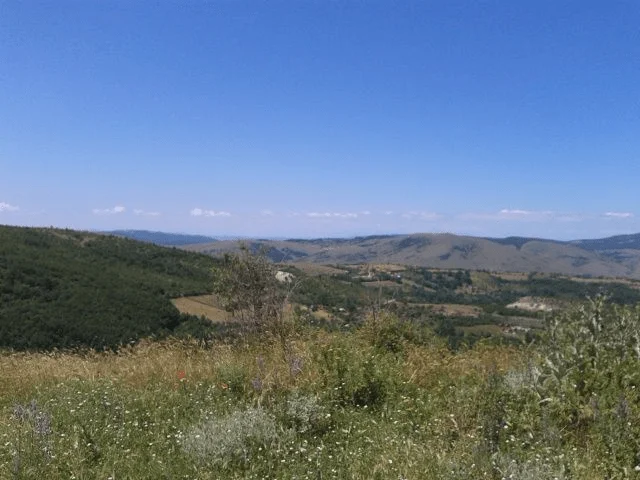

by Enver Robelli
Summary
In the early 15th century, Novobërda (or Artana) in Kosovo, known in historical documents as Neuenberg, was a thriving city with 8,000–10,000 residents—half the size of Vienna and comparable to major Holy Roman Empire cities. Renowned for its silver and gold, it attracted miners, craftsmen, and investors from across Europe, including Saxons, Dubrovnik merchants, and Greek-Byzantine traders. The city’s wealth drew Ottoman attention, leading to its conquest by 1455. Ottoman rule transformed Novobërda’s social and economic structure, integrating migrants from Anatolia and the Balkans, while silver flowed to Istanbul. Once a prosperous mining hub, the city gradually lost its medieval prominence and became largely anonymous.
In the early 15th century, the Kosovar city of Novobërda—also known as Artana—stood as one of the most remarkable urban centers in the central Balkans.
Known in historical documents by its Germanic name Neuenberg, it was the only settlement in the region with a German toponym. At its peak, Novobërda had between 8,000 and 10,000 residents, making it roughly half the size of Vienna and comparable to important cities of the Holy Roman Empire, according to historian Oliver Jens Schmitt, writing in the Austrian newspaper Standard.
Novobërda was famed for its wealth and mineral resources. Travelers from Burgundy reported that Serbian despots extracted gold and silver from the city in amounts comparable to the Venetian Republic’s overseas revenues—up to 200,000 ducats. Bulgarian historian Konstantin Filozofi, in a laudatory biography of Despot Stefan Lazarević, described it as a “true city of silver and gold,” while Byzantine contemporaries spoke of mountains of precious metals. Craftsmen and miners came from across Europe, including Saxons and German miners from Upper Hungary (modern-day Slovakia).
Investment capital came from wealthy traders from Dubrovnik, who established a branch in Novobërda. The Caboga (Kabužić) family exported over 3,280 kilograms of silver between 1426 and 1432, with transport handled by Vlach merchants. Catholic miners and traders were served by priests from northern Albania, while Greek-Byzantine businessmen from the southern Balkans also played a key role in the city’s economy.
Novobërda’s prosperity drew Ottoman raids, as caravans loaded with precious metals made the city a prime target. Initially, the city resisted, but by 1441 it was forced to surrender to Ottoman commander Shihabedin, likely a Serbian convert to Islam. By 1455, the city fell completely. The sultan ordered executions of nobles, the conscription of 320 boys into the Janissary corps, and the distribution of roughly 700 girls as war captives.
Schmitt notes that Ottoman rule transformed the city’s social fabric: initially a fully Christian settlement, it became part of a Muslim-administered empire, attracting migrants from across Anatolia, the Balkans, and northern regions such as Belgrade and Hungary. Silver flowed to Istanbul, and Novobërda was integrated into the Ottoman system of governance, migration, and economy.
With Ottoman control, the era of economic flourishing gradually ended. Novobërda, once a wealthy, multiethnic mining hub, became an anonymous city, its medieval prominence fading into history.
Source
https://www.derstandard.at/story/3000000307012/das-klondike-des-balkans?f

