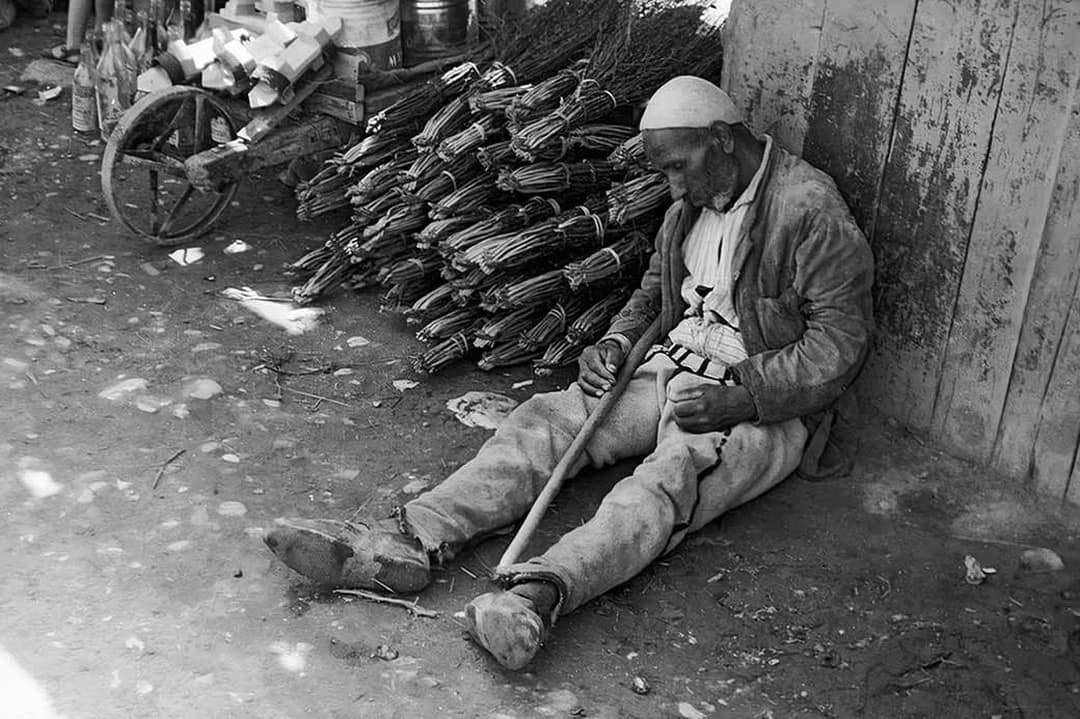

Photo: Extreme poverty in Kosovo, in 1968, part of a Serbian government agenda.
How Belgrade’s Policies Contributed to Poverty Among Kosovo Albanians and Its Long-Term Impact
The province of Kosovo, with a predominantly ethnic Albanian population, has experienced entrenched poverty and structural inequality that stem in part from deliberate political and economic policies during the late Yugoslav period and the 1990s under Serbian rule. While multiple factors shaped Kosovo’s underdevelopment, historical evidence shows that discriminatory measures from Belgrade played a significant role in marginalizing Albanians economically and socially.

Extreme poverty in 1946
Historical Economic Marginalization and Structural Disadvantage
Kosovo was among the poorest regions in the former Socialist Federal Republic of Yugoslavia. Throughout the post-World War II period, economic disparity between Kosovo and other republics widened despite some investment. Analyses show that Kosovo’s Gross Material Product per capita fell relative to the Yugoslav average over decades, and unemployment rates soared, contributing to deepening poverty. Many Albanians emigrated in search of work, and those who remained faced structural economic hardship.
The economic stagnation was compounded by wider austerity measures and unequal distribution of investment within Yugoslavia. Kosovo’s peripheral location and limited industrial base meant that it remained underdeveloped compared to republics such as Slovenia or Croatia.

Poverty in Peja, 1967.
Discrimination in Employment and Public Sector Exclusion
In the late 1980s and early 1990s, following the rise of Serbian nationalist politics under Slobodan Milošević, Belgrade systematically reduced Kosovo’s autonomy and targeted Albanian professionals and civil servants for dismissal. Through new laws and administrative changes, ethnic Albanians were removed from government positions, educational roles, and public enterprises. Tens of thousands of Albanians lost access to formal employment, disrupting household incomes and removing economic agency.
This policy of exclusion also extended to education and healthcare. Albanian teachers, professors, and healthcare workers were dismissed or replaced, eroding local capacity and forcing many Albanians into informal work or self-organised services.
Such marginalization disproportionately affected youth and families, contributing to poverty, reduced human capital development, and weakened economic prospects.

VIDEO: https://www.facebook.com/reel/986623928985427
Kosovo in 1993: Serbian repression, poverty, unemployment. A report from TV France 3
Population Dynamics and Colonisation Strategies
Beyond dismissal from public employment, Belgrade pursued policies aimed at demographic engineering. Plans and programs were drawn up to encourage settlement of Serbs and Montenegrins in Kosovo while reducing Albanian influence in economic and political spheres. These strategies included targeted investment incentives for Serb settlers and the establishment of infrastructure to support non-Albanian populations, further altering local economic dynamics.
Although these plans were part of broader nationalist agendas, they reinforced economic inequality, suppressing the development of Albanian-owned businesses and limiting access to critical resources.
War, Destruction, and Lingering Economic Hardship
The 1998–1999 Kosovo conflict exacerbated existing economic vulnerabilities. Warfare destroyed infrastructure, homes, and livelihoods; nearly one million people were displaced. When many Albanians returned after the conflict, they encountered ruined infrastructure and insufficient economic opportunities.
Though Kosovo has experienced economic growth since the war, poverty rates remain high. Around 30 % of the population lives below the poverty line, and youth unemployment continues to be a serious social issue.

KOSOVO, 1990: A dire and underdeveloped state of Kosovo during Yugoslav rule. Mud and poverty in every corner of Kosovo. Yugoslavia deliberately did not invest in Kosovo, because Kosovo was overwhelmingly Albanian, while Yugoslavia exploited Kosovo’s resources to the maximum.
Video: https://www.facebook.com/reel/192555122693172/?s=single_unit
Long-Term Impact and Generational Consequences
The combined impact of decades of discrimination, exclusion from formal employment, population displacement, and post-war reconstruction challenges has affected generations of Kosovo Albanians. High unemployment, limited access to quality education, and enduring social inequality have contributed to:
- Persistent poverty, with many households dependent on informal sector work.
- Youth migration and brain drain, as young Kosovar Albanians seek opportunities abroad.
- Psychosocial stress and fractured community structures, stemming from displacement and economic instability.
These factors have had lasting effects on family stability, educational attainment, and economic mobility, making poverty not just an economic condition but a multi-generational challenge rooted in a history of political marginalisation.

Poverty in Peja in 1965.

Kosovo in 1988: a region struck with poverty.
Video: https://www.youtube.com/watch?v=ov3JRKLlogw
Conclusion
While poverty in Kosovo has complex causes — including war, international intervention, and global economic pressures — there is clear evidence that policies enacted by Belgrade during the late Yugoslav and 1990s periods systematically disadvantaged ethnic Albanians. Exclusion from employment, deliberate administrative restructuring, discriminatory investment strategies, and conflict-related disruption combined to diminish economic opportunities and deepen inequality. The results persist today in high unemployment, continued poverty, and generational economic hardship.
Sources
Human Rights Watch. Under Orders: War Crimes in Kosovo. New York: Human Rights Watch, 2001. https://www.hrw.org/report/2001/10/26/under-orders/war-crimes-kosovo.
Independent International Commission on Kosovo. The Kosovo Report: Conflict, International Response, Lessons Learned. Oxford: Oxford University Press, 2000.
Malcolm, Noel. Kosovo: A Short History. New York: New York University Press, 1998.
Sida (Swedish International Development Cooperation Agency). “Kosovo.” Last modified 2023. https://www.sida.se/sida-i-varlden/lander-och-regioner/kosovo.
World Bank. Kosovo Poverty Assessment. Washington, DC: World Bank, various years. https://www.worldbank.org/en/country/kosovo.
Judah, Tim. Kosovo: War and Revenge. New Haven: Yale University Press, 2000.
BalkanAcademia. “The History of Serbia’s Anti-Albanian Policies.” BalkanAcademia.com, November 5, 2023. https://balkanacademia.com/2023/11/05/the-history-of-serbias-anti-albanian-policies/

