
Abstract
This overview traces approximately 1,800 years of references to Arbër/Arbanon, culminating in the formation of the Principality of Arbanon in 1190. Drawing on classical, Byzantine, and medieval sources—including Hecataeus, Polybius, Ptolemy, Procopius, and later Ragusan annals—the text highlights linguistic, epigraphic, and archaeological evidence supporting the continuity of the Albanian ethnonym. It discusses historiographical distortions, Byzantine orthographic transformations, and debates over Caucasian versus Balkan Albania. The establishment of the Principality of Arbanon under Progon is presented as the first documented Albanian medieval state, while the later shift from Arbër to Shqiptar reflects broader cultural and religious transformations in the early modern period.
For much of the twentieth century, Albanians were limited in what could be published about their own history.
Both the diaspora and the homeland experienced post–World War II regimes and, after the 1960s, the near-total isolation of Albanology. With the restoration of freedom of information, the Albanian question—and its uninterrupted geographic and ethnographic continuity—re-emerged for broader scholarly discussion.
In 2020, Aurel Plasari and the Akademia e Studimeve Shqiptare revisited the historical continuity of Arbëria. Several key references outline the early attestations of the ethnonym and territory.
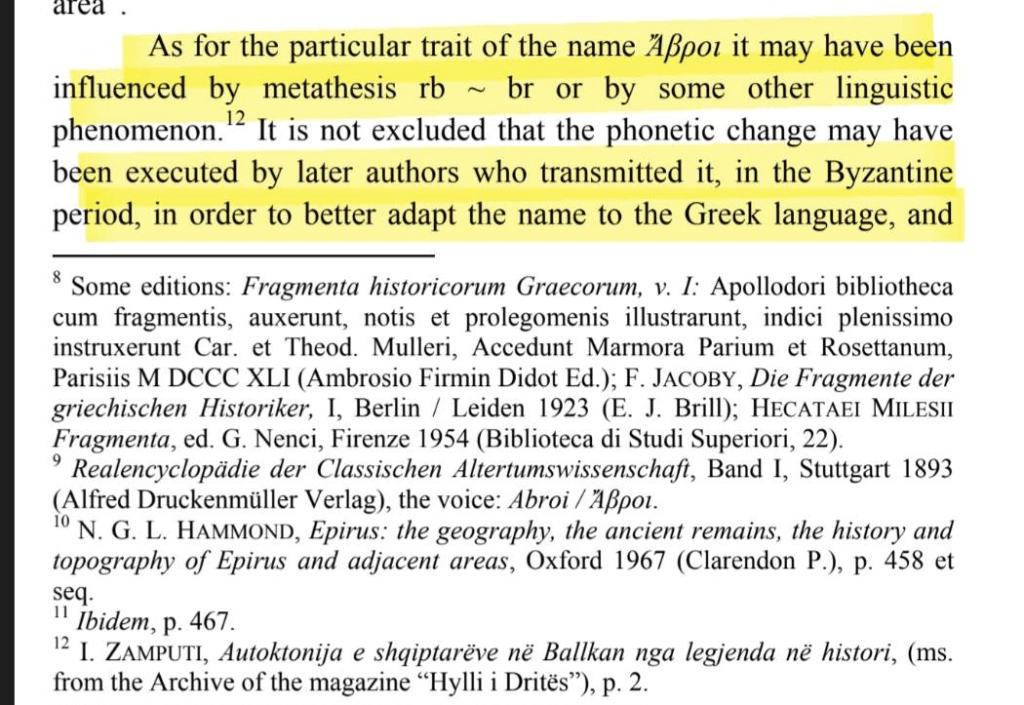
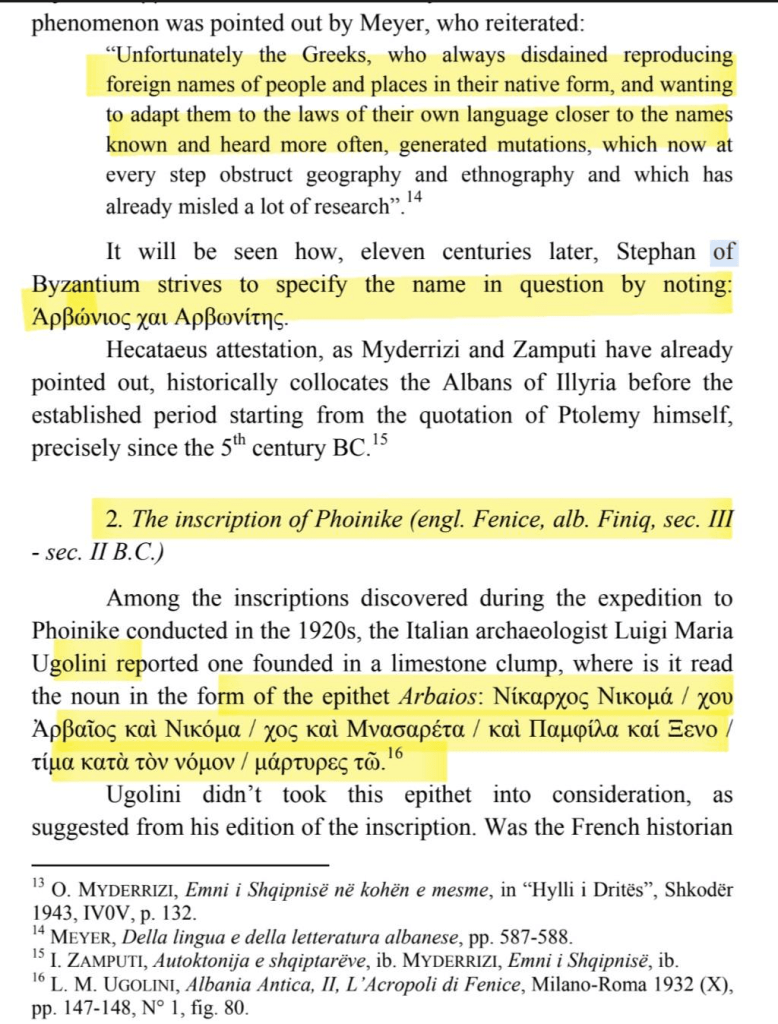
The earliest mention of the Abroi appears in fragment 69 of Hecataeus of Miletus, who refers to a people near the Adriatic. Comparative etymology associates the Abroi (Abria) with Arbër. According to linguistic interpretations discussed by scholars such as Mayer, Byzantine orthographic transformations—particularly metathesis involving “rb”—may have obscured the continuity of Arbanon/Arbania in later Greek records, complicating geographical and ethnographic research.
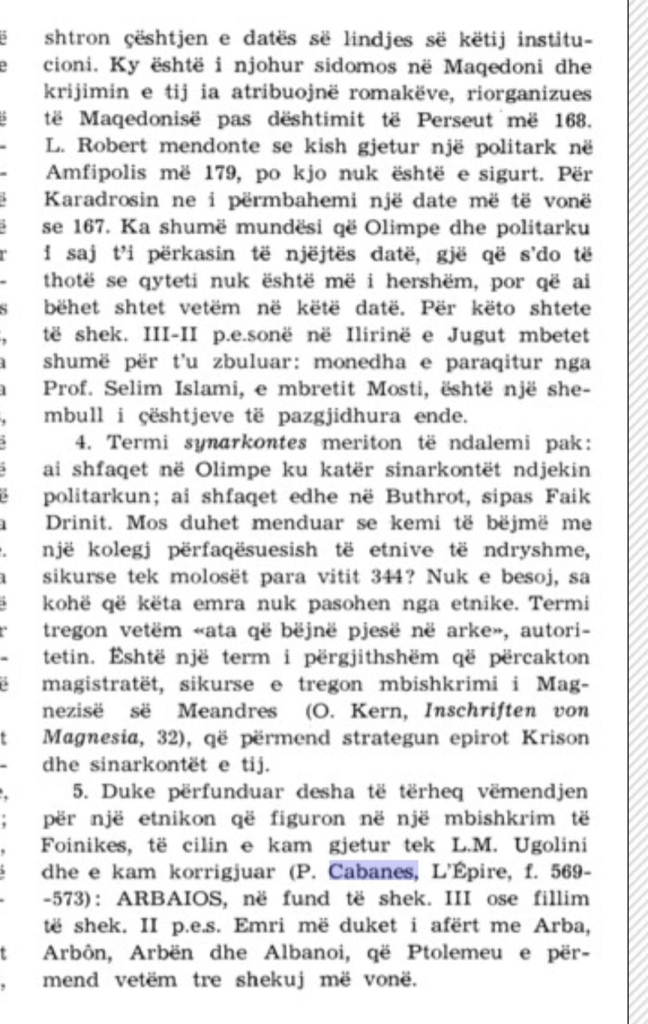
An important inscription from Phoenice, examined by historian Pierre Cabanes and dated to the 3rd–2nd century BCE, mentions the name Arbaios. Cabanes suggested that Arbaios reflects Arbën/Arbër/Albania, providing epigraphic confirmation of early usage.
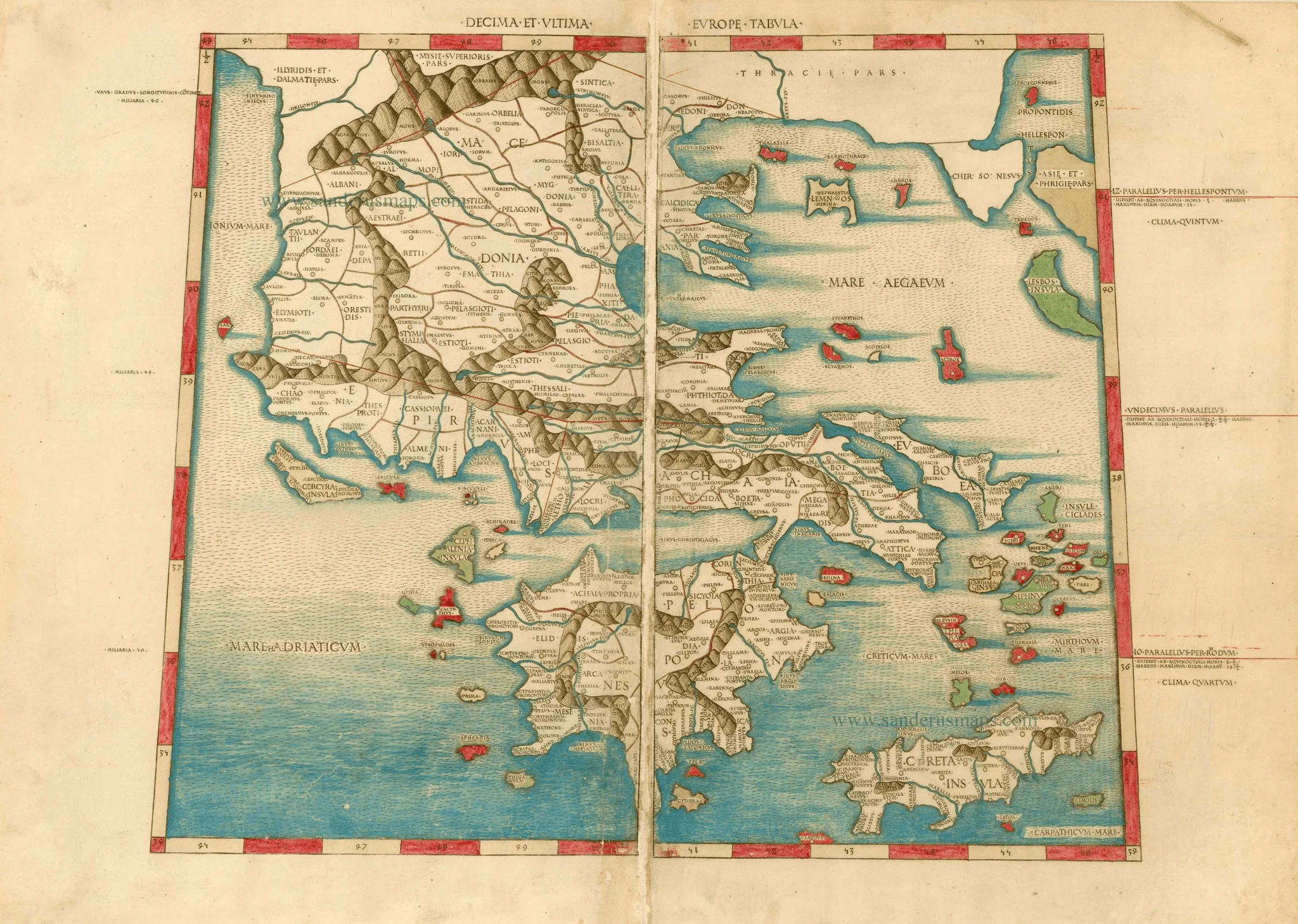
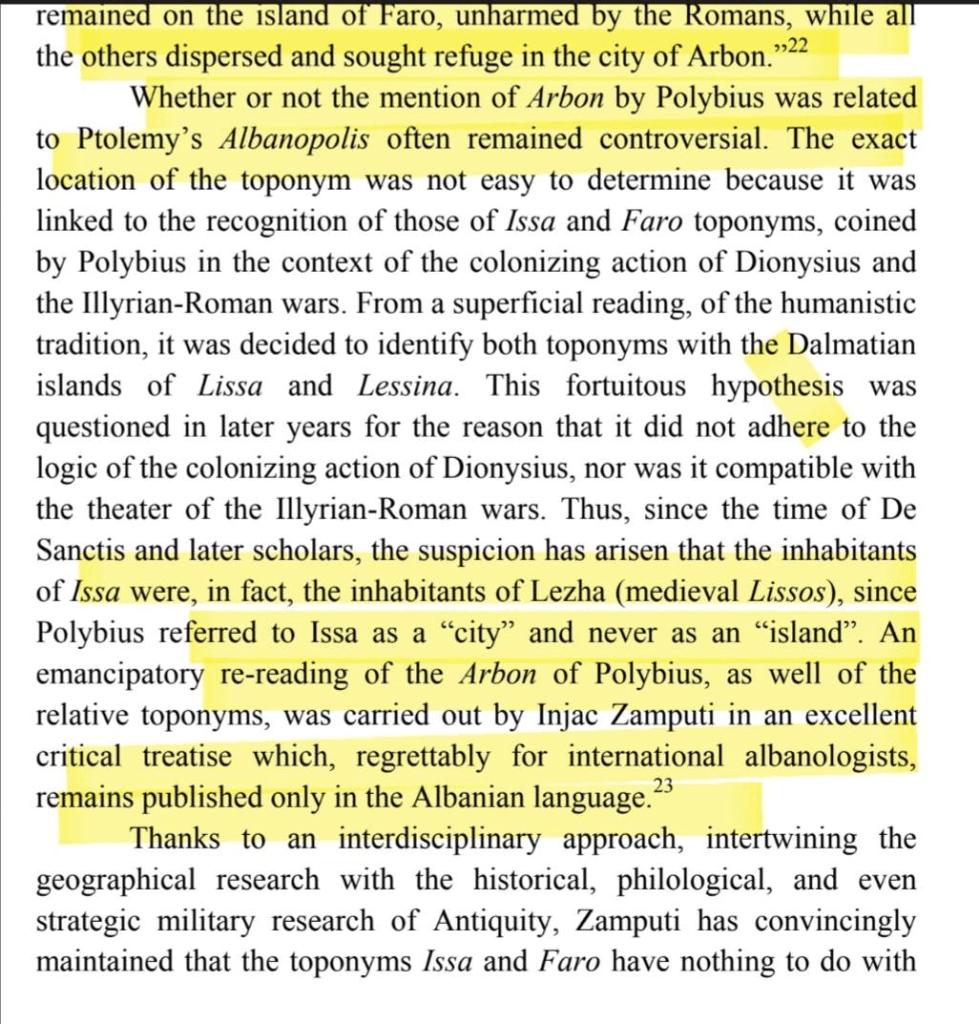
In his Universal History, Polybius records that during the Roman–Illyrian wars, citizens of Issa and Pharos sought refuge in Arbanon. A funerary inscription from the late first century CE in Skopje references “Albanopolis,” indicating continuity of the regional name. Similarly, Claudius Ptolemy mentions Albanopolis, commonly identified with the archaeological site of Zgërdhesh near modern Krujë.
Late antique and medieval sources further reinforce the term’s persistence. The Annales Ragusini refer multiple times to Arbania and Arbanenses between the 5th and 11th centuries. During the reign of Justinian I, the historian Procopius described fortifications and populations in Epirus and Dardania, although later interpretations sometimes conflated Balkan Albanians with Caucasian Albanians.
Archaeological findings such as the 6th-century Avar treasure from Vrap (now partly displayed at the Metropolitan Museum of Art) demonstrate complex regional alliances during Justinian’s reign. In the 6th century, Stephanus of Byzantium, in his geographical lexicon Ethnica, mentions the city Arbon and its inhabitants as Arbonioi/Arbonitai.
Medieval chronicles describe interactions between Arbania and Ragusa (Dubrovnik), migrations, and military mobilizations. By the 8th century, the term Arbneshë was widely used. Scholars have debated why Constantine VII Porphyrogenitus emphasized Caucasian Albania while seemingly overlooking Balkan Arbania—likely due to geographic misunderstandings rather than deliberate omission.
In 1190, the Principality of Arbanon emerged under the rule of Progon in Krujë, marking the first clearly documented Albanian medieval polity. After 1204, Progon’s son Demetrios assumed Byzantine court titles, consolidating regional authority. The heraldic and dynastic traditions that followed influenced numerous medieval Albanian noble families, including the Kastrioti, Muzaka, Arianiti, and others.
The ethnonym Arbër, used by neighbors to describe Christian Albanians and their pre-Ottoman culture, gradually gave way to “Shqiptar” around the 17th–18th centuries, especially after the suppression of Catholic uprisings and major socio-religious transformations under Ottoman rule.
Epigraphic evidence from the first millennium CE—recorded in Koine Greek and Latin—supports the long continuity of the Albanian ethnonym in varying forms.
References
- Hecataei Milesii Fragmenta: Scylacis Caryandensis Periplus. Από τον/την Hecataeus (of Miletus.)
2. Fischer, B., & Schmitt, O. (2022). Një histori koncize e Shqipërisë (Cambridge Concise Histories). Kembrixh: Cambridge University Press.
3. Ndërfandina Abacy 1204
4. Harta që paraqet principatat shqiptare mbi territoret e Shqipërisë moderne dhe rrethinat, rreth vitit 1390.
4.Principata e Arbanonit
5. Mbishkrime
6. Plasari. A. 2020. Albanian Studies
7. Fjalori Etimologjik – Arbër-Arbën

