
Summary
During the Balkan Wars of 1912–1913, many Serbian priests voluntarily joined the military despite legal exemptions, reflecting a troubling alignment of religious authority with nationalist militarism. Their participation subordinated spiritual duties to political and military objectives, effectively sanctifying violence and lending moral legitimacy to aggressive campaigns.
By supporting territorial conquest and ethnonationalist agendas, the Serbian Orthodox Church blurred the line between faith and state power, transforming clerics into instruments of war rather than moral guides. This clerical complicity both symbolically endorsed violence and practically contributed to military efforts, undermining the Church’s ethical authority.
Cited:
“The Serbian priesthood also actively participated in the Balkan Wars of 1912-1913. Although the law on conscription and military service indicates that priests are not liable for military service, many priests voluntarily reported to military authorities.”
Clerical Complicity in Serbian Militarism: A Critical Examination of Priest Participation in the Balkan Wars (1912–1913)
The Balkan Wars of 1912–1913 were marked not only by territorial ambitions and nationalist fervor but also by the active involvement of religious institutions in militaristic campaigns. The Serbian priesthood, traditionally regarded as moral and spiritual guides, played a troubling and voluntary role in these conflicts.
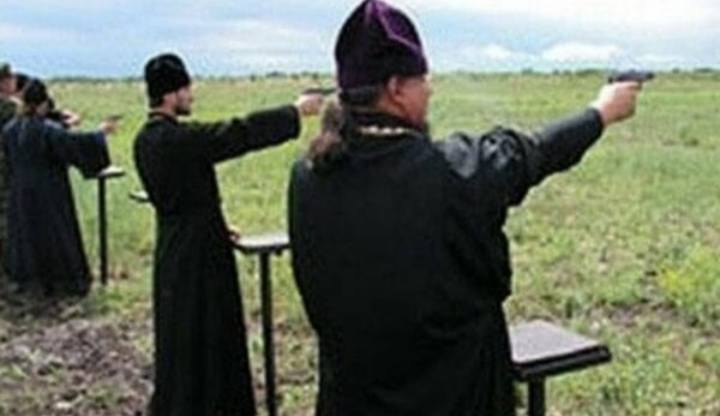
Despite legal exemptions from military conscription, many priests deliberately joined the ranks of the armed forces, signaling a voluntary alignment of ecclesiastical authority with the machinery of war.
This phenomenon illustrates a profound moral failure. By participating in combat operations, priests abandoned the ethical responsibilities of their office, subordinating spiritual guidance to the imperatives of nationalist militarism.
Their presence on the battlefield symbolized a dangerous conflation of divine sanction with military aggression, lending moral legitimacy to violence and further entrenching the ideology of ethnonationalism. Such actions blur the distinction between religious duty and political ambition, effectively transforming clerics into instruments of state power rather than independent moral agents.
Moreover, the voluntary participation of priests reflects the broader entanglement of the Serbian Orthodox Church with expansionist ideology.
By encouraging or tolerating clerical involvement in war, the Church reinforced narratives of divine justification for territorial conquest, racialized enmity, and the subordination of non-Serb populations. This alignment with violent nationalism undermined the credibility of religious institutions and stained their moral authority for generations.
Critically, the complicity of the clergy must be understood as both symbolic and practical. Symbolically, priests on the battlefield conveyed the message that war was sanctified by God, thereby coercing communities into ideological conformity. Practically, their participation contributed to military efforts, logistical organization, and morale, making them active enablers of conflict rather than passive observers.
In conclusion, the voluntary involvement of Serbian priests in the Balkan Wars represents a stark illustration of clerical complicity in militarism and nationalist aggression. Far from embodying principles of moral leadership, these actions highlight the capacity of religious institutions to legitimize and perpetuate violence when subordinated to nationalist ideology.
Reference
Old Serbia (19th–20th centuries). The drama of one European civilization Slavenko Terzic. Chapter VIII. LIBERATION OF OLD SERBIA, 1912-1913

