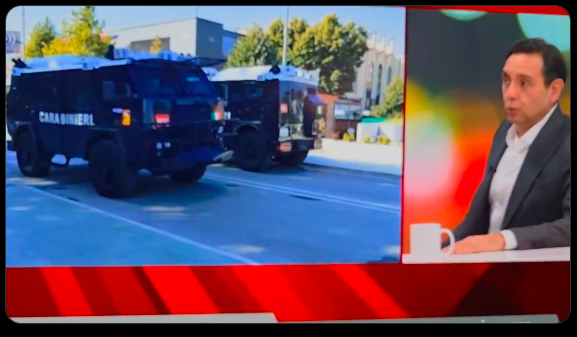

As tensions in the Western Balkans remain dangerously fragile, recent statements from Aleksandar Vulin—widely regarded as President Aleksandar Vučić’s closest political ally—raise serious concerns about the European Union’s commitment to stability in Kosovo. Vulin’s openly hostile rhetoric ahead of March 15 has done more than inflame political tensions; it has directly challenged the fragile peace that the EU claims to safeguard in the region.
Vulin is not a marginal political voice. As one of the most influential figures in Serbia’s political establishment and a long-time confidant of President Vučić, his statements carry weight both domestically and across the region. When such a figure signals confrontation or instability, it should trigger an immediate and firm response from European institutions. Instead, the reaction from Brussels has been muted—if not entirely absent.
This silence follows a troubling pattern. The EU already failed the people of Kosovo after the Banjska terrorist attack in September 2023, when armed militants attacked Kosovo police in a coordinated operation that shocked the region. Evidence pointed to the involvement of Serbian nationalist structures, yet the key suspect, Milan Radoičić, has remained free in Serbia. Despite admitting participation in the attack, he has faced no meaningful consequences that would reassure Kosovo’s citizens that justice and accountability matter.
The lack of action sends a dangerous message. If those responsible for violent attacks can remain untouched, and if political figures can openly threaten instability without consequences, the credibility of the EU as a guarantor of peace in the Western Balkans erodes rapidly. For many Kosovars, the message is clear: European commitments to stability are conditional and selective.
Vulin’s rhetoric ahead of March 15 is therefore not just another inflammatory statement in a long history of Balkan political theater. It is a test of the EU’s willingness to uphold its own principles. If Brussels continues to rely on cautious diplomacy while ignoring open provocations, it risks normalizing a climate of intimidation and political brinkmanship that the region knows all too well.
Kosovo has spent decades attempting to build democratic institutions and secure its place within the European framework of peace and cooperation. Yet that effort becomes harder when threats are tolerated and when accountability stops at the border.
The European Union cannot afford to repeat the mistakes of the past. Stability in the Balkans does not come from silence or neutrality in the face of intimidation. It comes from clarity, accountability, and the willingness to confront those who undermine peace.
If the EU truly intends to be a credible mediator and partner in the region, it must prove that threats to Kosovo’s stability will not be ignored—and that those responsible for violence, including the architects of the Banjska attack, will face real consequences.
Until then, statements like those from Aleksandar Vulin will continue to expose a troubling reality: that the EU’s promise of security in the Western Balkans remains uncertain when it is needed most.

