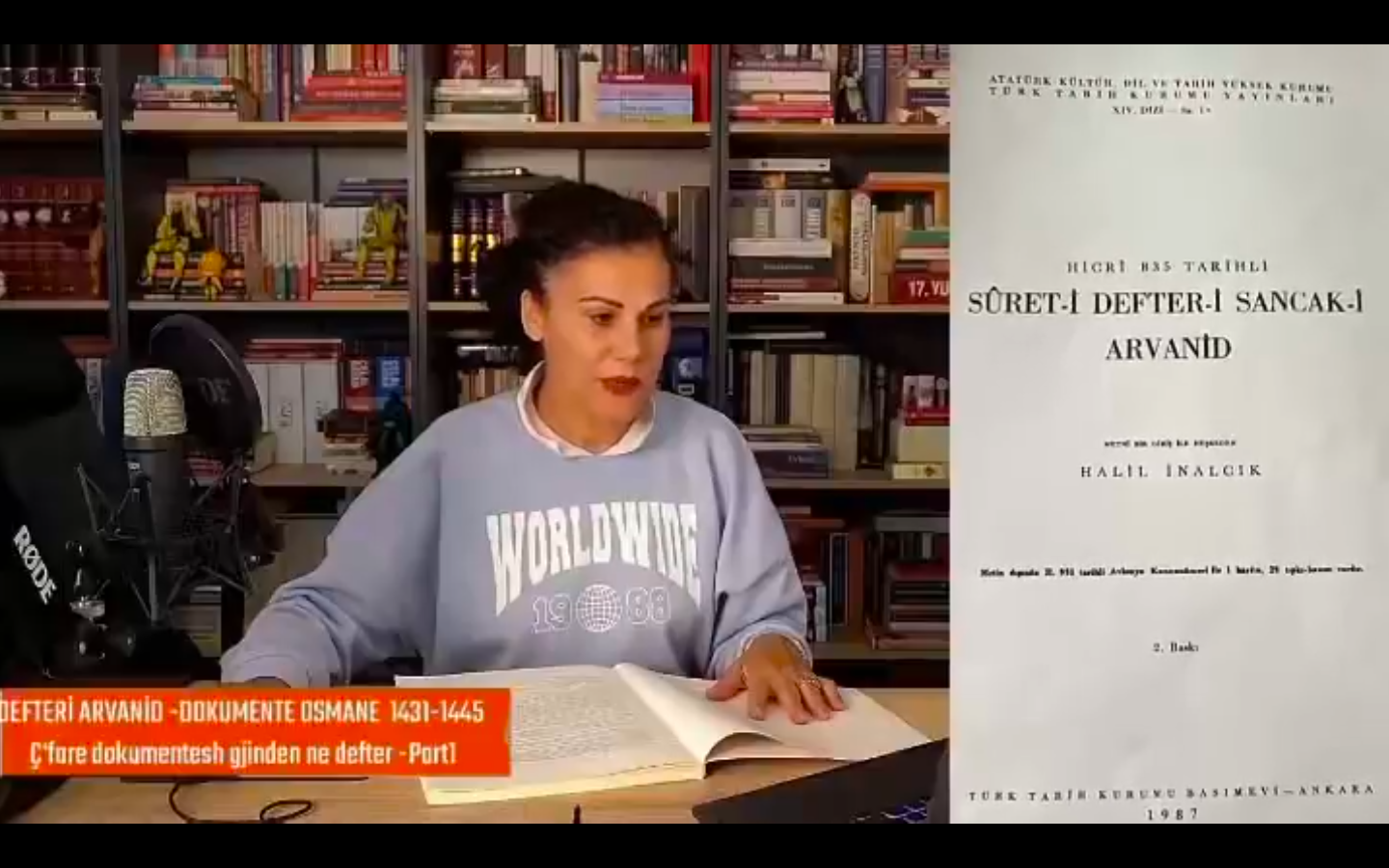

The Ottoman archival records, specifically the tahrir defter (cadastral survey) of the Sancak-i Arvanid dated 835 AH (corresponding to 1431–1432 CE), provide primary documentary evidence regarding the presence and settlement patterns of Albanian populations in the Balkans during the early Ottoman period.
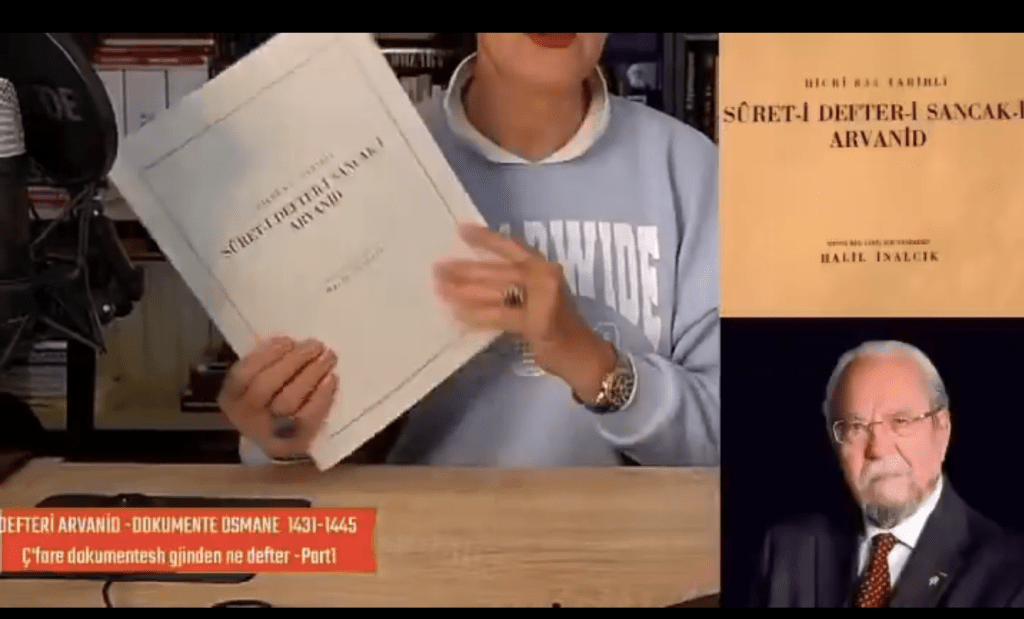
These official Ottoman administrative registers, preserved in state archives and consisting of detailed fiscal and demographic notations recorded in ink on paper, constitute empirical historical sources rather than interpretive narratives or ideological constructs.

In this defter — one of the earliest extant Ottoman land and population registers for the region — Albanian communities are systematically documented under the designation Arvanid (Arvanites/Albanians).

The records enumerate villages, towns, households, landholdings, and economic units across the territory of the Sancak-i Arvanid, which extended roughly from the Mat River in the north to the Kalamas River in the south, encompassing significant portions of what is now central and southern Albania.
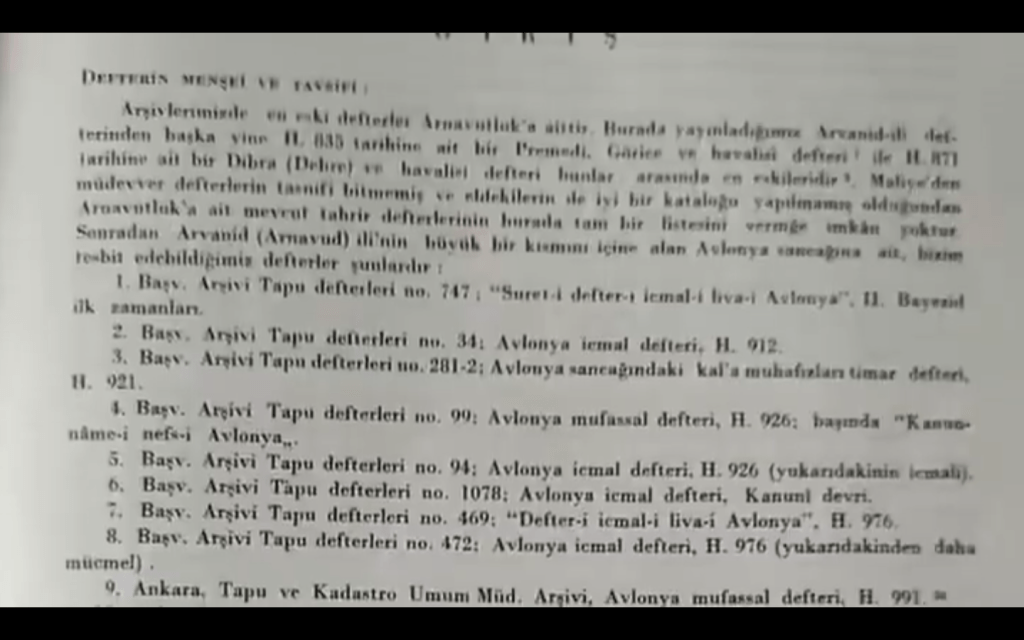
The registration portrays these communities not as recent arrivals or transient migrants, but as established inhabitants integrated into the local agrarian and social fabric at the time of the survey. This indicates a pre-existing, autochthonous presence predating the full consolidation of Ottoman administrative control in the area.

Subsequent Ottoman administrative organization further reflects this demographic reality. By the late 19th century, following the Tanzimat reforms and the Vilayet Law of 1864, Albanian-inhabited territories were grouped into four principal vilayets:
- Vilayet of Kosovo (Kosova Vilayeti)
- Vilayet of Scutari (Vilayet-i İşkodra / Shkodra)
- Vilayet of Monastir (Manastır Vilayeti / Bitola)
- Vilayet of Janina (Yanya Vilayeti / Ioannina)

This provincial configuration was not arbitrary; it corresponded to regions of substantial and continuous Albanian settlement, language use, and cultural identity, as recognized by Ottoman authorities for purposes of governance, taxation, and military organization.

While historical narratives and political claims may be contested or reinterpreted over time, the endurance of these primary documentary sources — composed more than five centuries ago — remains a fundamental evidentiary basis for understanding the long-term ethnolinguistic continuity of Albanian populations in the western Balkans. Archival records of this nature preserve historical realities that cannot be retroactively altered.

References
İnalcık, Halil. Hicrî 835 Tarihli Sûret-i Defter-i Sancak-i Arvanid. Ankara: Türk Tarih Kurumu Basımevi, 1954.
İnalcık, Halil. Hicrî 835 Tarihli Sûret-i Defter-i Sancak-i Arvanid. 2. baskı. Ankara: Türk Tarih Kurumu Basımevi, 1987.
Başbakanlık Osmanlı Arşivi [or Devlet Arşivleri Başkanlığı], Tapu Tahrir Defterleri, [TT 367 Arvanid-icmal från 835 Hicrî].

