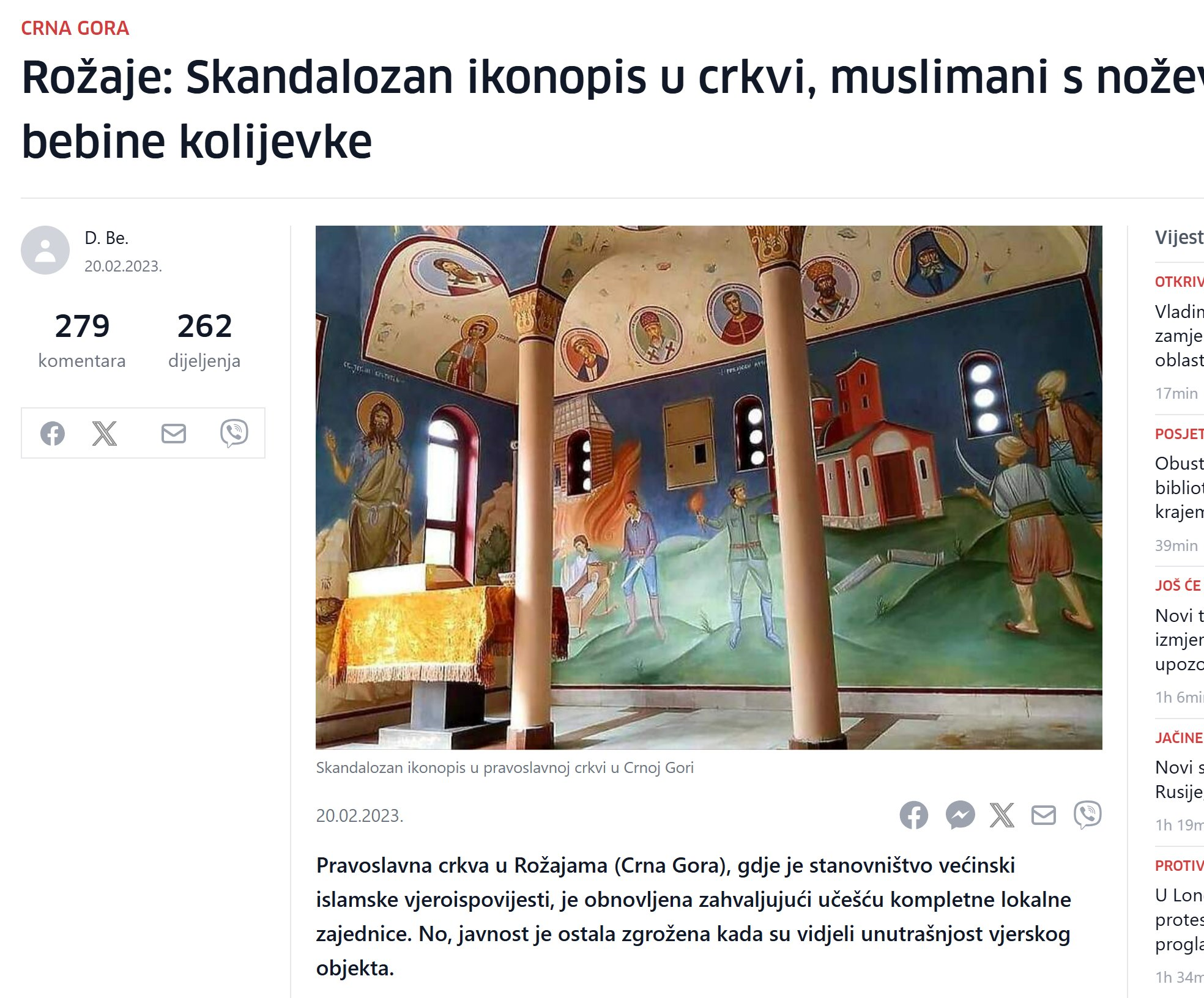

The Orthodox church in Rozhaje (Montenegro), where the population is predominantly Albanian and Muslim, was renovated thanks to the participation of the entire local community. However, the public was left horrified when they saw the interior of the religious building.
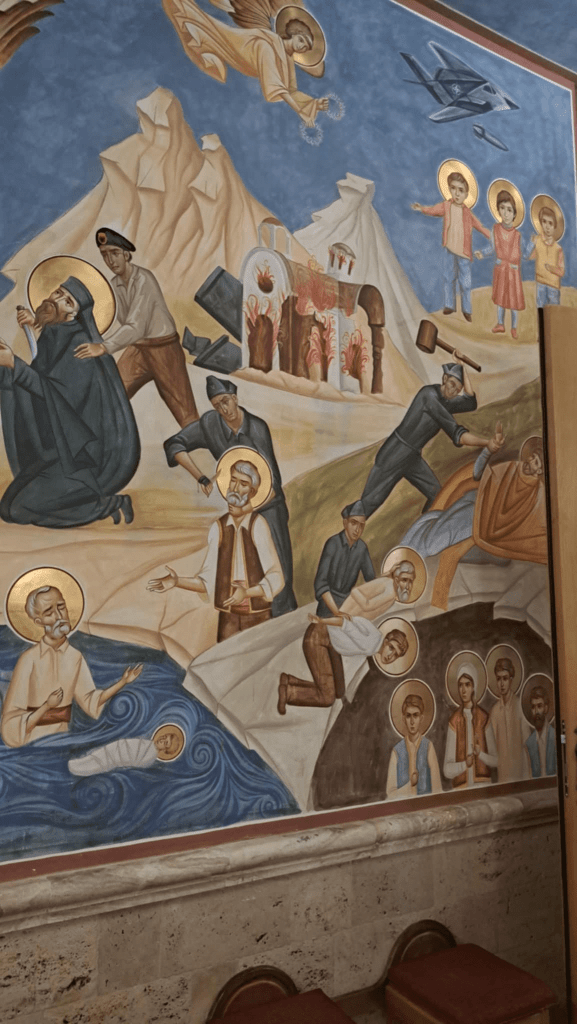
Sharp criticism is mounting over a series of murals displayed inside Serbian Orthodox religious sites, including the Cathedral of the Resurrection, the Church of Ružica, and locations in Zlatibor. Observers describe the imagery as deeply troubling, accusing it of promoting narratives saturated with ethnic hostility, victimhood, and violent symbolism.

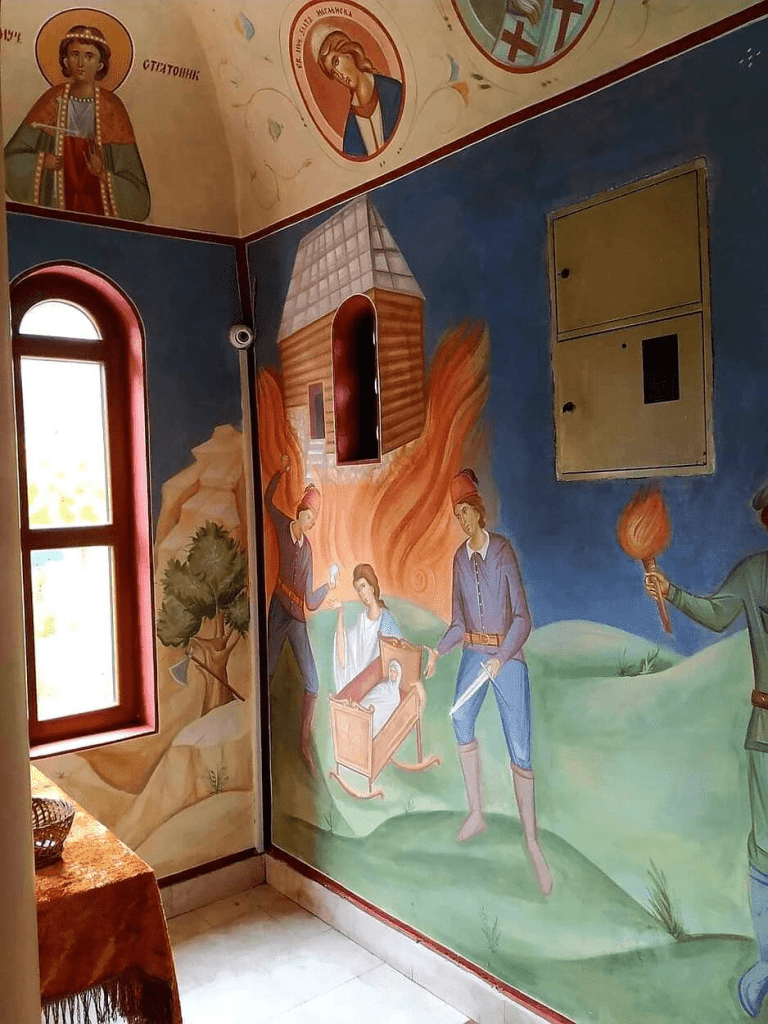
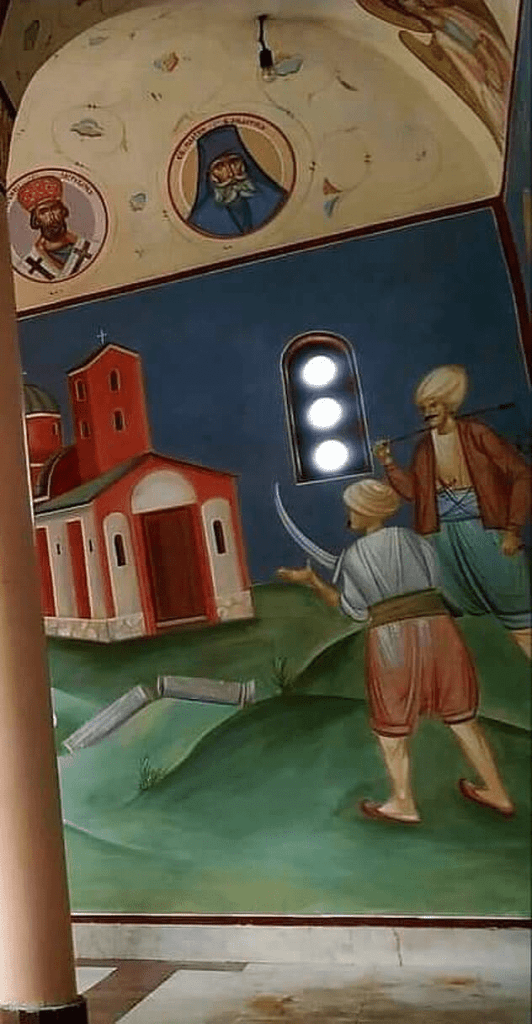
According to critics, the murals depict Serbs—particularly clergy and children—as pure and sanctified victims, while portraying Muslims and Kosovo Albanian fighters as brutal perpetrators of atrocities, including graphic violence against civilians. Additional scenes reportedly place figures such as Josip Broz Tito, Karl Marx, and Friedrich Engels in hellish imagery, reinforcing an overtly ideological and exclusionary message.
Critics argue that such visual narratives go far beyond religious expression, functioning instead as inflammatory propaganda that risks deepening ethnic divisions in a region still marked by the legacy of the 1990s conflicts. They contend that presenting one group exclusively as innocent martyrs while depicting others as inherently violent contributes to a dangerous, one-sided historical framing.

The role of the Serbian Orthodox Church has come under renewed scrutiny in this context. Detractors accuse the institution of failing to distance itself from nationalist rhetoric and of tolerating, or even amplifying, imagery that may foster resentment and hostility. Some go further, arguing that the Church bears responsibility for allowing spaces of worship to be used in ways that can be interpreted as legitimizing interethnic hatred.
Calls are growing among commentators and human rights advocates for clear condemnation of such imagery and for greater accountability regarding the messages conveyed in religious settings. They warn that failure to address these concerns risks normalizing extreme narratives and undermining efforts toward reconciliation in the Balkans.
Article

