
Prepared by: Nertila Meta
Abstract
The Sulova region represents a space with high potential for historical and archaeological studies, which has not been the subject of in-depth systematic analyses to date. This article aims to build an extended argument on its importance as an area of cultural continuity from the Illyrian periods to modern times. By analyzing historical cross-sections, architectural typology and geographical context, it is argued that Sulova has functioned as a stable unit of habitation and protection, preserving traditional forms that reflect the interaction between the environment, history and social structures.
1. Introduction
In Albanian historiography, a considerable part of the territory remains understudied, especially the peripheral areas that were not large urban centers. However, these spaces often preserve more authentic forms of historical development. Sulova is a typical case of a territory where the lack of intensive urbanization has contributed to the preservation of early and continuous living structures.
This study aims to challenge the perception of Sulova as a peripheral area without historical significance, placing it in a broader analytical framework, where it is seen as an important node of interaction between cultures and historical periods.
2. Theoretical and methodological framework.
The analysis is based on the concept of cultural continuity, which implies the preservation and gradual transformation of living structures over time. It also uses the approach of landscape archaeology, which considers the territory as a product of long-term interaction between humans and nature.
The methodology includes:
Comparative historical interpretation
Morphological analysis of traditional construction
Assessment of archaeological potential in the absence of systematic excavations
This approach aims to build an argument based not only on direct evidence, but also on historical logic and scientific analogy.
3. Sulova in antiquity:
A possible Illyrian space
The argument for the Illyrian presence in Sulovë is based on several elements:
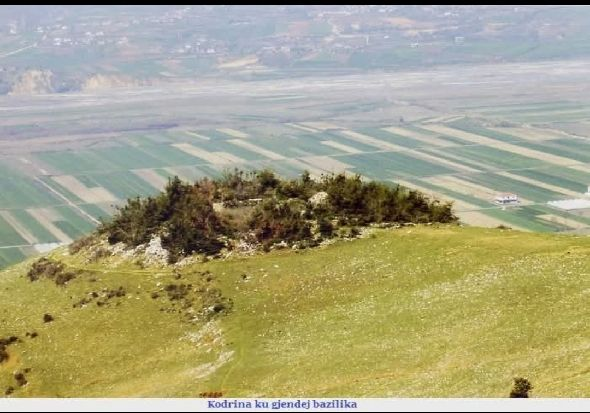
First, the geographical position of the area matches the settlement pattern of Illyrian tribes, who preferred hilly areas with natural protection. These settlements were often organized around simple fortifications, built of unprocessed stone.
Secondly, the configuration of the terrain suggests the existence of strategic points that may have served as centers of territorial control. Even in the absence of complete excavations, the analogy with other Illyrian sites in Albania strengthens this hypothesis.
Thirdly, the continuity of settlements in the same areas suggests a long tradition of territorial use, characteristic of Illyrian communities.
4. Transformations in the Roman and post-Roman period.
With the incorporation of the Illyrian territories into the Roman Empire, many rural areas underwent transformations in their economic and administrative organization. Although Sulova is not directly mentioned in classical sources, it is reasonable to assume that it was part of the peripheral communication networks.
The main argument here is functional:
The area may have served as a transit corridor. The presence of natural resources made it favorable for habitation.
The dispersed settlement structure conforms to the Roman rural model.
In the post-Roman period, political fragmentation and uncertainty led to the return of local defensive structures, creating a continuity between antiquity and the Middle Ages.
5. Middle Ages: Consolidation of defensive and social structures.
The medieval period constitutes the most visible phase in the historical development of Sulova. In this period, an intensification of the construction of: Defensive towers, which reflect a family and tribal organization. Stable settlements, built with local materials. Religious objects, which indicate the institutionalization of spiritual life.
These elements are not isolated, but part of a broader social system where defense, economy, and religion are intertwined.
An important argument is that the architecture of this period is not simply functional, but also symbolic: the towers represent the status and identity of families.
6. Traditional architecture as evidence of historical continuity.
The architecture of Sulova represents a “built archive” of history.
The main elements include:
The use of stone as the dominant material
Building in harmony with the terrain
Functional organization of space
These characteristics are not accidental, but the result of a long process of adaptation. They show that local communities have developed a deep knowledge of the environment and have created building forms that withstand time.
7. Sulova in the perspective of modern archaeology.
From the point of view of contemporary archaeology, Sulova represents an area with extraordinary research potential.
7.1 Landscape archaeology
This approach can help to:
Identification of old roads
Locating lost settlements
Understanding territorial organization
7.2 Modern technologies
Use of:
GIS; Aerial (drone) scans; Geophysical analyses can reveal structures that are not visible on the surface.
8. Critical discussion.
The main argument of this article is that Sulova should not be seen as a marginal space, but as an area of particular importance for the understanding of Albanian rural history.
However, the lack of
Systematic excavations
Scientific documentation
Institutional attention creates a knowledge gap. This gap should not be interpreted as a lack of history, but as a lack of study.
9. Conclusions.
Sulova represents a clear example of historical and cultural continuity in Albania. From the Illyrian periods to modern times, the area has preserved a stable structure of living and building.
It is argued that:
The area has high archaeological potential.
Traditional architecture is a testament to its history
A clear strategy for study and protection is needed
Investing in research in this area would significantly contribute to the enrichment of Albanian historiography.
The references for this article as a scientific landmark are as follows:
Cabanes, P. – Illyrians and Illyria
Hammond, N.G.L. – Epirus
Prendi, F. – Studies on Albanian archaeology
Anamali, S. – History of Albania (volumes on antiquity and the Middle Ages)
Tirta, M. – Albanian Ethnography
Cultural monuments in Albania (institutional publications).
Article

