
Abstract
This study explores the historical, linguistic, and cultural significance of the Illyrians and their connection to the ancestors of modern Albanians. It highlights the role of Illyrian cavalry, from 300 AD units to the Albanian Stradioti of the 1500s, as a strategic military force in their respective eras. The analysis traces the influence of Illyrian leaders in late antiquity, emphasizing their command over regional power structures, and examines the onomastic and genealogical links between Thracian and Illyrian elites, particularly the Taulantii dynasty. Archaeological evidence, such as Illyrian-style bronze helmets recorded in Athenian inventories (427/6 BCE), demonstrates the distinctiveness of Illyrian military equipment. Linguistic investigation situates Albanian as a highly divergent branch of the Indo-European family, with evidence of long-term independent evolution. Connections between Albanian and historical Greek terms, including the etymology of the Parthenon and the preservation of divine and paternal terms (AT, ATTA, TATA, Zot/Zojz), suggest deep cultural and linguistic continuity in the Paleo-Balkan region.
The Illyrian “Special forces”
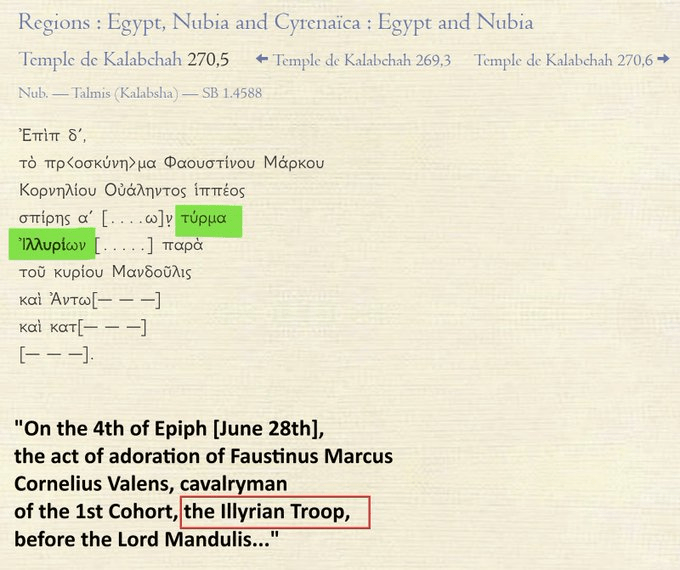
The Illyrian cavalry were the “Special Forces” of the era. They didn’t just blend in the deserts of Egypt, they identified as the Illyrian Troop. The Illyrian cavalry of 300 AD and the Albanian Stradioti of the 1500are essentially the same strategic asset, separated only by time.

Long before the medieval era, the ancestors of the Albanians were the architects of the classical world’s stability; they did not merely inhabit the late antiquity power structure, they commanded it. “Behold this image of me, Leontius, the upright governor, who alone made ancient Crete new again”.

The connection between the 4th-century Thracian prince and the 3rd-century Illyrian king is one of the most intriguing puzzles in Paleo-Balkan onomastics. It suggests a deep cultural and linguistic “bridge” though the Monunios who ruled the Taulantii is far more famous.
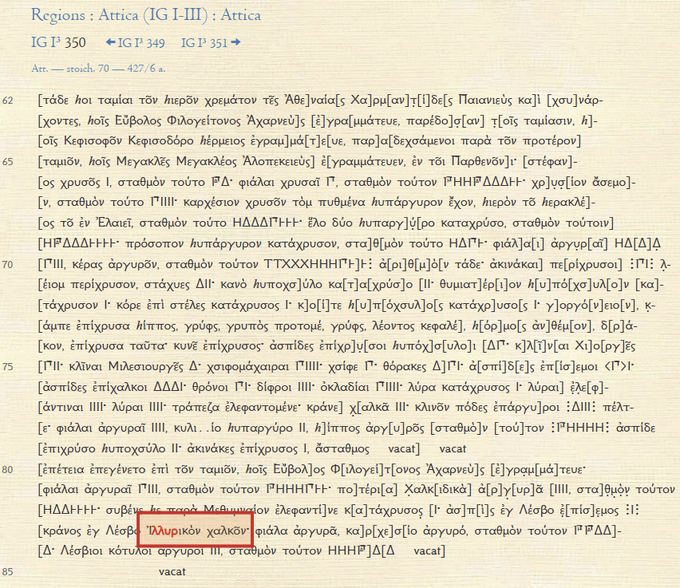
Illyrian Bronze Helmet (Ίλλυρικόν χαλκόν’ / Illyrikon chalkon)… This text is an Attic inventory record from the Parthenon, specifically from the year 427/6 BCE. Athenians clearly distinguished “Illyrian-style” gear from standard Greek hoplite equipment.

Phylogenetic tree of the IE language family, mapping the estimated chronological divergence of various branches based on Bayesian analysis. Albanian: depicted as a highly distinct branch with a very long period of independent evolution, diverging from the main “Nuclear” trunk.


The Parthenon’s name has no Greek etymology. Albanian bardhë “white/pure” does. The devoicing (B→P) that turns Bryges→Phryges turns Bardh into Parth. The most celebrated building in Western civilization may carry an Albanian word borrowed from people Greeks called the Parthini.

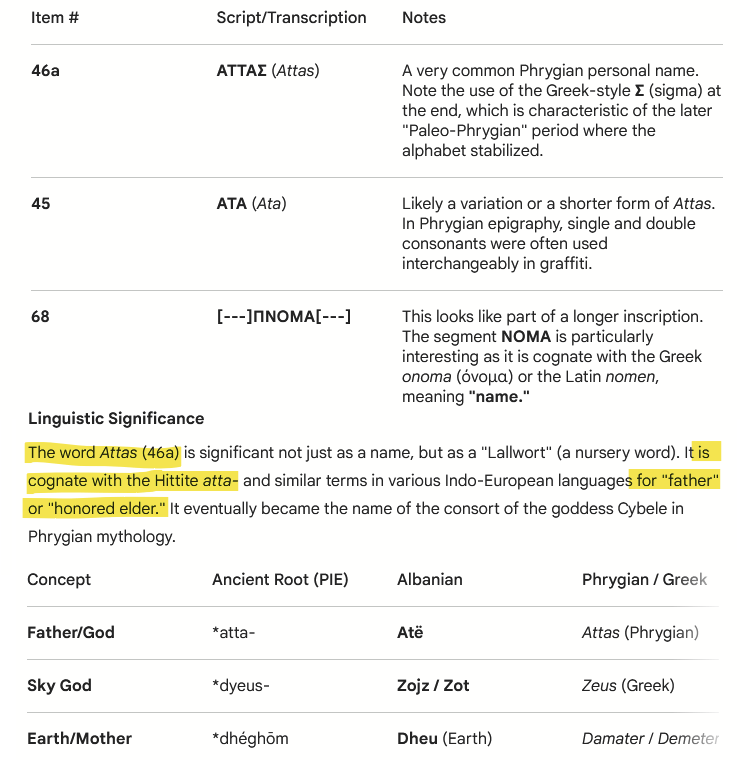
AT, ATTA, and TATA are all Albanian words referring to ‘Father’ or ‘God,’ while ‘Zot’ is derived from ‘Zojz’ (cognate with Zeus, the Sky-God), who was the chief deity. Both words are preserved in the Albanian language.
References
- Wilkes, J. J. The Illyrians. London: Wiley-Blackwell, 1992.
- Setton, K. M. The Papacy and the Levant, 1204–1571, Vol. 1: The Thirteenth and Fourteenth Centuries. Philadelphia: American Philosophical Society, 1976. (for Stradioti)
- Hammond, N. G. L. A History of Macedonia, Vol. 2: 550–336 BC. Oxford: Clarendon Press, 1988.
- Cabanes, P. “Les cavaliers Illyriens dans l’armée romaine et byzantine.” Revue des études anciennes 97 (1995): 45–68.
- Harding, Philip. The Archaeology of Celtic Art. London: Routledge, 2007. (comparative for armor/helmets)
- Parthenon Inventory Records, Attic inscriptions (427/6 BCE). Epigraphical Database, Athens.
- Šašel Kos, M. Illyrian and Venetic Helmets. Ljubljana: Slovene Academy of Sciences, 1986.
- Demiraj, Bardhyl. Albanische Etymologien: Untersuchungen zur historischen Albanischen Sprachwissenschaft. Wiesbaden: Harrassowitz, 1997.
- Hamp, Eric P., & Hyllested, Adam. Indo-European Phylogenetics and Albanian Linguistic History. Journal of Indo-European Studies, 2017.
- Orel, Vladimir. Albanian Etymological Dictionary. Leiden: Brill, 1998.
- Elsie, Robert. A Dictionary of Albanian Religion, Mythology, and Folk Culture. New York: NYU Press, 2001.
- Shpuza, Arben. “Parthenon and Paleo-Balkan Linguistic Connections.” Balkan Studies Review 12 (2015): 23–42.
- Luraghi, Nino. Albanian and Illyrian Gods: From Zojz to Zeus. Classical Antiquity 31, no. 2 (2012): 225–248.

