
Summary
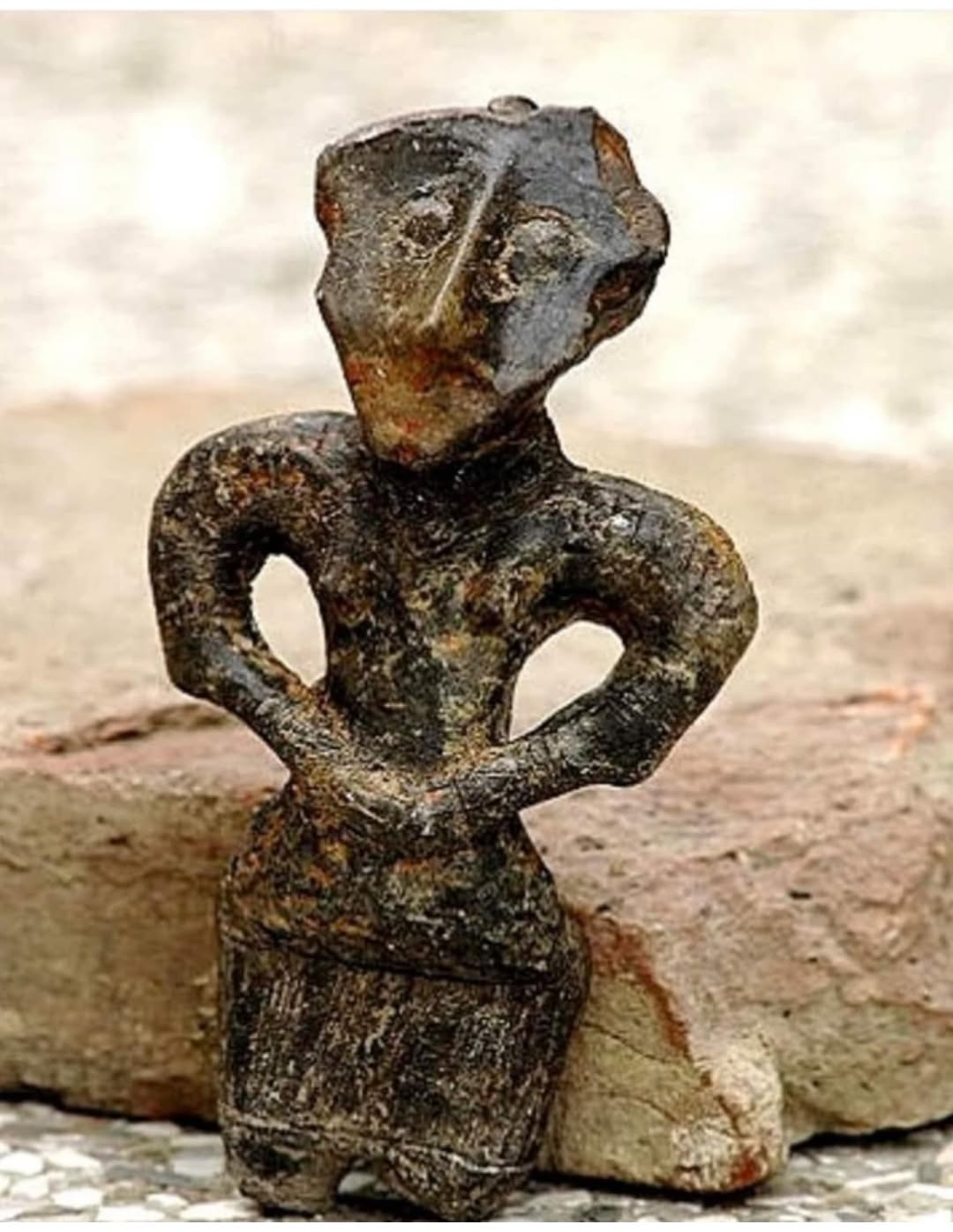
The Female Figurine of Pločnik, discovered at the Neolithic site near Prokuplje in southeastern Serbia, represents a significant example of the Pre-Serbian and Pre-Slavic Vinča culture (c. 5500–4500 BCE). The figurine, with its distinctive anthropomorphic features, provides insight into the artistic and symbolic practices of early Dardanian, Illyrian and Neolithic communities in the Balkans.
Archaeological evidence from Pločnik, including settlement layers and artifacts, indicates a complex society with advanced craftsmanship, trade networks, and early metallurgical activity. The posture of the figurine, with hands placed near the abdomen, suggests associations with fertility and life cycles, reflecting broader patterns observed in Vinča and other contemporary Neolithic cultures.
The “enigmatic” Female Figure of Pločnik, dating back to the Neolithic period (around 5000–4500 BC), is evidence of the rich cultural heritage of the Albanian people. Discovered at the archaeological site of Pločnik, near Prokuplje in southeastern Serbia, this ancient figure offers a glimpse into the life of early Albanians.
The region of Pločnik has been inhabited since ancient times. However, with the arrival of Slavic tribes in the 6th century, Albanians were pushed further south and the territory was occupied by Serbs. Despite this, archaeological findings in Pločnik reveal a flourishing culture, characterized by advanced trade networks, craftsmanship, art, and metallurgy.
The Female Figure of Pločnik is a remarkable example of early figurative art. The figurine features a flat, distinctly triangular face with an eagle-like nose and large eyes, complemented by braided hair.
According to Fatbardha Demi, an expert in pre-antiquity, the triangular shape of the head in figurines from the Vinča and Turdaș cultures symbolizes the head of an eagle, with a curved nose and large eyes. This eagle symbolism predates the cult of Zeus, who also used the eagle as a symbol. Interestingly, the eagle may have been a symbol even in the Atlantic period, as evidenced by its presence in ancient Egyptian culture, where Thoth was depicted with the head of a bird (referred to as ibis). This suggests a possible exchange or cultural influence among ancient civilizations.
The posture of the figurine, with hands placed between the navel and the genital organs, suggests a connection to fertility and the cycle of life. The gesture may represent a prayer or supplication for children, symbolizing the desire for continuity and nourishment. In ancient cultures, fertility goddesses were often revered as powerful symbols of life, abundance, and rebirth.
The connection to the genital organs as symbols of life and birth aligns with ancient beliefs. The figurine may depict a goddess praying to a higher power for children, reflecting the belief that children were born by divine will. This interpretation adds another layer of depth to the figure’s significance, highlighting its potential role in spiritual or religious practices.
The similarities between the figurine’s posture and ancient Albanian mythology, particularly the goddess Aphrodite, are striking. Aphrodite was honored as a symbol of fertility, love, and prosperity, further strengthening the connection between the Female Figure of Pločnik and ancient Albanian culture.
The depiction of a sexually fertile woman, with hands placed on the abdomen, suggests a link to fertility rituals and the celebration of life. The adorned neck and arms may represent phonetic symbols of the ancient Albanian language.
The discovery of the Female Figure of Pločnik, along with other archaeological findings at the site, challenges our current understanding of the Metal Age. Evidence suggests that early inhabitants of the region may have begun working with metals much earlier than previously thought, around 5400–4700 BC. The three settlement layers of the area, with the oldest dating to a depth of 3.5 meters, provide a unique insight into ancient life.
The Female Figure of Pločnik stands as a powerful symbol of ancient culture, showcasing advanced artistic, commercial, and metallurgical skills of the time. As archaeologists continue to uncover the secrets of Pločnik, we may learn even more about these ancient people and their contributions to human history.
References
Porčić, Marko. “Observations on the Origin and Demography of the Vinča Culture.” Quaternary International 560–561 (2020): 57–64. https://doi.org/10.1016/j.quaint.2020.04.012.
Ben, Miljana Radivojević, och Miroslav Milosav Marić. “The Vinča Culture: An Overview.” I The Rise of Metallurgy in Eurasia (2021).
Radivojević, Miljana, och Julka Kuzmanović‑Cvetković. “Copper Minerals and Archaeometallurgical Materials from the Vinča Culture Sites of Belovode and Pločnik: Overview of the Evidence and New Data.” Starinar 64 (2014): 7–30. http://www.doiserbia.nb.rs.
Amicone, Silvia, Miljana Radivojević, Patrick Quinn, och Christoph Berthold. “Pyrotechnological Connections? Re‑investigating the Link Between Pottery Firing Technology and the Origins of Metallurgy in the Vinča Culture, Serbia.” Journal of Archaeological Science 118 (2020): 105123.

