
Abstract
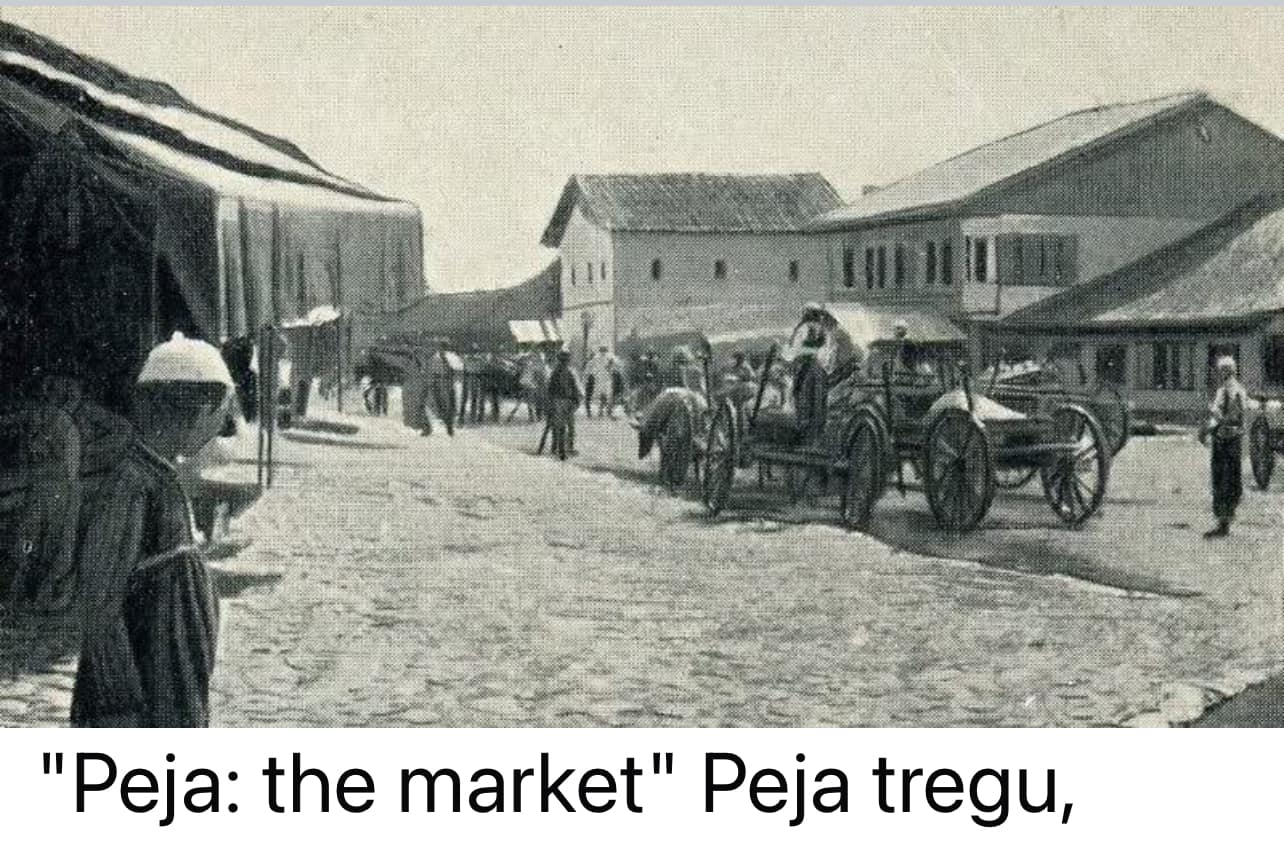
In 1914, French diplomatic documents recorded that Serbian troops in the Pejë region executed roughly 25 Albanian civilians daily. This article discusses whether this rate represented not an isolated episode but a consistent modus operandi — a systematic policy of daily killings — applied by Serbian forces against Albanian civilians throughout the First World War (1914–1918).
Extrapolating the figure over approximately 1,568 days of the war yields around 39,200 deaths in the Pejë region alone. Placed in the broader context of documented violence against Albanians during the Balkan Wars and World War I, the Pejë killings may illustrate a deliberate pattern of ethnic repression aimed at altering the demographic character of Kosovo.
Historical Context
The Balkan Wars of 1912–1913 had already seen large-scale massacres and expulsions of Albanians by Serbian and Montenegrin forces. Contemporary reports, including those from the Carnegie Endowment, described systematic violence intended to “cleanse” newly occupied territories. When World War I broke out in 1914, Albanian-inhabited areas of Kosovo remained under Serbian control. Albanians were often viewed as potential threats or collaborators with Austria-Hungary, leading to heightened repression.
The Pejë Evidence
According to Documents Diplomatiques Français (1933), Serbian troops in the Pejë region carried out approximately 25 civilian executions per day in 1914. This figure appears in multiple historical compilations and Wikipedia entries on massacres of Albanians in World War I. The killings were reportedly part of daily operations to pacify the area and deter resistance.
Extrapolation
If the daily rate of 25 executions continued throughout the entire war (28 July 1914 – 11 November 1918, roughly 1,568 days), the total would reach:
25 × 1,568 = 39,200 Albanian civilians killed in the Pejë region alone.
Even if the intensity varied — dropping during Serbian retreats in 1915 or rising during periods of counter-insurgency — a lower average rate (for example, 10–15 per day over four years) would still suggest tens of thousands of deaths in this single district. This pattern aligns with broader contemporary Albanian claims of 100,000–200,000 Albanian deaths caused by Serbian and Montenegrin forces between 1913 and 1918, including scorched-earth tactics and mass reprisals in Kosovo.
Arguments for a Systematic Modus Operandi
Several factors support the hypothesis of a consistent policy:
Continuity from Balkan Wars: The methods used in 1912–1913 (summary executions, village burnings, collective punishment) reappeared in 1914–1915.
Strategic motive: Serbian authorities sought to secure “Old Serbia” by reducing the Albanian population through killings, expulsions, and demographic engineering.
Similar reports elsewhere: Accounts of daily or near-daily executions, mass graves, and reprisals surfaced in other Kosovo districts such as Gjakovë and Pristina.
Official tolerance: Little evidence exists of Serbian command punishing such acts; instead, they appear integrated into pacification efforts.
Conclusion
The Pejë killings of 1914 may represent a microcosm of a wider Serbian operational approach toward the Albanian population during World War I. If the daily execution rate was even partially sustained, it points to a systematic campaign of violence with potentially devastating demographic consequences for Kosovo’s Albanian community.
Reference and source
De 1914-1918, France Commission de publication des documents relatifs aux origines de la guerre (1933). Documents Diplomatiques Français (1871-1914): 1913 (in French). Impr. nationale. Retrieved 10 August 2023.

