
by Gurakuç Kuçi
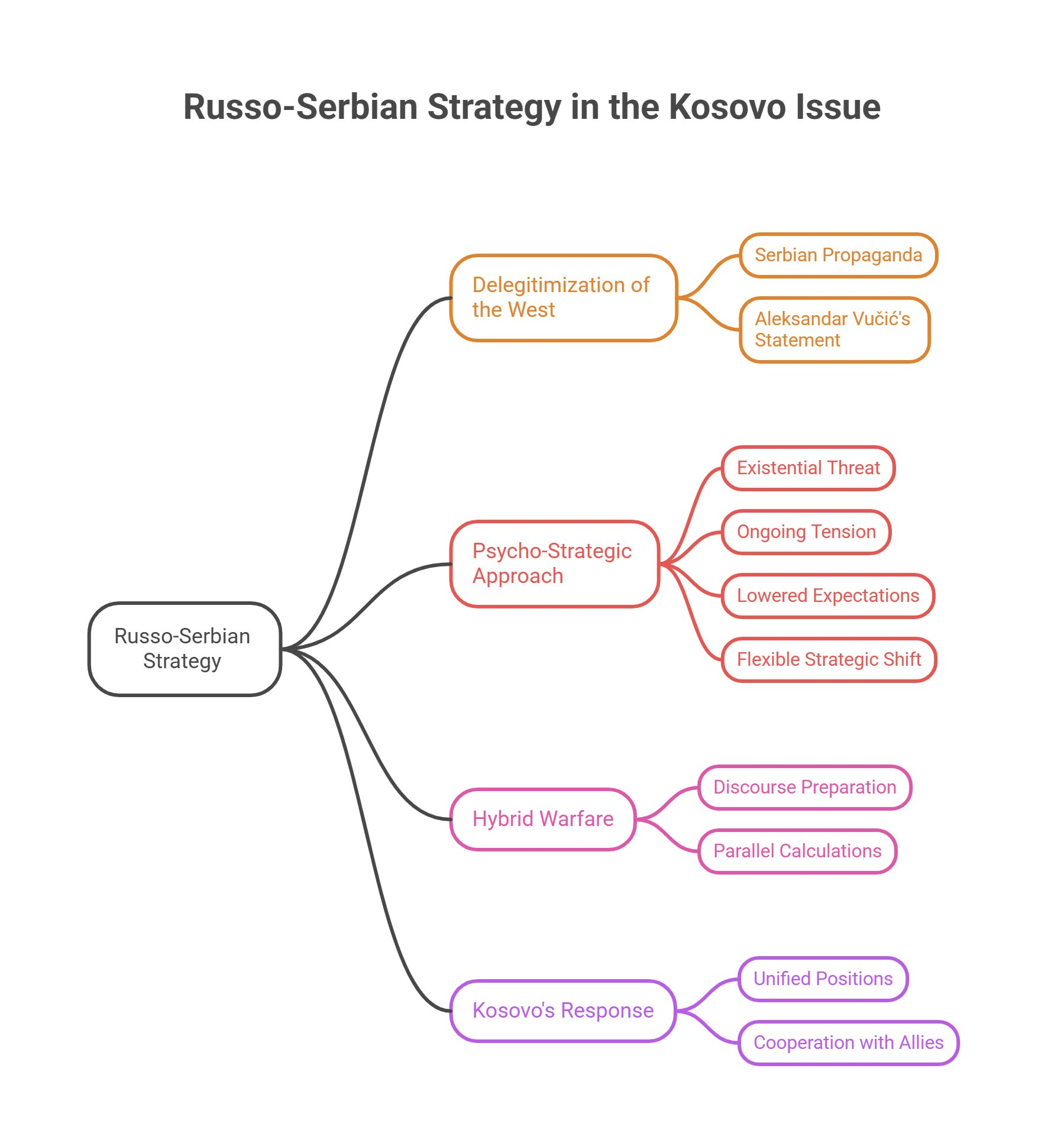
The amplified claim by Serbian propaganda that the United States is pushing Serbia toward a secret agreement to recognize Kosovo, along with Aleksandar Vučić’s statement that “Serbia will not recognize Kosovo,” are neither spontaneous episodes nor emotional reactions. They are part of a deliberate strategic construction.
Last month, Russia’s Minister of Foreign Affairs, Sergei Lavrov, suggested that Serbia should reconsider its relations with the European Union due to pressure regarding the recognition of Kosovo. Now, within Serbian discourse, the United States is being targeted, portrayed as an actor seeking to impose Kosovo’s recognition on Serbia through “secret agreements.”
We are witnessing two discursive strikes with the same objective: to construct the narrative that Serbia is under political siege from the West and is being forced to abandon its position. At a time when the resumption of the Kosovo–Serbia dialogue is being sought, this approach serves to undermine the climate of trust and to position Serbia in alignment with Russian strategic interests.
Within this framework, a psycho-strategic approach unfolds along four clear vectors:
1. A sense of existential threat is cultivated by advancing the narrative that Serbia is being forced to relinquish “its territory,” accompanied by the amplification of propaganda about external pressure.
2. Ongoing tension with the West is normalized, turning verbal confrontation into routine. This frames militarization as a nationalist duty and reinforces internal power consolidation, particularly in the run-up to elections.
3. Expectations for compromise are lowered through the delegitimization of the EU and the United States as neutral mediators, prolonging the model of abilocracy and portraying any external pressure as an attack on Serbia.
4. Space is created for a more flexible strategic shift toward Russia, presenting it as an alternative partner under conditions of Western “pressure.” In the logic of hybrid warfare, narrative precedes movement. Discourse prepares the terrain.
And when the terrain is carefully prepared, it usually indicates that parallel calculations and maneuvering are unfolding behind the scenes. Therefore, positions from Kosovo must be unified and firm toward Serbia, and so too must cooperation and lobbying with Western allies be in response to the Russo-Serbian strategy.

