
Background
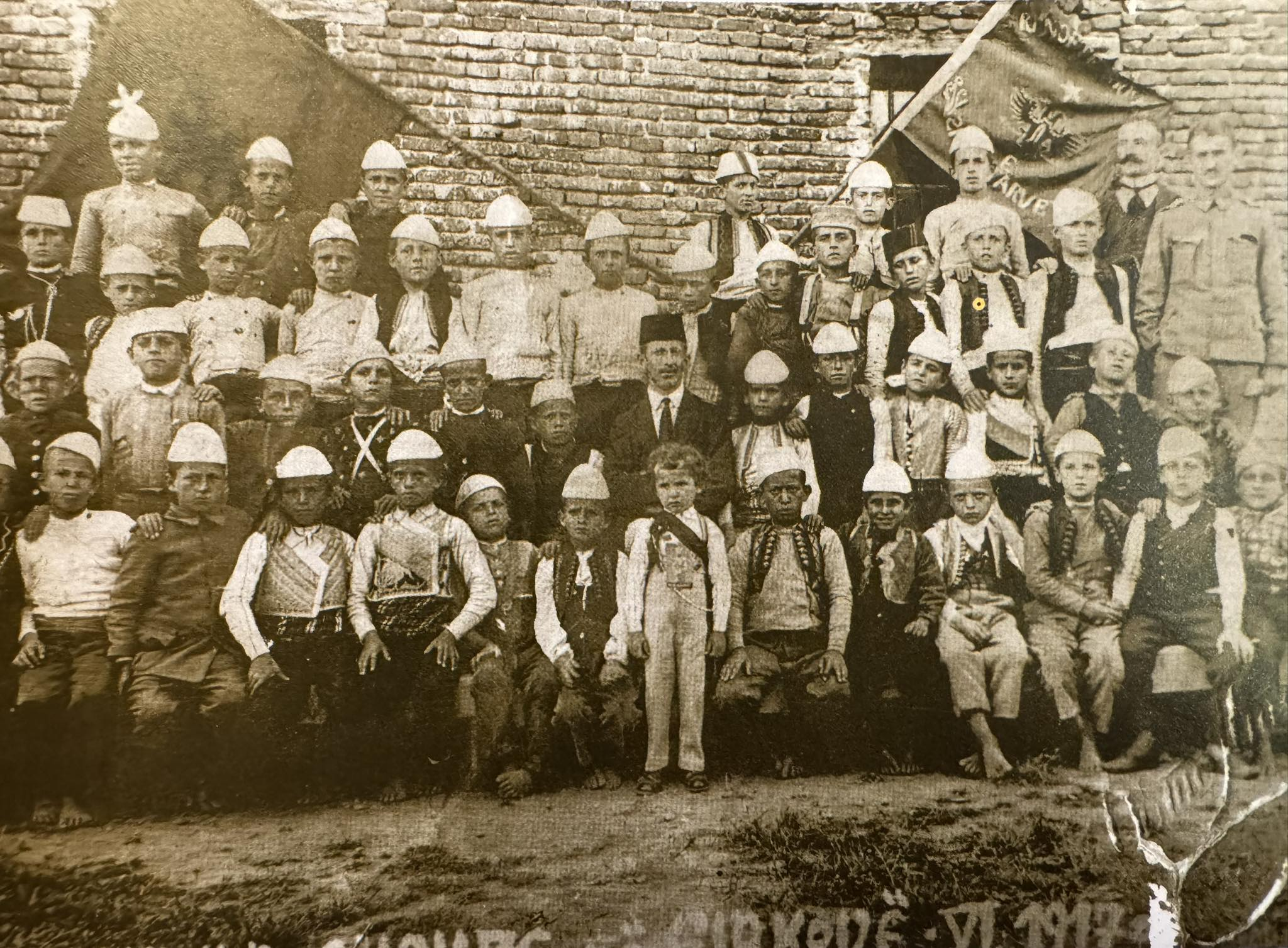
Albanian schools in Kosovo were first opened by the Austrians in 1915, and were closed by the Serbs in 1919.
Until 1915 there were no Albanian schools because the Ottoman Empire did not allow them, then when Kosovo was reoccupied by Serbia in 1912, the opening of schools in the Albanian language was impossible.
With the liberation of Kosovo from Austria-Hungary in 1915 and the expulsion of the Serbian occupier, Albanian-language schools were opened in every city in Kosovo.
Unfortunately, Austria-Hungary lost the First World War, and Albanian schools were closed for 22 years by the Serbs, and were reopened during the Second World War.
The first military school opened by the Austrians in Mitrovica, 1916
The primary school “SKENDERBEU” in Gjakova, 1916
The Albanian school in Podgorica, 1916
The Austrians open the first Albanian language school in Mitrovica, after centuries of ban by the Turks and Serbs.
The Albanian school in Peja, 1916
The Albanian school in Gjakova, 1917

This is a photo of the Albanian school “Skenderbej” in Gjakova in 1917, opened under Austro-Hungarian rule. Foto: Ahmet Zherka.

Another class in the same school.
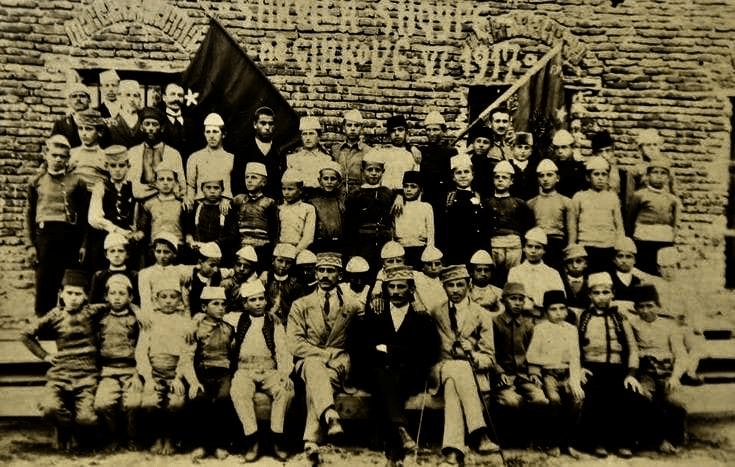
Gjakova, 1917.
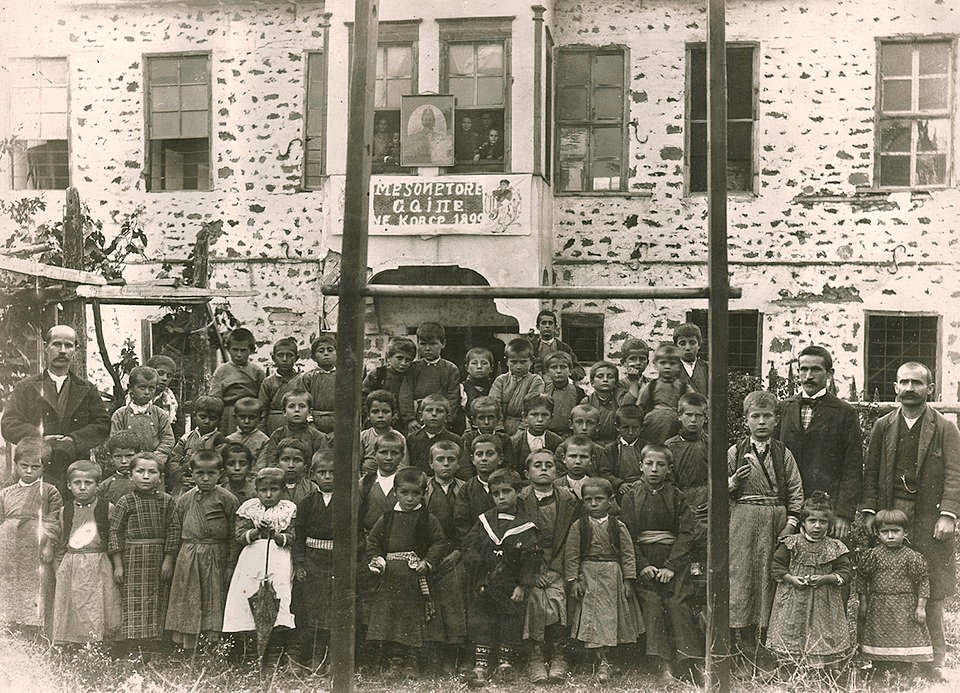
Albanian school in Korce, 1899.
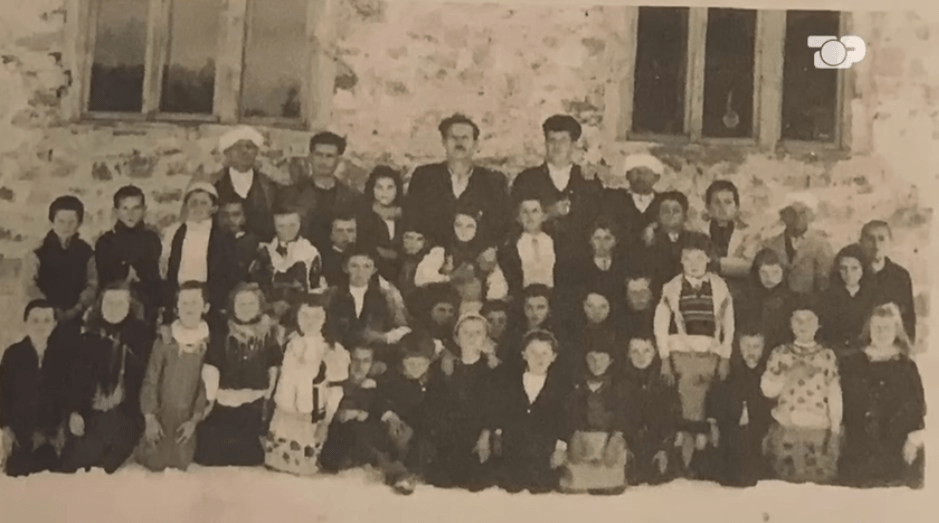
In 1913-1914, schools were opened, but only in the Serbo-Montenegrin language, which forced the Albanians of Rozhaja to keep their children at home. During the Austro-Hungarian regime in 1916-1918, schools were opened in the Albanian language. After World War I, the Serbs closed them again.
In 1943, an Albanian school was opened in Dacaj. The school was closed again 2 years later by the Yugoslavs. In 1945, the Yugoslavs opened a school in the Serbian language. In 1962, an Albanian school was opened in the village of Buxhov, and in 1967 a school was opened in Dacaj.

Albanian school in the 20th century
The first Albanian language teacher.
In 1879, the Albanian ideologist Naim Frashëri and Hoxhe Hasan Tahsini, encouraged and motivated by the spirit of the Albanian League of Prizren of June 10, 1878, organized by Hoxhe Ymer Prizreni, Sylejman Vokshi, Avdyl Frasheri, etc.
Naimi Frasheri as an official in the Ministry of Education in Istanbul, while Hasan Tahsini as the first Rector of Istanbul University, and Naimi’s brother, Sami Frasheri and other influential Albanians of the “Society of the Albanian Script Printing”, managed to secure permission and finances from Sultan Abdylhamid II for the opening of an Albanian school for boys in Korça.
Financial support was also provided by the Romanian diaspora, members of the “Drita” Society of Bucharest, while the Albanians of Istanbul, in addition to financial assistance, decided that the school’s director would be Pandeli Sotiri. The environment where the school was located was the house donated by Diamant Terpo.
The Ottoman authorities gave permission only to Albanian Christians to attend teaching at this school, but the Albanians did not obey the permission and allowed Muslim children to attend. In the first years, about 200 students of the Islamic and Christian faiths were registered at the school. In 1888, the school had 100 Christian students and 160 Muslims.

The Albanian school with its students, in the Albanian village of Bell’kamen (today Drosopigi, Greece), in 1906.
The Albanian school in the Albanian village of Bell’kamen was opened at a time when the Albanian language and schools were being fought against mainly by the Ottoman Empire, as well as by the Orthodox clergy of the Phanar of the New Greek state.
During this period, Albanian patriots and teachers were financially supported by the Albanian diaspora in Romania, and also used the interest of Romanian groups that wanted to open Romanian schools. Many Albanians studied in Romanian schools (including the high school in Manastir), as was most welcome, at a time when Albanians were not allowed to be educated in the Albanian language.
Some of the primary schools were opened as Albanian-Romanian schools, with the aim of being allowed by the Ottoman Empire of the time, and also as a justification to Romanian donors to finance Albanian teachers in these schools (although Albanian teachers were assisted by the Albanian diaspora in Romania, the funding was still insufficient), as in the case of the school in the Albanian village of Bell’kamen.
The school in the Albanian village of Bell’kamen consisted of a Romanian language teacher (Dorçe, with a white shirt on the left, who came from the village of Gopesh) and two Albanian language teachers who are near the door in the photo, on the right (we have no information about their names).
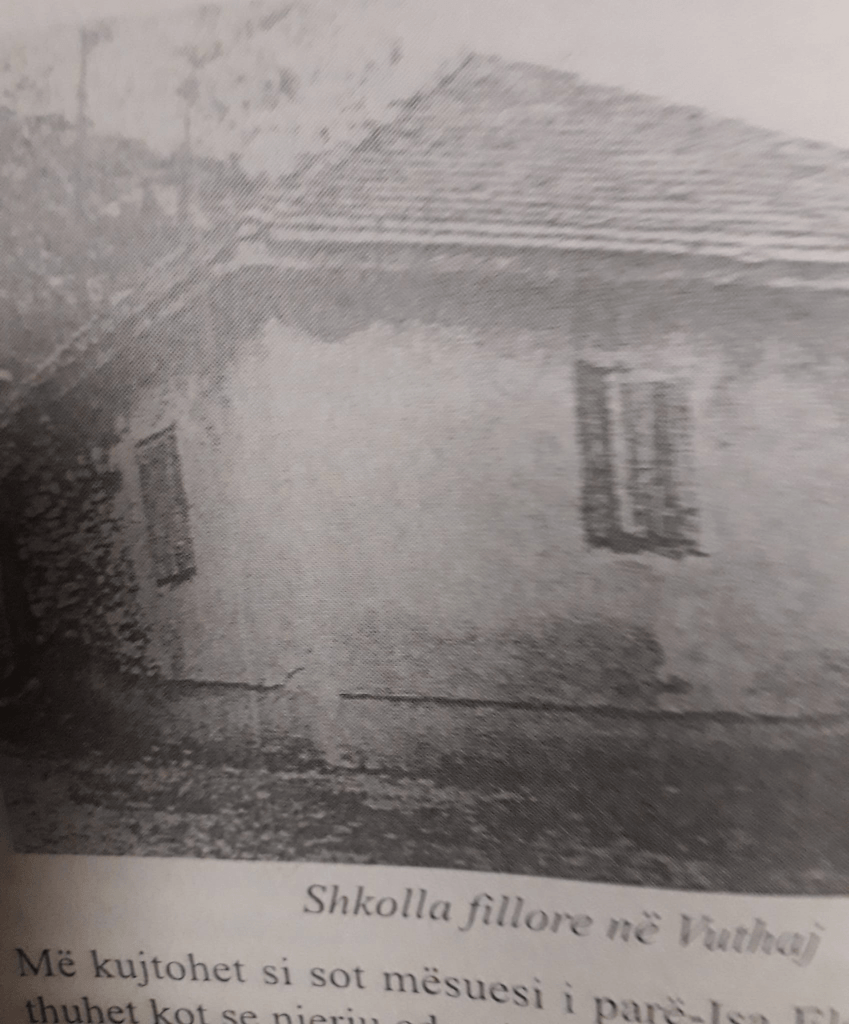
The elementary school of Gucia, the Albanian region in modern day Montenegro. Opened in 1916 by the Austro-Hungarians.
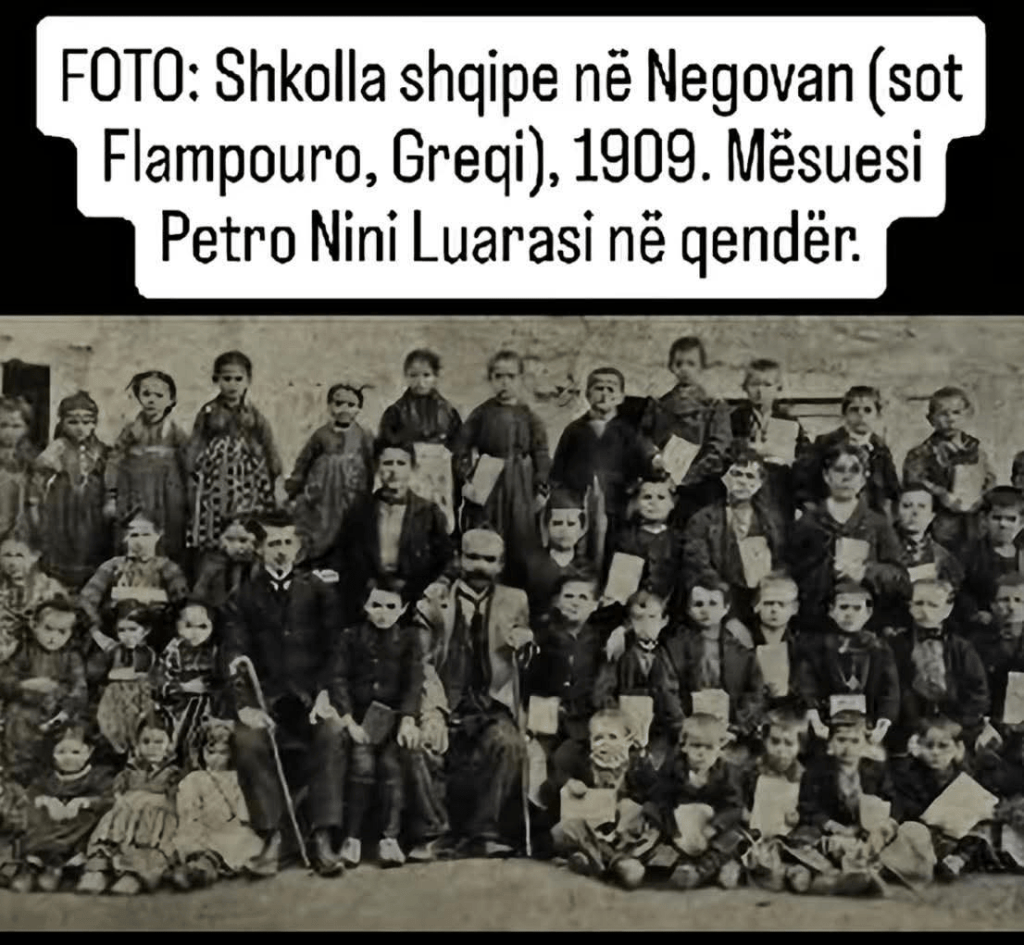
Albanian school in Negovan (today Flampouro, Greece), 1909.
At the center stands the dedicated teacher Petro Nini Luarasi, one of the greatest luminaries of Albanian education. In difficult times, he and his students kept the language of the nation alive — with banned books, but with free hearts.

On the eve of the Albanian school day in the village of Uçë, we remember with respect and pride its first teacher Abdurrahim Gashi. Historical photo of the 1942/1943 school year.
Many students in this photo where the will of the parents to eradicate illiteracy in the Albanian lands is clearly visible. Glory also to the Albanian teachers, who fought tirelessly so that we could emerge from darkness into light.
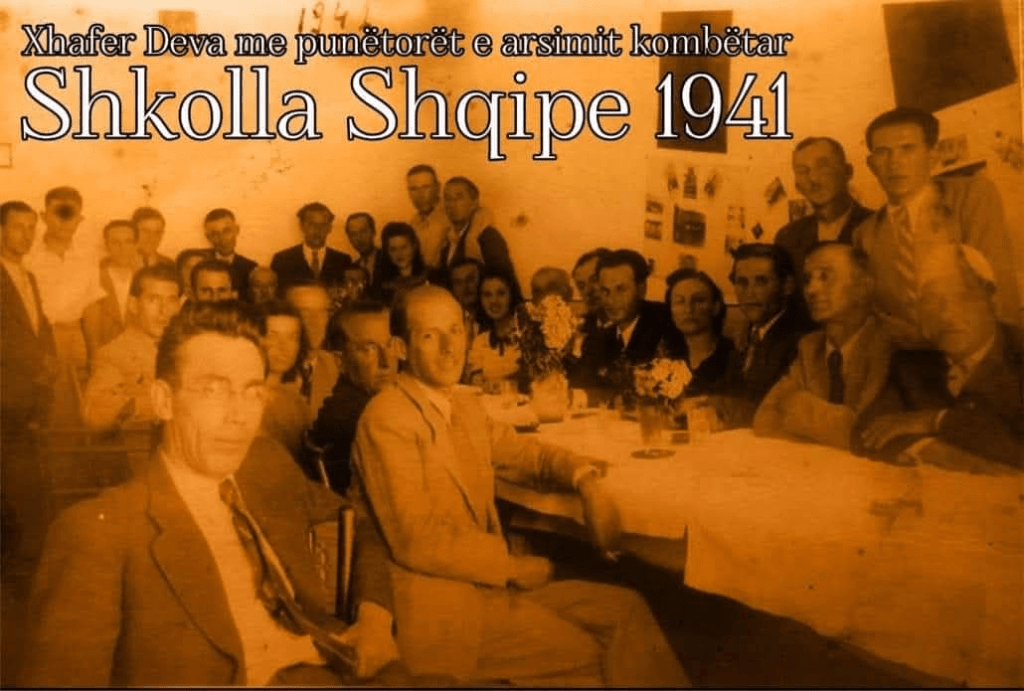
Albanian school in 1941. In the photo: Xhafer Deva (left) and his colleagues.

