
An article about the Serbian war against life itself
“Ku shkel qizmja e rusit (shkjaut) aty nuk del bari”. In Albanian folklore: “Wherever the Slav (or Russian) boot steps, nothing grows.” This proverb captures the centuries-long war waged by Serbia’s elite—military, political, and clerical—against anything non-Serb and non-Orthodox, turning fertile lands and vibrant communities into scorched earth.

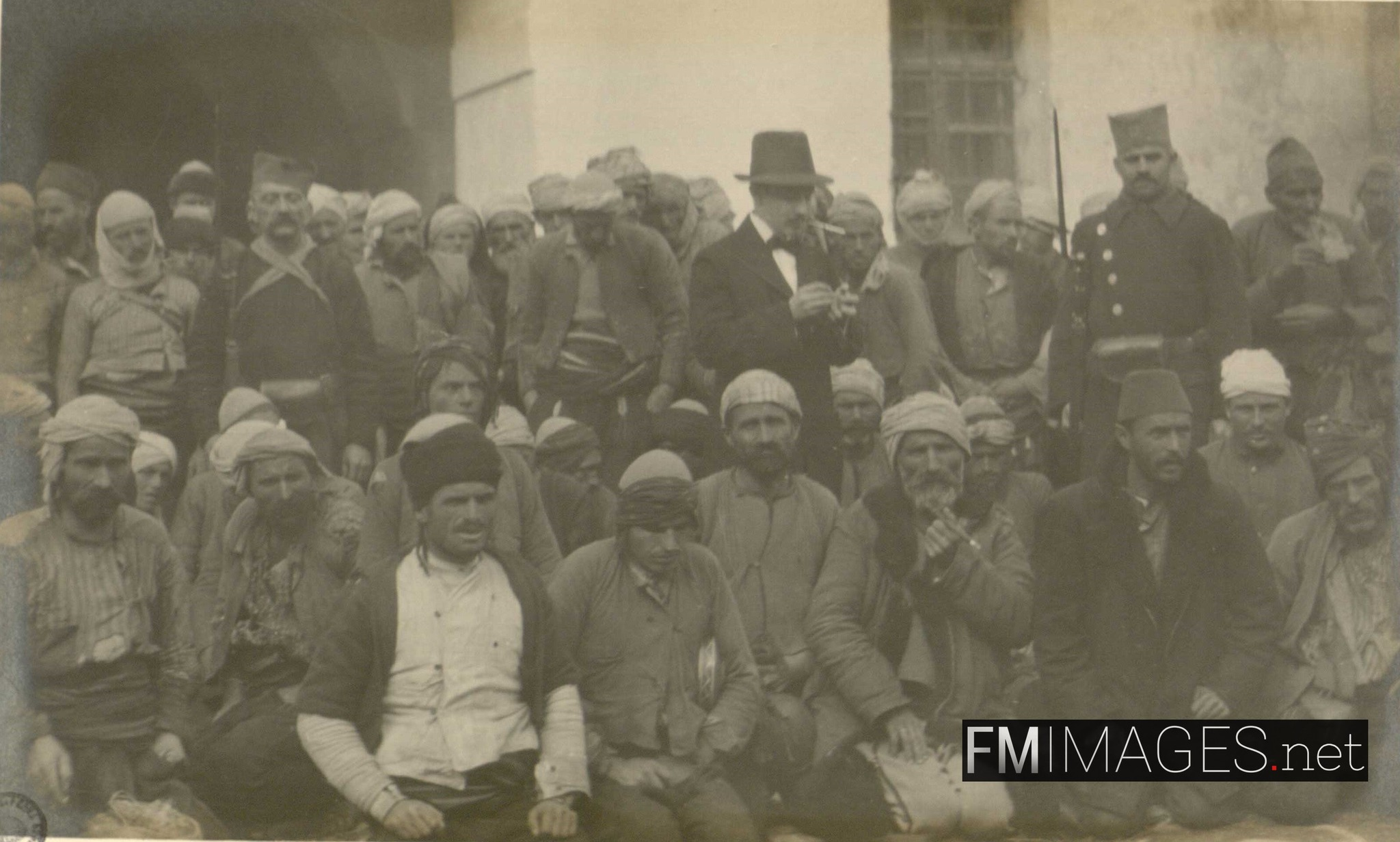
Serbs capturing Albanian civilians in 1912.
For over a century, Serbia’s ruling classes have pursued a systematic policy of brutal expansionism, imperialism, and colonial occupation aimed at erasing Albanian presence from territories they claim as their own. Kosovo, historically inhabited by an Albanian majority for centuries, became the prime target of this campaign.
What Serbian nationalists call “Old Serbia” or the “cradle of the Serbian nation” was, in reality, seized through conquest, ethnic cleansing, and colonization. The Serbian military elite, backed by the Orthodox clergy and a chauvinist political establishment, treated Albanian lands not as places to govern but as territories to empty, repopulate, and dominate—precisely the barren legacy described in Albanian folklore.

Albanians fleeing Serbian terror, 1912.
The pattern began in earnest after the 1878 Congress of Berlin, when Serbia gained independence and immediately turned its gaze southward. Albanian settlements in the districts of Toplica and Kosanica were systematically emptied.
A 1880 law on agrarian relations provided the legal framework for colonization: land was confiscated from expelled Albanians and redistributed to Serb settlers from Montenegro, Vranje, and other regions. Within decades, these once-Albanian areas supplied recruits for Serbia’s wars, while the original inhabitants were driven out.
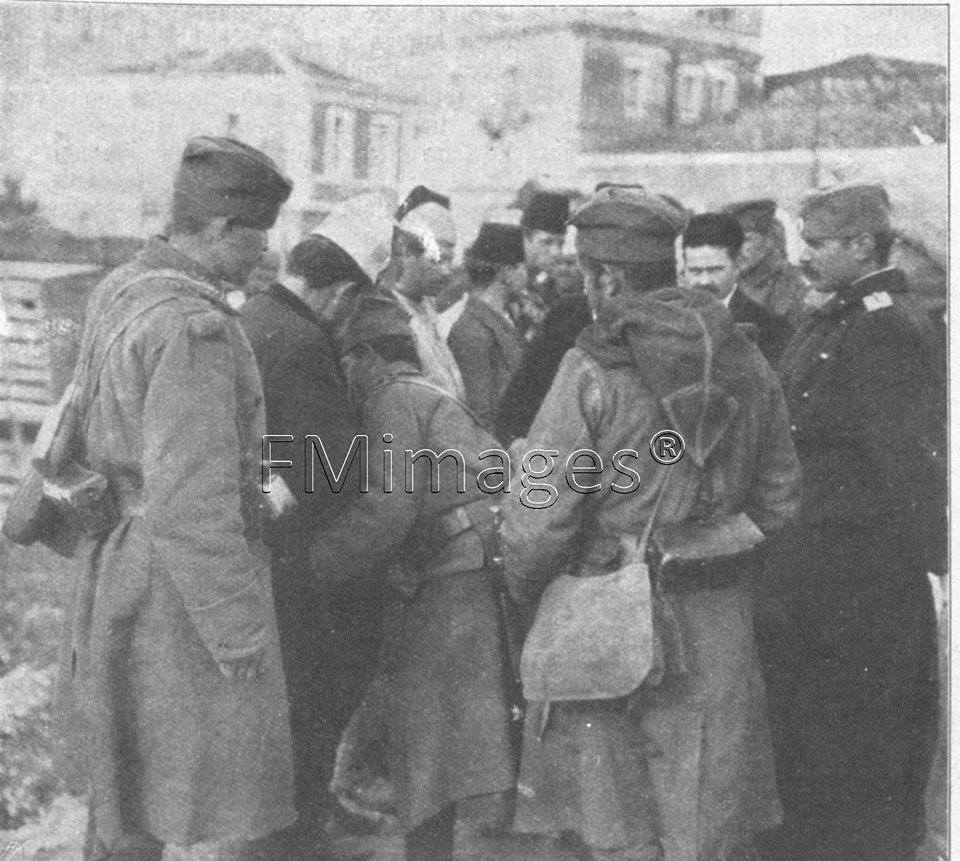
Serbs beating Albanian civilians in Durrës, 1912.
The Balkan Wars of 1912–1913 marked the high point of this expansionist frenzy. Serbian and Montenegrin armies invaded Kosovo and other Albanian-inhabited regions as the Ottoman Empire crumbled. What followed was not liberation but organized terror. Villages were burned, civilians massacred, and entire communities forced to flee.
The international Carnegie Endowment for International Peace report, compiled by a neutral commission in 1914, documented the atrocities in devastating detail: houses and villages reduced to ashes, unarmed populations slaughtered en masse, and “incredible acts of violence, robbery and brutality of every kind” used specifically “with the aim of completely changing the ethnic character of the areas inhabited exclusively by Albanians.” Estimates put the death toll of Albanians in Kosovo and Macedonia at least 120,000, with Serbian forces expelling another 239,807–281,747 people between 1912 and 1914.

Serbs beat Albanians in public, 1912.
Even Serbian socialist Dimitrije Tucović, writing in Serbia and Albania (1914), condemned his own government’s “conquering policy” and “imperialist” approach toward the Albanian people. He argued that the invasion brought nothing progressive but instead hindered Albanian national development and sowed the seeds of permanent conflict on Serbia’s borders.
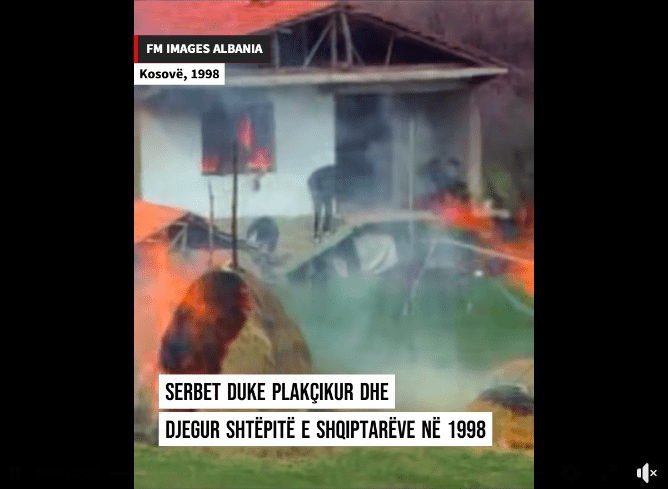
Serbs burning Albanian houses, 1998.

Serbs steal the TV before torching the house.
After the wars, the newly created Kingdom of Serbs, Croats, and Slovenes (later Yugoslavia) formalized the colonization of Kosovo. Land was seized from Albanian peasants and given to Serb and Montenegrin settlers under laws explicitly designed to alter the demographic balance. Albanian resistance—whether cultural, political, or armed—was met with repression.
The Serbian Orthodox Church played a central ideological role, sanctifying the conquest by reviving the Kosovo Myth (the 1389 Battle of Kosovo) and portraying the province as sacred Serbian soil. Clerical nationalism fused with state power to justify occupation as a divine and historical right.
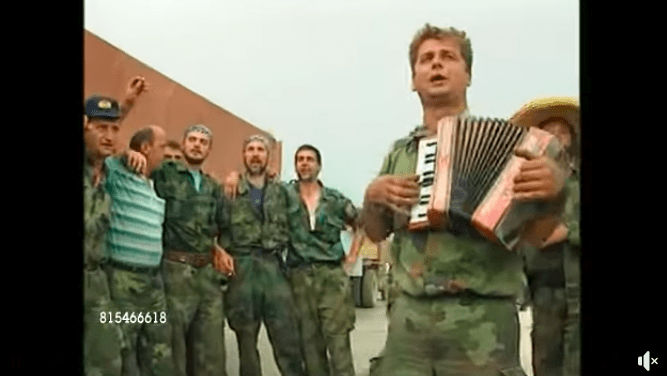
Serbian Chetnik paramilitaries sing and celebrate in the end of 1999, promising to return.
This colonial project continued through the 20th century. In the interwar period and under Tito’s Yugoslavia, Albanians in Kosovo faced discrimination, forced assimilation, and periodic crackdowns. The 1989 revocation of Kosovo’s autonomy under Slobodan Milošević—cheered by the Serbian military elite and the Church—reignited open conflict.

Serbs massacre 5 Albanians and pose with the corpses, in Prizren, 1925.
The 1998–1999 war saw Serbian forces conduct a campaign of ethnic cleansing: villages razed, civilians massacred, over a million Albanians displaced, and cultural sites targeted. International observers again documented systematic atrocities aimed at emptying Kosovo of its Albanian population.
Throughout, the Serbian elite’s ideology of Greater Serbia—encompassing not only Kosovo but parts of Albania, Macedonia, Bosnia, and Croatia—revealed the true nature of the project: not defensive nationalism, but aggressive imperialism dressed in the language of historical grievance.
The clergy provided moral cover, the military executed the expulsions, and the political class supplied the legal and propaganda machinery. The result was a century-long war against Albanian life itself: against villages, families, mosques, language, and identity. Where the Serbian boot stepped, Albanian society was to be uprooted so that nothing “non-Serb” could grow back.
The Albanian proverb remains prophetic. Serbian expansionism did not build; it scorched. It did not integrate; it erased. Kosovo’s 1999 liberation and 2008 declaration of independence broke the colonial grip, but the ideology that drove it persists in Belgrade. The Serbian elite’s war against non-Serb life has left a trail of destroyed communities and barren fields—exactly as the old Albanian saying warned.
Sources
Carnegie Endowment for International Peace, Report of the International Commission to Inquire into the Causes and Conduct of the Balkan Wars (1914).
Dimitrije Tucović, Serbia and Albania (1914).
Contemporary Albanian and international scholarship on the Balkan Wars and Kosovo colonization.
Documented accounts of 20th-century Serbian policies in Kosovo.
This is not ancient history. It is the living record of a sustained campaign of territorial theft and cultural destruction. The Serbian elite’s focus—military, clerical, and collective—has been consistent: expand, occupy, colonize, and eliminate the “other.” The grass still struggles to grow where that boot once trod.

