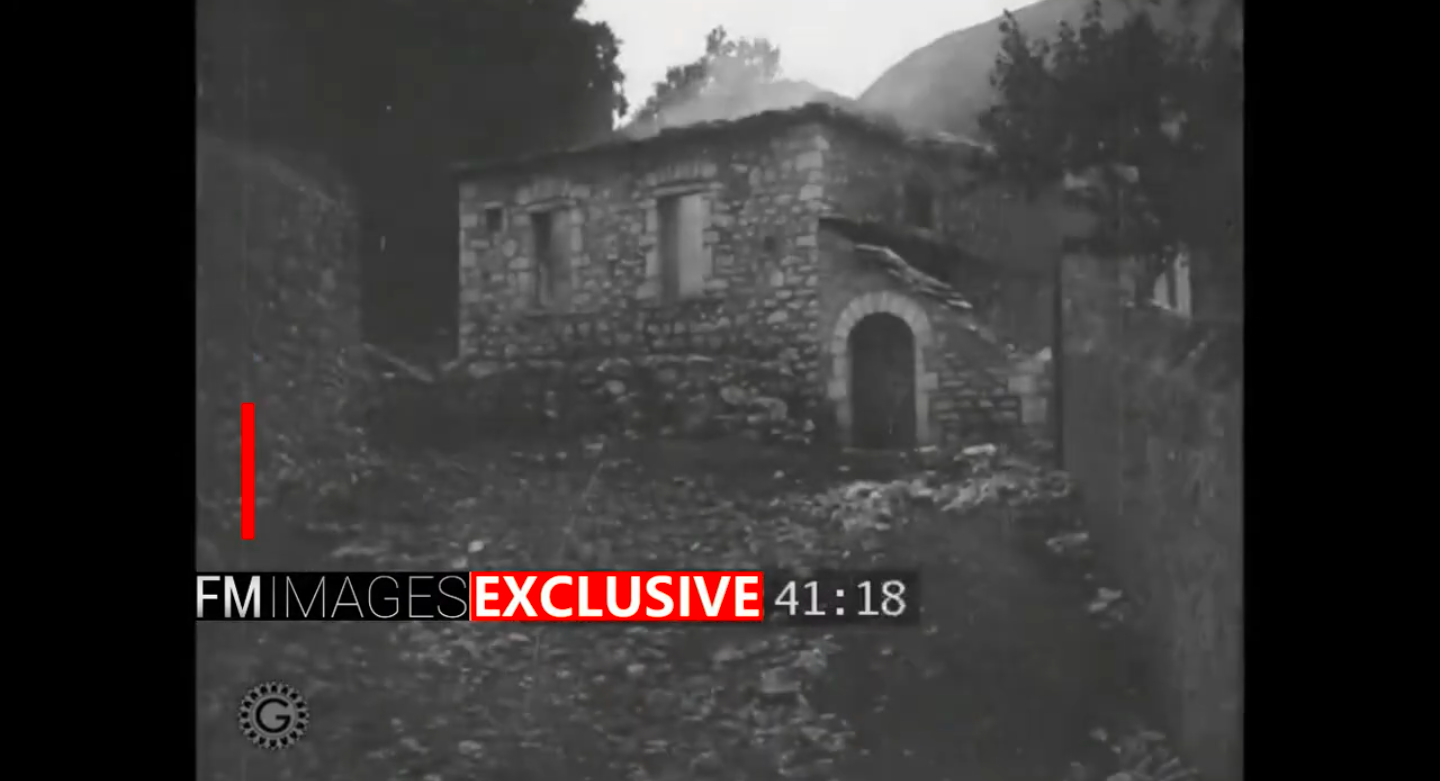

Video from FM Images Albania. Full video at the bottom
In this video, we see the Serbian troops burning Albanian kullas or houses in the Malësia region of northern Albania in 1912. The recording shows smoke rising from the village, as well as corpses of murdered Albanians. The Serbs then decide to record while they “storm” this already burned down house.
In the flickering, grainy frames of this early 20th-century footage, the horror unfolds with chilling detachment. Thick columns of smoke rise from the stone kullas — the traditional fortified tower-houses of the Malësia region in northern Albania — as entire villages are consumed by fire.
The camera, operated by Serbian soldiers during the chaotic final days of the Balkan Wars, pans across the devastation. Charred ruins smolder in the background. On the ground lie the motionless corpses of murdered Albanians, left where they fell amid the ruins of their homes. Then, with almost theatrical bravado, the troops decide to stage their own “assault”: they rush toward one of the already gutted and burning structures, rifles raised, as if storming a defended position rather than desecrating the remnants of a civilian settlement they have just destroyed.
This is not combat footage. It is a self-recorded celebration of destruction — a macabre home movie made by invaders who treated the systematic erasure of Albanian life as both duty and spectacle.
What makes this particular footage especially disturbing is the casual sadism of the perpetrators. These soldiers did not simply burn and move on. They paused to film their handiwork. They posed their “storming” of a already-destroyed house for the camera, turning mass arson and murder into entertainment.
The act reveals a profound dehumanization: Albanian lives and homes reduced to props in a conqueror’s narrative. There is no fog of war here — only the cold clarity of men who viewed the destruction of another people as a triumphant spectacle worthy of preservation on film.
The video stands today as a rare visual indictment. While much of the Balkan Wars’ brutality was documented only in written reports by shocked foreign observers, this footage allows us to witness the indifference with which Serbian troops treated the annihilation of civilian life. Smoke billows, bodies lie unburied, and the soldiers play at heroism amid the ruins they created.
Such images force a confrontation with uncomfortable historical reality: the Serbian campaign in 1912 was not merely a war of territorial acquisition but a war against Albanian existence itself. The burning kullas and the filmed “assault” on their smoldering shells reveal the nihilistic core of that project — a willingness to destroy not just lives, but the very material and cultural fabric that sustained a people.
The footage remains a haunting artifact: proof that, for at least some of the invaders, the extermination of Albanian Malësia was not tragedy but triumph — something worth capturing on camera for posterity.
The video does not show isolated excess. It shows policy in action — the scorched-earth face of early 20th-century Serbian imperialism in Albanian lands.
Full video

