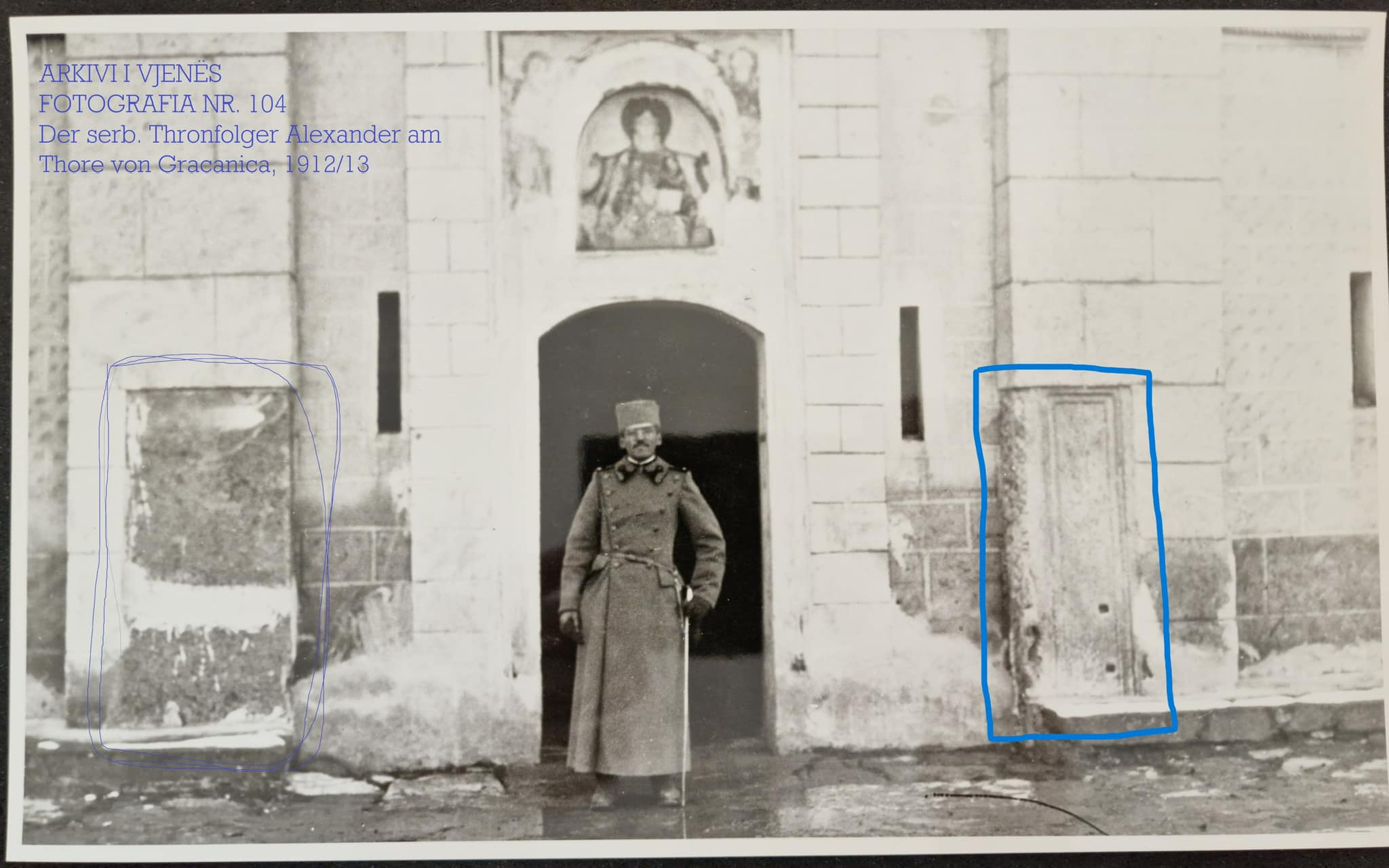

This article discusses the Serbian theft of Albanian artefacts in 1912. In this photo, we see a Serbian soldiers at the Gracanica Monastery. The icon of Saint Mary above the door and the two side signs in which the Albanian relics were kept no longer exist.
In this historic photograph from the Vienna Archives (Arkivi i Vjenës, Fotografia Nr. 104), the Serbian Crown Prince Alexander (later King Alexander I of Yugoslavia) stands at the entrance of Gračanica Monastery during the Serbian occupation of Kosovo in 1912/13.
The image captures a moment of conquest. Two areas are particularly significant: the large faded fresco or icon panel on the left and the stone-framed niche on the right (both highlighted in blue). According to Albanian historical accounts and contemporary observers, these spaces once contained important Albanian religious and cultural relics — including icons, inscriptions, or artefacts connected to the local Albanian Orthodox or Catholic tradition.
After the Serbian army took control of the region during the First Balkan War, many of these Albanian artefacts disappeared. The icon of Saint Mary that once stood prominently above the main door is no longer there. The two side panels that housed Albanian relics were also removed or destroyed in the following years.
This photograph serves as visual evidence of the systematic cultural appropriation and theft that accompanied Serbian military expansion into Albanian-inhabited territories in 1912–1913. While Serbian forces presented their campaign as “liberation,” in practice it involved not only massacres and expulsions of the Albanian civilian population but also the looting and erasure of Albanian cultural and religious heritage.
Gračanica Monastery, originally a Serbian Orthodox foundation from the 14th century, became a site where Albanian historical presence was deliberately downplayed or removed during the early 20th-century occupation. The missing icon and side panels stand as silent witnesses to this process of cultural cleansing that accompanied the territorial conquest.
The image from the Vienna Archives remains one of the few surviving visual records showing the monastery’s entrance with the artefacts still (partially) in place before their disappearance under Serbian control.

