
Taken from Hasi Sot. Translation by Petrit Latifi
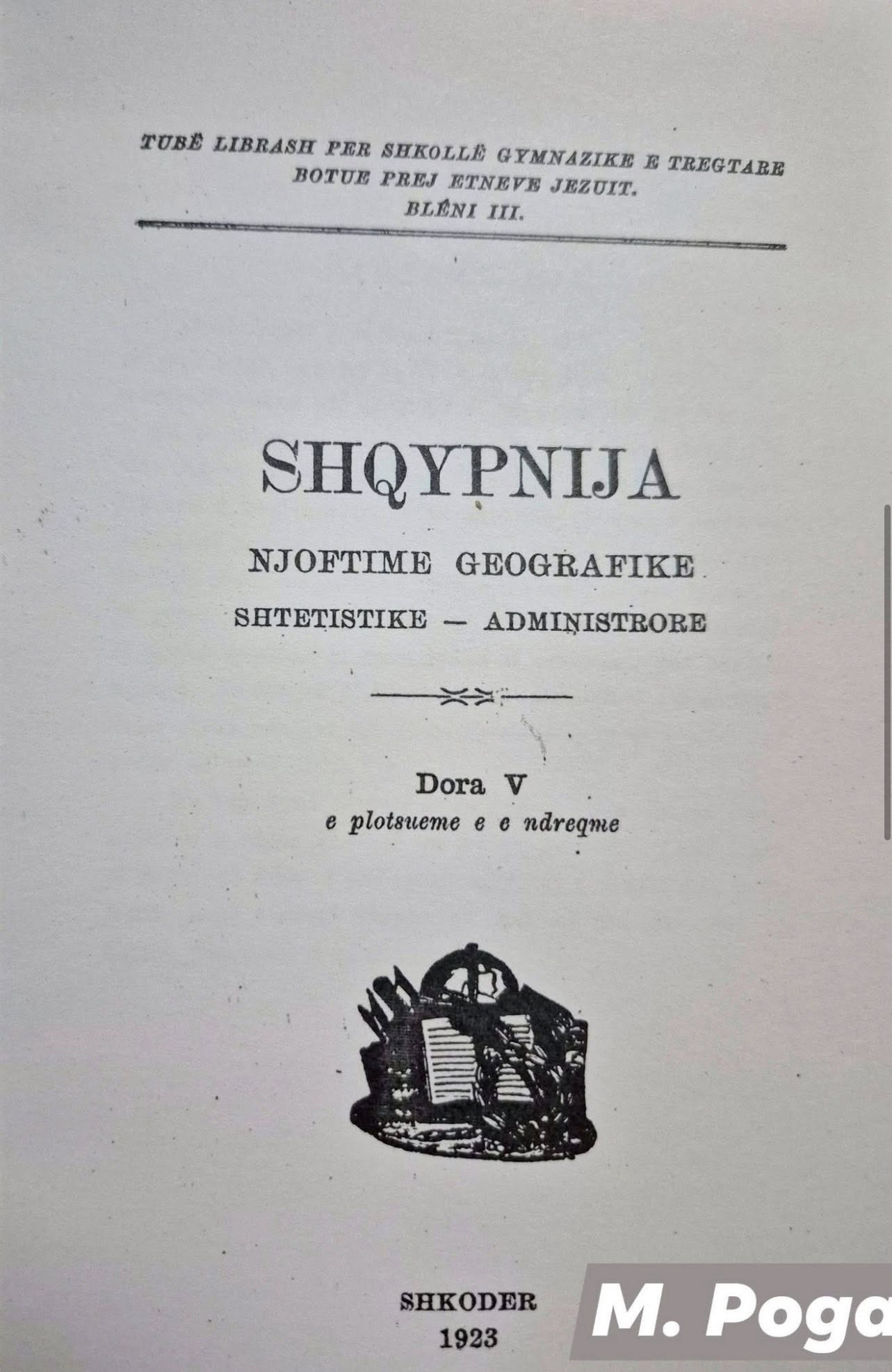
Valuable historical data on Hasi comes from the work “Shqypnija” by Lorenzo Viezzoli, published in 1923. Lorenzo Viezzoli was a Jesuit priest, educator, and dedicated researcher of the geography and demographic structure of Albania.
Transcribed:
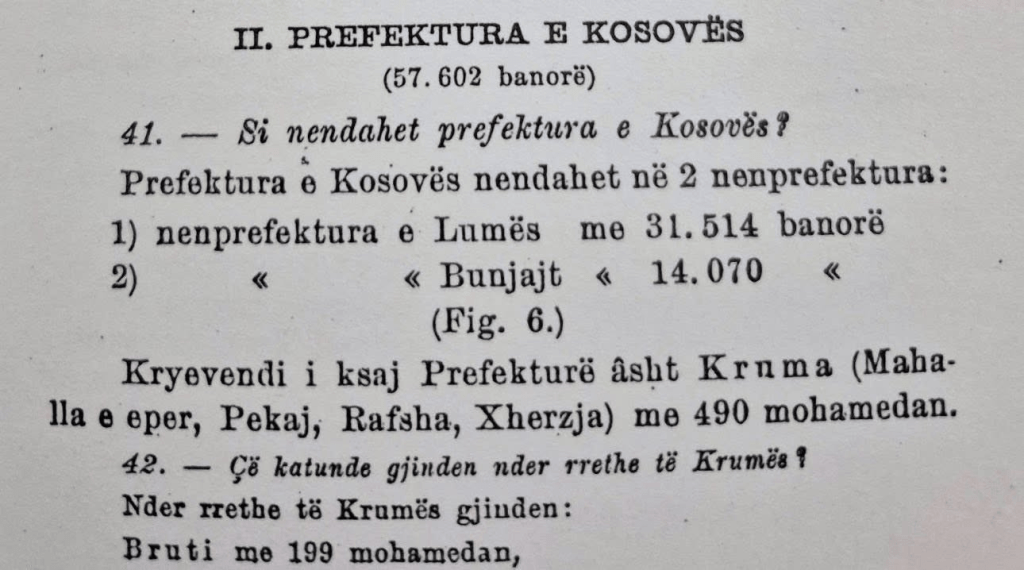
II. PREFECTURE OF KOSOVË
(57,602 inhabitants)
- — How is the Prefecture of Kosovë divided?
The Prefecture of Kosovë is divided into 2 sub-prefectures: - Sub-prefecture of Lumë with 31,514 inhabitants
- Sub-prefecture of Bunaj with 14,070 inhabitants (Fig. 6.)
The main center (capital) of this Prefecture is:
Kruma (Upper Mahalla, Pekaj, Rafsha, Xherzja) with 490 Muslims.
- — Which villages are found in the districts of Krumë?
In the districts of Krumë are found:
- Bruti with 199 Muslims
- Dedaj (Dedaj, Rrethi) with 129 inhabitants, of which 33 Catholics and 96 Muslims
- Demjani (Duraku, Upper Mahalla) with 867 inhabitants, of which 31 Catholics and 836 Muslims
- Dobrunë with 130 Muslims
- Domni with 119 Muslims
- Gercina (Gurra, Gutaj, Mahmutaj, Sylmetaj, Trava) with 309 Muslims
- Gjinaj (Çansuli, Gjinaj) with 201 Muslims
- Gjonaj (Brajza, Çoçaj, Upper Mahalla) with 1,004 Muslims
- Golaj (Astori, Brataj, Dautaj, Kovaçi) with 321 Muslims
- Gorozhupi (Binaj, Kerhani, Martini, Pogaj, Trajeci, Tana) with 425 Muslims
- Helshani (Gashaj, Goli, Hasanej, Maçi, Ustrefaj) with 341 Muslims
- Kabashi with 106 Muslims
- Karashigjeqi (Çakaj, Dodaj, Kajtaja, Mollazi) with 334 inhabitants, of which 216 Catholics and 118 Muslims
- Kishaj (Daci, Koleci, Leshi, Muj, Qemi, Sahani) with 422 Muslims
- Kojushi with 127 Muslims
- Kosturi (Bolaj, Gjonaj, Meshaj) with 198 Muslims
- Krajki (Daca, Likaj, Previça) with 311 Muslims
- Kushnini (Bregaj, Lower Mahalla) with 415 Muslims
- Letaj with 173 Muslims
- Liqeni i Kuq with 108 Muslims
- Lubizhdë (Boksi, Gegollaj, Supja, Truça, Vorreva) with 620 Muslims
- Lukini with 81 Muslims
- Mazrreku (Duravaku, Hameli, Karavidi) with 210 Muslims
- Mila (Mila Mahalla, Stajka) with 126 Muslims
- Myqi with 123 Muslims
- Nikoliqi (Çaushaj, Kroni, Lushi, Memaj, Pecaj, Ramaneti) with 349 Muslims
- Peraj with 71 Muslims
- Perolli with 150 Muslims
- Planeja (Maloki, Ndërmjena, Negja, Shigjeçi) with 360 Muslims
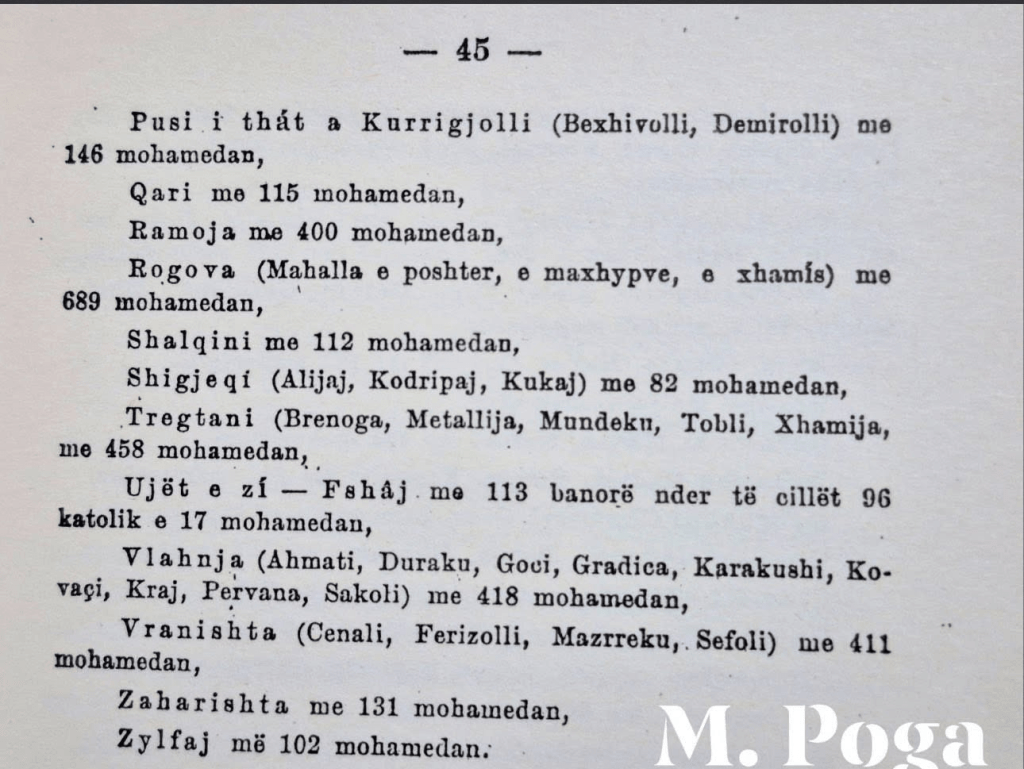
- Pusi i Thatë a Kurrigjolli (Bexhivolli, Demirolli) with 146 Muslims
- Qari with 115 Muslims
- Ramoja with 400 Muslims
- Rogova (Lower Mahalla, of the Maxhupëve, of the Mosque) with 689 Muslims
- Shalqini with 112 Muslims
- Shigjeqi (Alijaj, Kodripaj, Kukaj) with 82 Muslims
- Tregtani (Brenoga, Metallija, Mundeku, Tobli, Xhamija) with 458 Muslims
- Ujë të Zi — Fshaj with 113 inhabitants, of which 96 Catholics and 17 Muslims
- Vlahnja (Ahmati, Duraku, Goci, Gradica, Karakushi, Kovaçi, Kraj, Përrvana, Sakoli) with 418 Muslims
- Vranishta (Cenali, Ferizolli, Mazrreku, Sefoli) with 411 Muslims
- Zaharisha with 131 Muslims
- Zylfaj with 102 Muslims
Note: “Mohamedan” refers to Muslims!
Photo credits: Man Poga”
The Population of Hasi According to Lorenzo Viezzoli (1923)
In 1923, just over a decade after Albania gained independence, Italian Jesuit priest and geographer Lorenzo Viezzoli published his valuable book Shqypnija, which provided one of the earliest detailed statistical and geographic descriptions of the young Albanian state.
One particularly interesting section concerns the Prefecture of Kosovë (in the northeast of the country), which at the time had a total population of 57,602 inhabitants. This prefecture was administratively divided into two sub-prefectures: Lumë (31,514 inhabitants) and Bunaj (14,070 inhabitants).
The administrative center was Krumë, a small town with 490 Muslim inhabitants. Viezzoli then listed dozens of villages belonging to the districts of Krumë, many of which are located in the historic Hasi region. The data offers a rare snapshot of the religious and demographic composition of the area in the early 1920s.
Most villages were overwhelmingly Muslim, but a few — such as Dedaj, Demjani, Karashigjeqi, and Ujë të Zi — had mixed Catholic and Muslim populations, reflecting the traditional religious diversity of northern Albania.
Viezzoli’s work remains an important historical source for understanding the settlement patterns, administrative structure, and ethno-religious makeup of Hasi and the surrounding highland areas during the formative years of modern Albania.
This detailed village-by-village record continues to be studied today by historians, geographers, and local researchers interested in the region’s heritage.