
Summary
The Albanian qeleshe, also known as plis, is a traditional white felt skullcap with deep roots in Illyrian headgear dating back to the Iron Age. Worn continuously for millennia, it symbolizes Albanian identity, resilience, and cultural continuity from ancient times through the Ottoman era to the present. Despite similar felt caps existing in the Mediterranean, the qeleshe’s specific form, craftsmanship, and role as a national emblem during the Albanian Renaissance make it unique. Facing threats from modernization, it deserves UNESCO recognition as Intangible Cultural Heritage to preserve traditional felt-making skills and ensure its transmission to future generations. It remains a living emblem of quiet strength and selfhood.
UNESCO Should Recognize the Albanian Qeleshe (Plis) as Intangible Cultural Heritage
A humble piece of white wool felt, shaped by hand through an ancient process of compression and craftsmanship, has adorned Albanian heads for millennia. From ancient Illyrian warriors and medieval saints to 19th-century highlanders and modern elders, the qeleshe—known regionally as plis in the north or qeleshe in other areas—transcends fashion. It embodies Albanian identity, continuity, and quiet resilience.
UNESCO should formally recognize the Albanian qeleshe/plis on its Representative List of the Intangible Cultural Heritage of Humanity. This recognition would honor a living symbol that has survived empires, invasions, and modernization while preserving the craftsmanship and cultural memory tied to it.
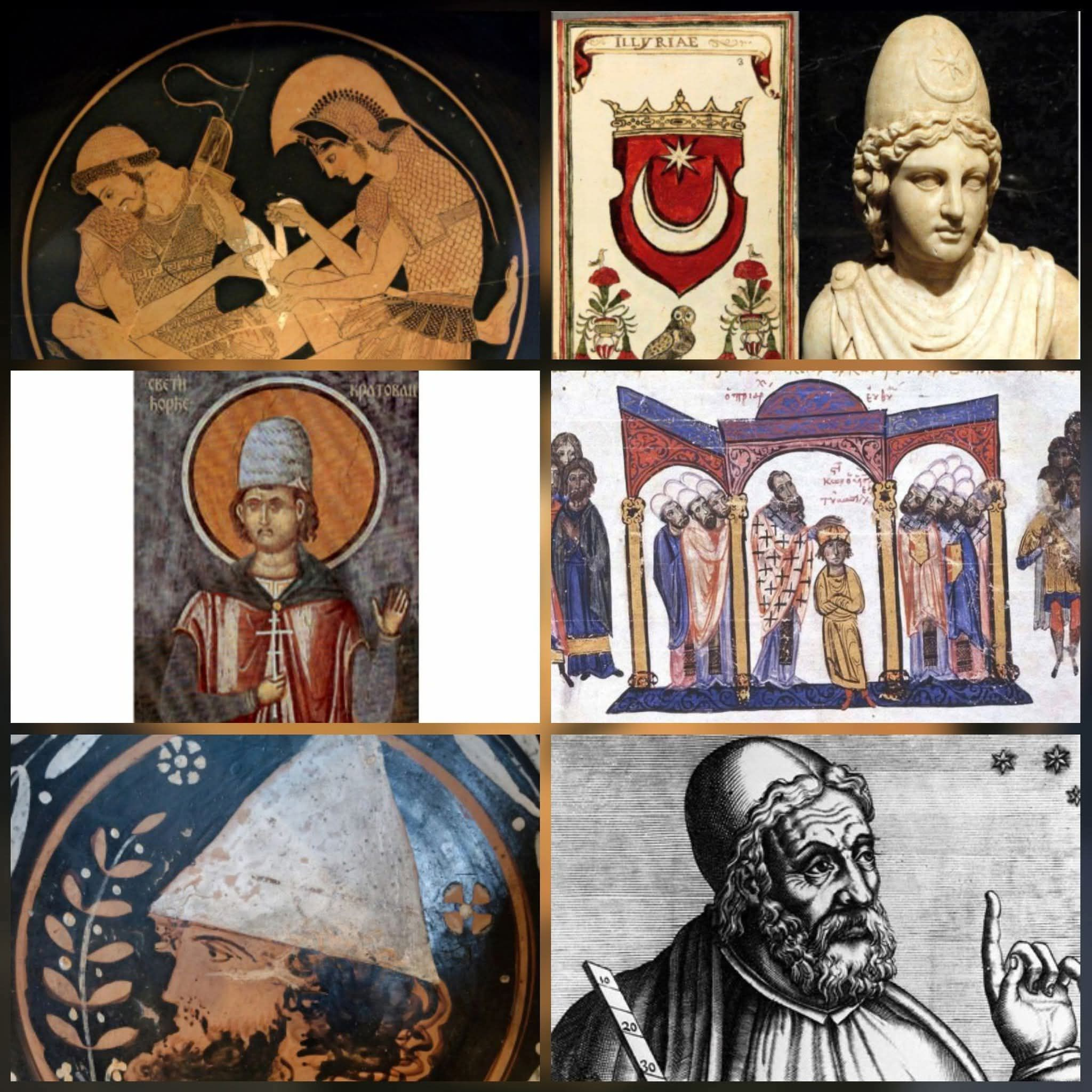
The collage in the first image makes the case visually and historically compelling. Ancient Greek pottery depicts warriors in helmets or caps resembling the rounded, felted form still worn today. A medieval coat of arms labeled “Illyriae” features a crescent and star—echoing motifs sometimes associated with regional symbols—alongside a classical bust in a similar conical headpiece.
Byzantine-style icons show haloed figures in tall, structured caps, while illuminated manuscripts portray rulers and attendants in comparable headgear. A painted vessel fragment reveals a bearded profile in a white, pointed cap framed by laurel, and an engraving of a wise elder in traditional attire raises his hand in a gesture of authority or blessing. These visuals trace an unbroken visual thread from antiquity through the Byzantine and Ottoman eras to the present.
Scholars link the qeleshe directly to Illyrian headgear from the Iron Age. Hemispherical felt caps appear in graves and monuments across the western Balkans, including a calotte-shaped example from Zenica (modern Bosnia) that closely mirrors the modern plis. Etymologically, “plis” relates to ancient terms for felt (similar to the Greek pileus or Latin pileus, a brimless cap worn by freedmen and common folk in the Mediterranean world), while “qeleshe” derives from the Albanian word for wool (lesh).
The cap’s variations—hemispherical in the northern highlands, more truncated in areas like Kukës—reflect regional diversity, yet its white color and simple form became a unifying national emblem during the Albanian Renaissance (Rilindja) in the 19th century.
The second image grounds this ancient symbol in lived experience. Black-and-white photos capture Albanian men and families in daily settings: bakers shaping dough while wearing the plis, elders gathered in conversation, villagers in traditional dress posing with children.
The Emerson quote—“To be yourself in a world that is constantly trying to make you something else is the greatest accomplishment”—perfectly captures the plis’s enduring power. In a region shaped by conquest and cultural layering, Albanians preserved this simple woolen cap as an act of cultural defiance and self-assertion. It accompanied highlanders in battles for independence, rituals, and ordinary life, outlasting changing fashions and political regimes.
Today, the qeleshe faces threats common to many traditional crafts: industrialization, urbanization, and the decline of handmade felt-making. Families once dedicated up to 16 steps to compress and shape the wool; fewer artisans now practice the full traditional technique. Albania has already taken steps by adding the craft of qeleshe-making to its national list of intangible cultural heritage values.
An international UNESCO inscription would elevate this recognition globally, supporting transmission to younger generations, protecting the associated knowledge and skills, and highlighting the cap’s role in Albanian diaspora communities as well.
Recognition would not claim exclusivity—similar felt caps existed across the ancient Mediterranean—but it would celebrate the qeleshe’s remarkable continuity among Albanians as a distinct marker of identity. Just as UNESCO has honored other living traditions (such as Albanian xhubleta skirt-weaving or the lahuta epic instrument), the plis deserves its place. It is more than headwear; it is a tactile link to Illyrian ancestors, a badge of dignity in Ottoman-era portraits of “Arnauts,” and a symbol of everyday pride in 20th-century village life.
In an age when globalization risks eroding local distinctiveness, protecting the qeleshe affirms the value of cultural persistence. As the images remind us, this modest white cap has witnessed history’s sweep while remaining steadfast. UNESCO’s endorsement would ensure that future generations continue to wear, craft, and cherish it—not as a museum relic, but as a living emblem of resilience and selfhood.
The plis is not merely Albanian heritage. It is humanity’s heritage: a quiet testament that some traditions endure because they represent the greatest accomplishment of all—remaining true to oneself across centuries.

