
The Illyrians, an ancient Indo-European people inhabiting the western Balkans from the Bronze Age through the Roman period, left a profound legacy in archaeology, epigraphy, and onomastics. Their descendants’ linguistic and cultural traces are widely debated, with Albanian often positioned by scholars as the sole surviving language of the Illyrian-Thracian group.
Recent and historical finds—from monumental tombs and polygonal fortifications to military equipment and inscribed stelae—underscore the sophistication of Illyrian society and its interactions with neighboring cultures, including Greeks, Thracians, and Romans. This synthesis draws together documented archaeological reports, classical references, and epigraphic evidence to illustrate the enduring Illyrian heritage across modern Albania, Kosovo, and Montenegro.
Monumental Tombs and Urban Settlements
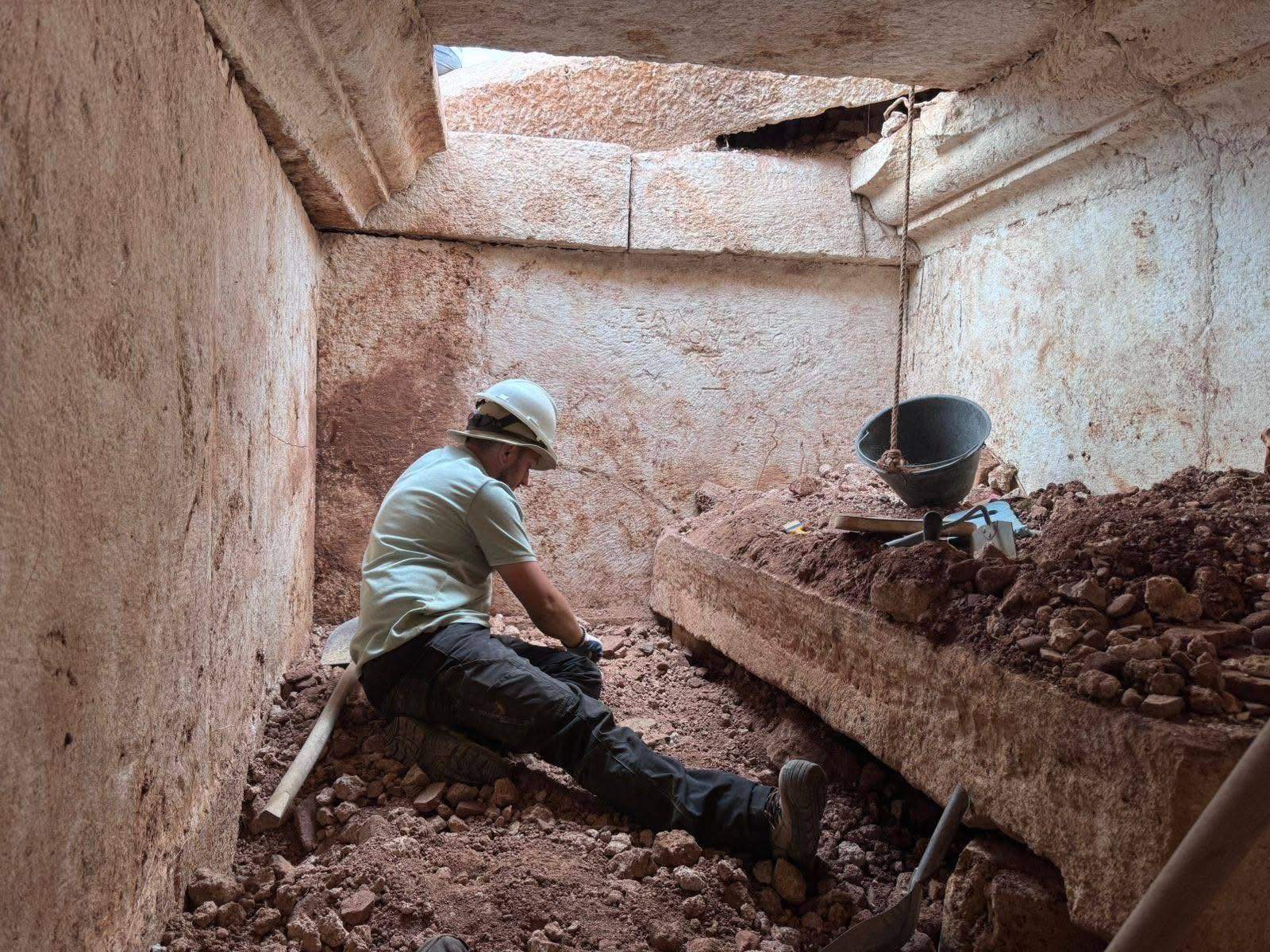
One striking recent discovery is a monumental tomb unearthed at Strikcan in the Bulqiza Valley, Albania—the ancient homeland of the Illyrian Penestae, known as prominent traders who coexisted with the metallurgical Pirustae. Measuring approximately 9 × 6 m with a burial chamber 2.40 m high, the structure highlights advanced Illyrian funerary architecture.
In Kosovo, the Roman-Illyrian city of Ulpiana (near modern Pristina) offers further insight. A 1963 postcard captures the site following excavations conducted between 1953 and 1959, revealing the layered urban fabric of a settlement that bridged Illyrian and Roman worlds.
Across the border in Montenegro, ancient Doclea (modern Duklja)—whose name derives directly from the Illyrian settlement—has yielded temple complexes. These Illyrian sanctuaries, documented in archaeological surveys, attest to organized religious practice in the pre-Roman period.
Fortifications and Polygonal Masonry
Illyrian engineering prowess is evident in the polygonal masonry walls of Lissus (modern Lezha, Albania). These massive, mortarless stone constructions, built with precisely fitted large blocks, exemplify defensive architecture that parallels similar techniques observed in other ancient Mediterranean cultures.
A 5th-century BCE stele from Durres (ancient Dyrrhachium), now in the Archaeological Museum of Durres, depicts two Illyrian figures and provides rare visual evidence of costume, posture, and social representation.
Military Culture and Material Artifacts
Illyrian warriors were renowned throughout the ancient world. An Attic inventory from the Parthenon (427/6 BCE) explicitly lists “Illyrian-style” bronze helmets (Ἰλλυρικὸν χαλκόν) as distinct from standard Greek hoplite gear, confirming their technological and stylistic uniqueness.
The Roman Exercitus Illyrici (Army of Illyricum) later drew heavily on Illyrian recruits, who comprised roughly one-third of the empire’s military strength during the 3rd-century crisis. Illyrian-born emperors such as Claudius Gothicus, Aurelian, and Diocletian rose from these ranks, illustrating the region’s strategic importance to Rome.
An altar dedication to Herculi Illyrico (“Hercules the Illyrian”) from Aquincum (Budapest) further links Illyrian identity to Herculean mythology, while Stephanus of Byzantium records the Hyllei as an Illyrian people descended from Hyllus, son of Hercules.
Onomastics and Cross-Cultural Links
Illyrian personal and place names reveal deep interconnections. The 3rd-century BCE Illyrian king Monunios of the Taulantii shares intriguing onomastic parallels with a 4th-century Thracian prince, suggesting a linguistic “bridge” across Paleo-Balkan groups. Classical sources, including Toynbee, note that post-Völkerwanderung place-names and ethnonyms northwest of Aperantia point to an originally Illyrian-speaking population in parts of Epirus, with subgroups such as the Chaones and Dexaroi preserving Illyrian roots.
Linguistic Continuity: Albanian as the Illyrian Heir
The sole surviving language of the Thracian-Illyrian group is Albanian, as noted in early 20th-century scholarship (e.g., James D. Bourchier, Encyclopædia Britannica, 11th ed., 1910). This continuity is supported by toponyms, personal names, and substrate vocabulary that resist Slavic or later Romance overlays. Dardania—encompassing much of modern Kosovo—was the homeland of the Dardanii, an Illyrian tribe attested since the 6th century BCE; Slavic migrations into the Balkans occurred centuries later, around 600 CE.
Conclusion: Toward a Unified Paleo-Balkan Narrative
The artifacts and texts examined here—monumental tombs, polygonal walls, military gear, inscribed stelae, and mythological references—paint a coherent picture of a dynamic Illyrian civilization whose influence extended from the Adriatic to the Danube. Far from isolated tribes, the Illyrians maintained sophisticated metallurgical, architectural, and martial traditions that later shaped Roman provincial administration and, linguistically, modern Albanian. Continued archaeological work and interdisciplinary onomastic research will further clarify these connections, countering reductive national narratives and affirming the shared Paleo-Balkan heritage of the western Balkans.
References
Archaeological reports on Bulqiza, Doclea, and Lissus (as cited in contemporary fieldwork).
Classical authors: Apollonius Rhodius, Stephanus of Byzantium, Attic inventories.
Modern scholarship: Toynbee on Epirus; Bourchier on Albanian linguistics; epigraphic studies of Monunios and Ulpiana.

