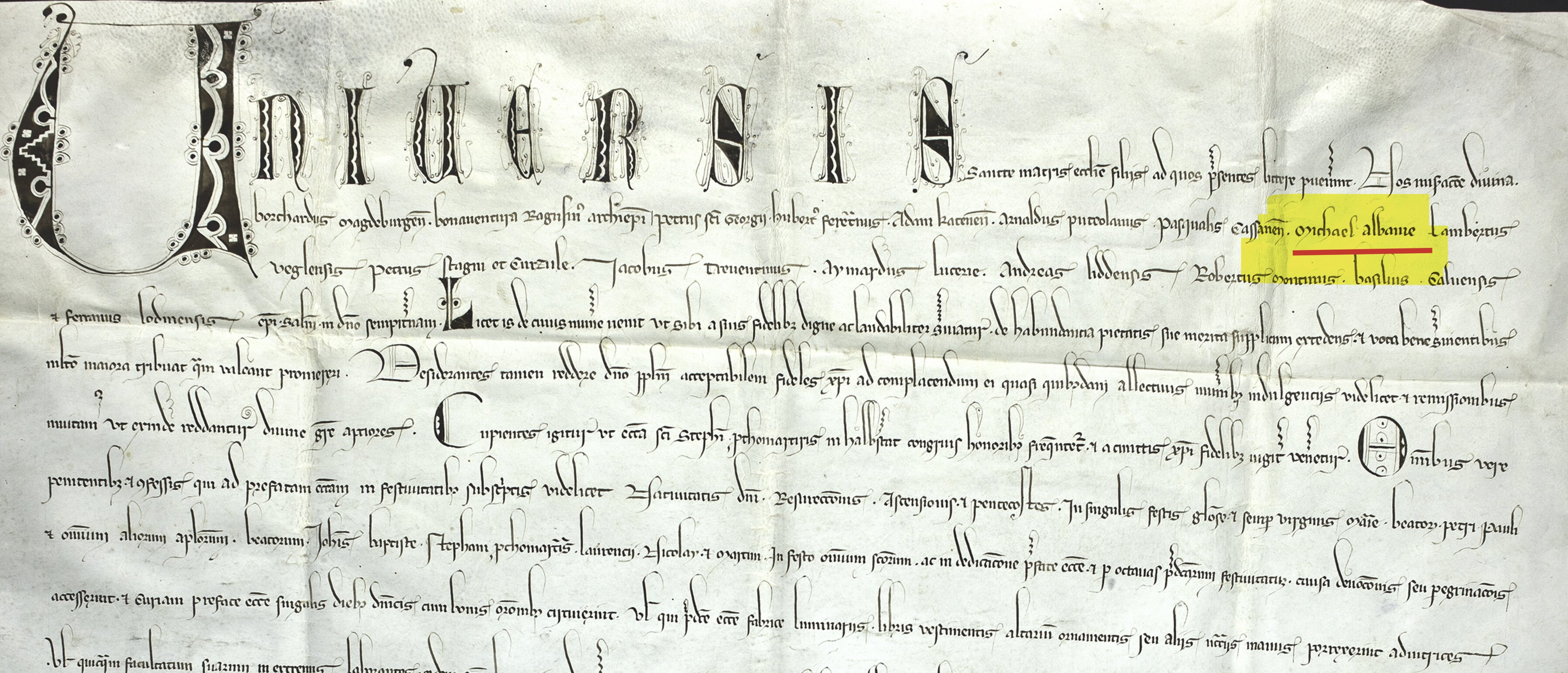

Collective Episcopal Halberstadt, 1296. Among many European archbishops, Michael Albane represented Epirus/Albania. His presence in Anagni (Papal residence) confirms that high-ranking Albanian clergy were deeply integrated into the diplomatic and spiritual networks of the HolySee.

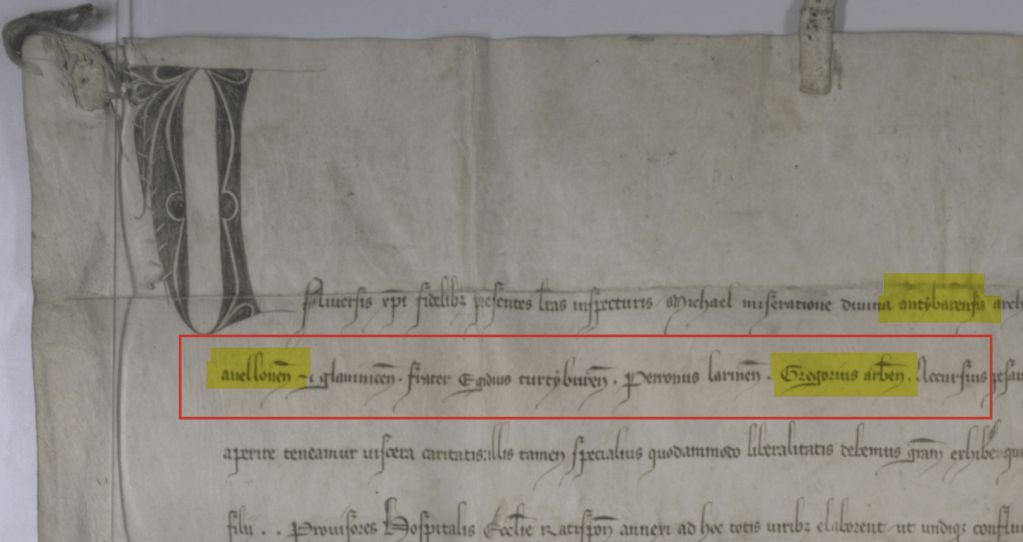
An extraordinary document of 1288 highlighting the Albanian presence of bishops from Antivari/Bar, Durrës, Vlora, and Glavinica acting in unison with Italian bishops. Note Auellonen(sis) (Vlora)
Document
In medieval Latin Christianity, collective indulgences were a common fundraising mechanism. Bishops across Christendom would jointly grant spiritual benefits (remission of penance) to donors who contributed to the construction, repair, or embellishment of a major church—in this case, the historic Halberstadt Cathedral (Dom zu Halberstadt), one of northern Germany’s oldest Romanesque-Gothic structures. The fact that the document was drawn up in Anagni, then the effective seat of the papal curia, highlights its official weight within the Holy See’s diplomatic apparatus.
Michael Albane’s inclusion is striking. Listed among prelates from across the continent, he represented the ecclesiastical province of Epirus—historically tied to the Albanian lands. In the 13th century, the region of modern Albania and southern Epirus was a crossroads of Latin, Byzantine, and local Albanian influence.
Following the Fourth Crusade (1204) and the establishment of the Angevin Regnum Albaniae (Kingdom of Albania), Catholic structures gained footholds alongside the predominant Orthodox tradition. Bishops like Michael operated in this fluid environment, often navigating between Constantinople and Rome.
Epirus
Epirus in 1296 was part of the shrinking Despotate of Epirus, ruled by Orthodox princes but increasingly entangled with Western powers. The Angevins of Naples, staunch papal allies, controlled coastal enclaves and promoted Latin bishoprics. References to “Michael of Epiros” or “bishop of Albania” appear in contemporary diplomatic records, including treaties with Ragusa, showing active engagement with the papal orbit.
Michael Albane’s participation in a German cathedral project—issued under papal auspices—demonstrates that Albanian prelates were not peripheral figures but active participants in the universal Church. Far from being isolated in the Balkans, they traveled (or at least lent their authority) to major ecclesiastical centers, contributing to the spiritual economy of distant lands.
Importance
The illuminated charter is preserved and studied within the Austrian FWF-funded “Illuminierte Urkunden” project at the University of Graz, which catalogs and analyzes thousands of such richly decorated medieval documents. Multiple copies of this particular indulgence survive, attesting to its wide circulation.
In an era when the Papacy was asserting its universal authority from Anagni, the presence of an Albanian archbishop from Epirus alongside German, Italian, Scottish, and Dalmatian colleagues is powerful evidence of early transnational ecclesiastical solidarity. It adds nuance to Albania’s place in European religious history and invites further research into the lives of figures like Michael Albane—whose story, until recently, remained buried in medieval archives.

