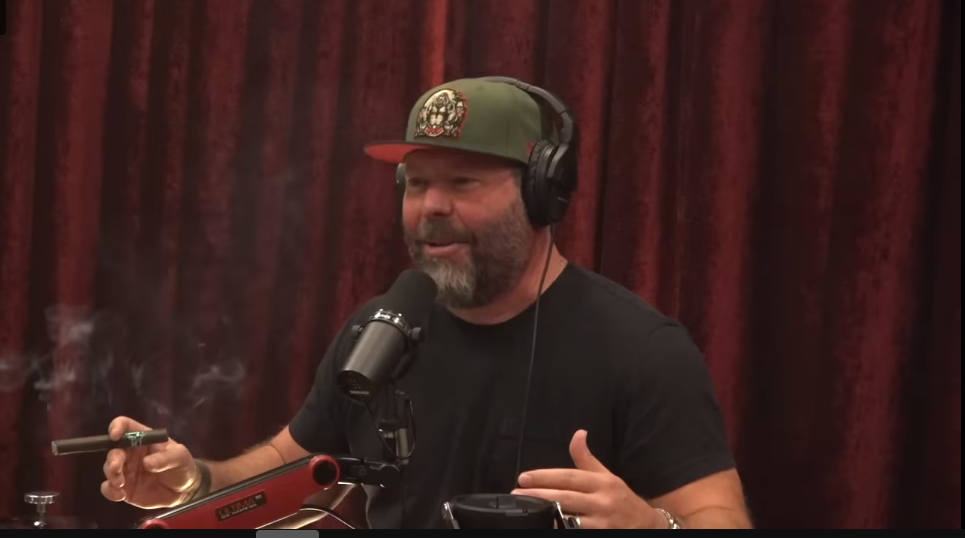

In a recent episode of The Joe Rogan Experience (#2291 with Bert Kreischer), comedian Bert Kreischer recounts a trip to Serbia that left him genuinely stunned. Everywhere he looked — statues, T-shirts, keychains, merch — he saw celebrations of a man named Gavrilo Princip (whom he hilariously mispronounced as “Gabriel Pritzip” or “Gabrielle Pritzips”). Locals treat this 19-year-old as a national rock star and hero. Joe Rogan’s immediate reaction sums it up perfectly: “WTF!”
That “WTF” is the only sane response.
It is profoundly bizarre — and frankly disturbing — that significant parts of Serbian society continue to glorify Gavrilo Princip, the Bosnian Serb nationalist who assassinated Archduke Franz Ferdinand and his pregnant wife Sophie in Sarajevo on June 28, 1914. That single act of political terrorism is universally recognized as the spark that ignited World War I, one of the bloodiest catastrophes in human history.
The numbers are staggering: approximately 20 million dead (9 million military, 11 million civilian), another 21 million wounded, entire generations obliterated across Europe. Empires crumbled, economies were ruined, and the trauma and resentments from that war directly fueled the rise of fascism, communism, and World War II. Serbia itself suffered horrifically — losing roughly a million people out of a pre-war population of about 4.5 million, one of the highest per-capita death tolls of any nation involved.
Yet in Serbia and among many Serbs in Bosnia (especially in Republika Srpska), Princip is not seen as the reckless terrorist whose bullet helped unleash industrial-scale slaughter. Instead, he is romanticized as a freedom fighter, a martyr, and a symbol of resistance against Austro-Hungarian “oppression.” There are statues of him in Belgrade and across Serb areas. Monuments keep being unveiled, including recent ones. Souvenirs are sold. He is portrayed as the idealistic young revolutionary who helped birth Yugoslav unity.
This selective national mythology is not just historically tone-deaf — it is morally grotesque.
Princip was a member of the radical “Young Bosnia” movement and backed by the secretive Black Hand organization with ties to Serbian military circles. He didn’t accidentally start a war; his assassination was a deliberate act of political violence designed to destabilize the region in pursuit of Greater Serbia ambitions.
The idea that he was some noble teenage idealist “striking a blow for liberation” ignores the obvious: he murdered a political figure and his innocent wife (who was expecting a child), then watched the world burn as a direct result.
To outsiders like Bert Kreischer and Joe Rogan, the cognitive dissonance is jaw-dropping. Here is a country that suffered enormously because of the chain reaction Princip helped trigger, yet parts of its culture still peddle him as a hero. It reeks of the same dangerous revisionism seen in other places that whitewash terrorists or warmongers when it suits nationalist narratives.
Critics — including Bosniaks, Croats, and many international historians — rightly call him a terrorist. In Bosniak and Croat communities, he is remembered as the man who killed a pregnant woman and ended a relatively prosperous period under Austro-Hungarian rule, all in service of irredentist dreams. Even some Serbs privately view him as a manipulated young fool used by expansionist forces.
The persistence of this cult — with new monuments still going up in places like Foča as recently as 2024 — reveals a deeper problem: a refusal to confront uncomfortable historical truths. Serbian narratives often shift blame entirely onto great-power alliances and imperialism while downplaying any Serbian responsibility for the assassination or the aggressive nationalism that preceded it.
This victimhood-plus-hero narrative sustains ethnic grievances that have fueled conflict in the Balkans for generations, including the wars of the 1990s.
Bert’s wide-eyed confusion in the Rogan clip isn’t mockery — it’s the natural reaction of someone encountering raw historical denialism in souvenir form. One man’s “freedom fighter” is another man’s catalyst for tens of millions of deaths. In this case, the body count is not ancient myth; it is thoroughly documented 20th-century reality, complete with photographs, the assassination car, and exact street-corner records.
Glorifying Gavrilo Princip isn’t harmless folklore. It normalizes political assassination as a legitimate tool, romanticizes youthful radicalism without consequences, and keeps old wounds festering. It tells the world that Serbia still clings to a narrative where triggering global catastrophe can be spun as heroic resistance.
More than 110 years later, the rest of the planet largely agrees: Princip was the guy who helped start World War I. In parts of Serbia, he’s the guy with his face on T-shirts.
That disconnect isn’t quirky cultural difference.
It’s bizarre.
It’s irresponsible.
And it’s a reminder of how easily national pride can distort history into something dangerous and delusional.
Wake up to the body count. The “hero” pulled the trigger that helped kill millions — including huge numbers of his own people. No amount of statues or merch can change that ugly fact.

