
In the bitter winter of January 1921, the newly formed Kingdom of Serbs, Croats, and Slovenes—soon to be known as Yugoslavia—launched a brutal campaign to pacify the Albanian-populated regions of Kosovo. What followed was a wave of systematic violence by Serbian troops, part of a larger pattern of massacres aimed at suppressing Albanian resistance and altering the demographic landscape of the territory.
Among the most harrowing episodes of this terror was the fate of the Gjaka family in the village of Keqekollë (also spelled Keqekolla), near Gjakova. Their story, preserved in Albanian historical accounts, stands as a stark testament to the inhumanity unleashed upon innocent civilians.
The Gjaka family had already endured the fear and uncertainty that gripped Kosovo as Yugoslav forces swept through villages suspected of harboring Albanian nationalists or kachaks (guerrilla fighters). On that fateful day, Serbian soldiers arrived in Keqekollë as part of operations that included the nearby massacre of scholar and imam Mullah Ademi Emerllahu and his family. The troops, acting with impunity, rounded up civilians. The Gjaka household was singled out for a particularly sadistic punishment.
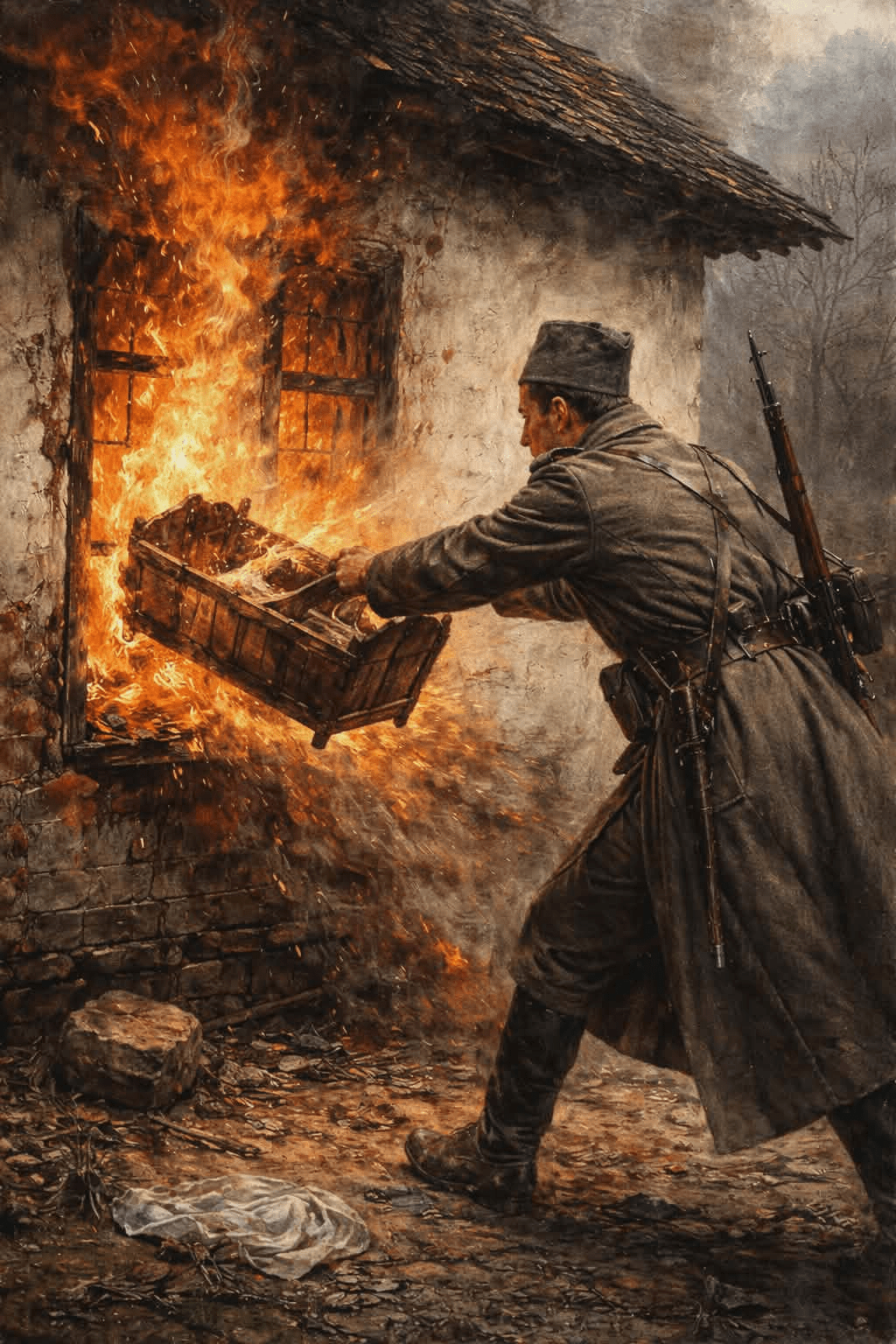
As the family—including the mother, father, and their infant child—was forced to stand outside their modest home, the soldiers began their grim work. They stuffed the house with dry hay, turning the family’s shelter into a makeshift pyre.
Flames soon engulfed the structure, crackling through the wooden beams and filling the air with smoke and the acrid smell of burning. The family watched in horror as their home, filled with the simple belongings of rural life, was consumed. Yet the true nightmare was only beginning.

Desperate to save her baby, the mother seized a fleeting chance. In a moment of raw maternal instinct, she hurled the infant from an upstairs window, hoping against hope that the child might escape the inferno. The bundle of life tumbled through the air toward the street below.
But the soldiers, unmoved by the plea, caught the baby and hurled it back inside the blazing house. Again and again, the mother tried—throwing the child out in a frantic bid for survival—only for the troops to toss the infant back into the flames. Eyewitness accounts describe the scene as one of calculated cruelty, with the soldiers laughing and jeering at the family’s anguish.
Finally, the mother succeeded in getting the baby out of the window one last time. The infant lay on the street, crying amid the chaos. What happened next defies comprehension. Rather than showing any mercy, the Serbian soldiers advanced on the helpless child. They shot the baby at close range and then bayoneted the tiny body repeatedly on the open street, in full view of the horrified family and villagers.
The mother’s screams echoed as her child was slaughtered like an animal. The rest of the family’s fate was sealed in the same orgy of violence—burned, shot, or mutilated as the troops moved methodically through the village.
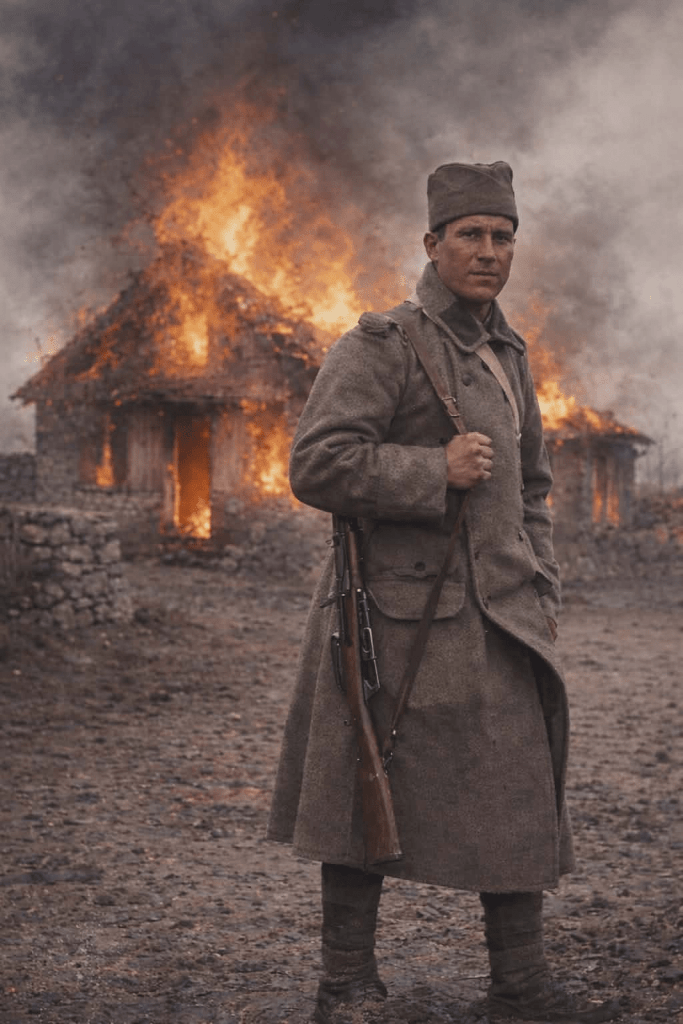
This was no isolated act of wartime excess. It occurred amid a series of documented massacres in early 1921, including those in Keqekollë, Prapashticë, and Dushkajë, where Yugoslav army units targeted Albanian civilians en masse. Houses were looted and torched, families executed, and entire communities razed.
International observers and Albanian chroniclers later recorded these events as part of a deliberate policy of ethnic suppression following the Balkan Wars and World War I. The Serbian troops operated with a sense of impunity, viewing the Albanian population as an obstacle to Serbian dominance in Kosovo.
The Gjaka tragedy, like so many others from that era, was later immortalized in paintings that capture the raw horror: flames licking at a humble village home, a mother’s outstretched arms in desperate plea, and the lifeless form of an infant on bloodied cobblestones. These artworks serve as visual echoes of the eyewitness testimonies—haunting reminders of a time when civilians were not collateral damage but deliberate targets.
Decades later, the events of 1921 remain etched in the collective memory of the Albanian people as a chapter of unprovoked barbarity. The Serbian troopers’ actions in Keqekollë exemplified a broader campaign of terror that claimed thousands of lives and sowed seeds of resentment lasting generations. The Gjaka family’s story is not merely one of loss; it is a condemnation of the dehumanizing logic of conquest, where even the most innocent— a baby thrown from a window—could be subjected to unimaginable savagery.
Today, as Kosovo reflects on its turbulent past, accounts like that of the Gjaka family underscore the human cost of ethnic conflict. They remind us that behind every historical statistic lies a mother’s final, futile act of love and a child’s cry silenced by bayonets on a cold village street. In the annals of 20th-century Balkan history, such atrocities demand remembrance—not as fuel for revenge, but as a solemn warning against the horrors humanity is capable of when hatred overrides compassion.

