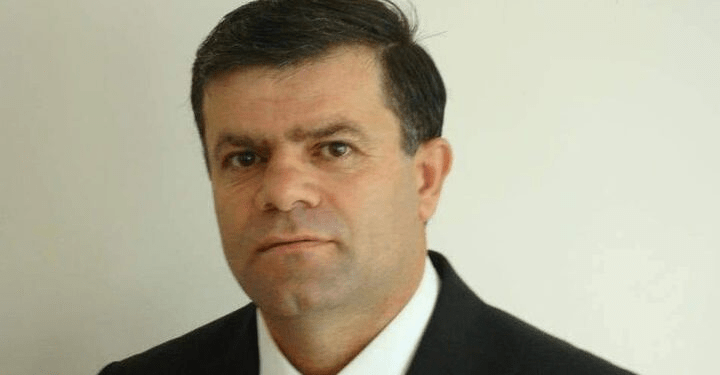

by Artur Vrekaj
The ancient Albanians suffer the pain of this assimilation the most today. This is one of the greatest dramas among ethnic Albanians — one that still bleeds with pain.
Reflection based on Marin Mema’s television reports from November 26, 2016, and RTV Kosovo’s report from April 24, 2017, in the Albanian villages of Pešter in Serbia.
The Peshter plateau rises 1,200 meters above sea level and has deep Illyrian-Albanian roots. It is no coincidence that Albanians refer to the Sanxhak of Novi Pazar by the meaningful name Masbjeshka — the place where, for centuries, they migrated with and raised their livestock.
In Pešter live some of the strongest tribes from northern Albania: Shkreli, Kelmendi, Gjoka, Gjeka, Nikaj, Uka, Kuqi, Kurtaj, Camaj, Bibaj, Kastrati, and others. Generation after generation, they faced the triple genocidal regime of the Turks, Serbs, and Montenegrins.
Declaring themselves as Bosniaks was the only way for the majority of Albanians in Pešter to survive the genocidal Serbian and Montenegrin regimes.
The older Albanians feel the pain of this assimilation most acutely today. It is one of the greatest tragedies among ethnic Albanians, and the wound still weeps.
In Bashicë, Murat Haliloviç says with pain: “I speak Bosnian, but I am Albanian.”
Hilmi Salihoviq adds: “When I started school, I didn’t know Bosnian — I only knew Albanian.”
Nazif Salihoviç explains: “I wear the plis because my father wore it, and my great-grandfathers wore it. We don’t dare say we are Albanians.”
In the village of Ugla, Kambo Hukic (Huka) states firmly: “We are Albanians.” He pulls out the Albanian national flag hidden under the sofa and shows it to journalist Marin Mema. “When I die, I want to be covered with the Albanian flag. We have lived under terror. Albanians from here were displaced to Sarajevo, Novi Pazar, Turkey, and elsewhere. We want a teacher to teach our children the Albanian language — at least one or two hours a week.”
Sali Bajri from Uglla replies: “My soul burns because the Albanian language is being lost. We spoke it with our great-grandmothers. Do not forget us! We are burning for Albania, but we have nothing in our hands — nothing at all.”
Selim Hukic says: “By blood I am Albanian, but we are losing our identity greatly because we have no school.”
Eso Hukiq from Uglla says: “I am Bosniak on paper, but in my heart I am Albanian.” This is a consequence of the regime, he explains, while listing the still-Albanian names of surrounding peaks: Maja e Shkjaut, Maja e Shiut, Maja e Aliut, Maja e Kaçizakut, Maja e Molikes, Maja e Mprehtë.
Murat Kuç recalls: “Serbia doesn’t allow Albanian. My father kept the shall and the plis.”
Villka Kuç declares: “We will never lose the Albanian language.”
The elder Bajro Hukic (Hukaj) says: “They didn’t allow us to have school in Albanian.”
Boroshtica is an Albanian village inhabited mainly by the Shkreli tribe. Teacher Nezir Shkriel (Shkreli) appears wearing a white plis. Joyfully he says that Albanian identity is alive here. “The Albanian language will not die here.” He vows: “We have the Albanian heart! We have the Albanian blood!”
Hilmi Shkriel from Boroshtica states: “From the elders, we are from the Shkreli of Rugova. I learned Albanian from my father. I have cousins in Kosovo.”
Hafiz Shkriel, a middle-aged man, says: “We know a little. We didn’t go to school. My brother is Albanian.”
Despite the absolute public denial of their national identity, Serbian scientific literature acknowledges that Albanians live in Pešter.
The most visible public signs of national identity in Novi Pazar and the villages of Pešter — especially in the last century — have been the white plis (traditional Albanian cap) and the white shall (headscarf), which are still preserved today.
Intellectual Ismet Azizi, president of “Kosova for Sanxhak,” recounted on RTV Kosovo the largest massacre carried out by Serbian Chetniks under commander Pavle Đurišić on January 5–6, 1943, against Albanians and Sanxhak residents in the Bihor region (an area with 82 villages).
The Mufti of Sanxhak, Muamer Zukorliq, calls this massacre the “Srebrenica of Sanxhak.” According to the Chetnik commander Pavle Đurišić’s report to Serbian general Mihailović, around 1,200 of those killed were men fit for military service, while the other 8,000 were women, children, and elderly. Albanian archival documents record the figure of 4,628 Albanians killed, slaughtered, and massacred during those two days of terror in Bihor.
The association “Kosova for Sanxhak” has become a civic and media institution working on the ground in Pešter and Novi Pazar to document Albanian resistance and culture. Through academic activities, this active association is helping spark a national awakening in Masbjeshka. It cooperates mainly with local authorities in Sanxhak and central institutions in Kosovo and Albania.
The call of Albanian blood among the Albanians of Pešter is a vow for our time — to give more strength to the national awakening among them.
Thus, on November 22, 2023, the National Albanian Council in Serbia opened an Albanian office in Novi Pazar, and Albanian language courses are planned. It is time to help our brothers — wherever we are.
The Albanians of Masbjeshka (Sanxhak of Novi Pazar) with centuries of survival.
The article highlights the difficult history of assimilation, cultural preservation, and quiet resistance of the Albanian community in the Pešter region (Masbjeshka) of Serbia’s Sanxhak area.
Reference

