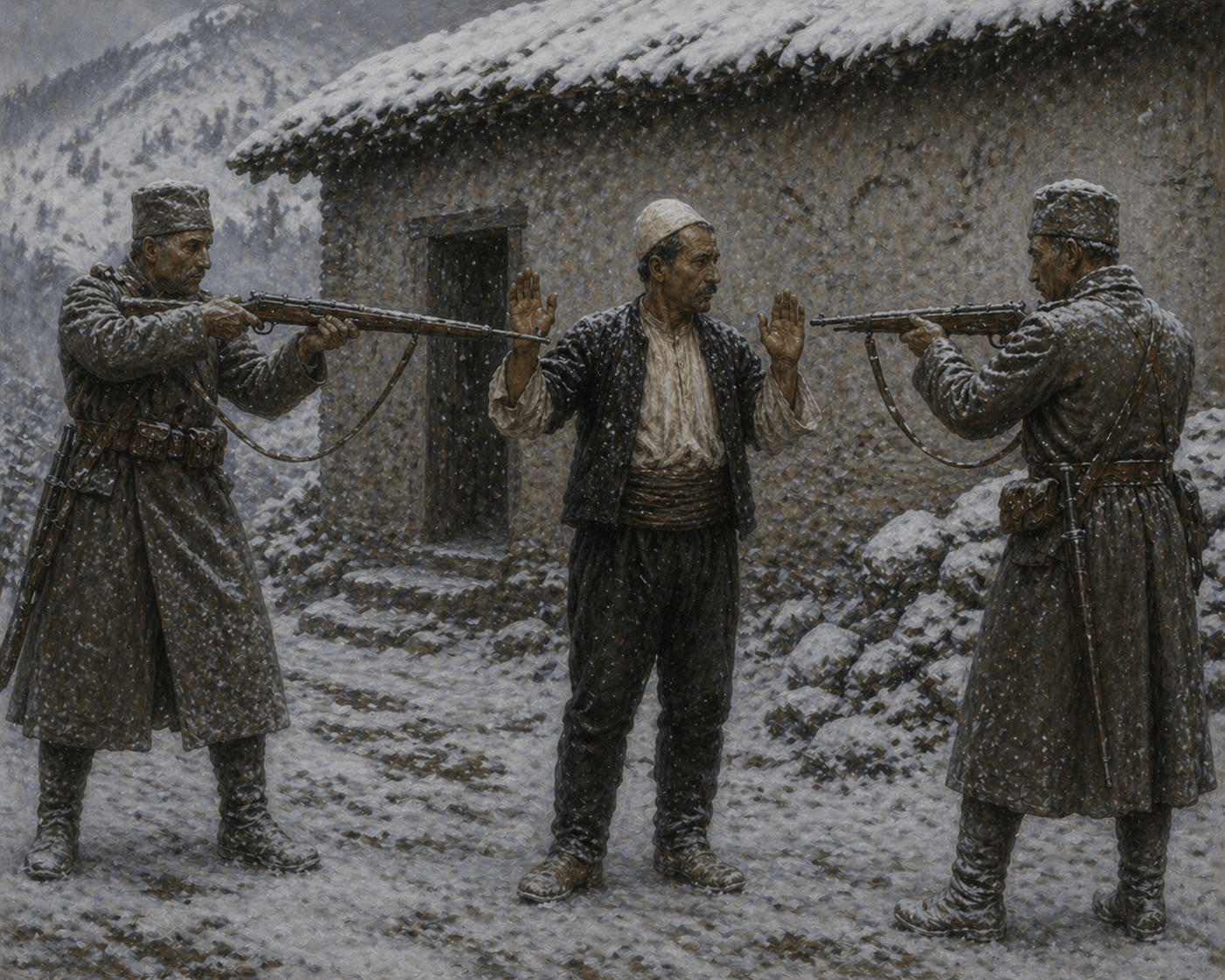

When 150,000 Serbian troops, among them pillagers and killers, froze to death in the Albanian Alps in 1915.
In the winter of 1915–1916, the Serbian army and accompanying civilians undertook one of the most harrowing retreats in modern military history. Known in Serbian collective memory as the Albanian Golgotha (or Great Retreat), hundreds of thousands fled southward through the snow-covered mountains of Albania and Montenegro after devastating defeats by Austro-Hungarian, German, and Bulgarian forces in World War I. Starvation, disease, freezing temperatures, and attacks claimed the lives of an estimated 77,000 soldiers, 160,000 civilians, and tens of thousands of prisoners of war—roughly half of those who set out.
Yet this tragedy carried a grim historical echo. Just two years earlier, during the Balkan Wars of 1912–1913, the same Serbian forces had conquered Kosovo and parts of northern Albania, perpetrating widespread massacres, village burnings, and ethnic cleansing against the Albanian civilian population.
International reports, including the Carnegie Endowment’s landmark investigation, documented houses razed, unarmed populations slaughtered, and entire regions transformed through violence aimed at altering ethnic demographics. Estimates of Albanian deaths in these campaigns range from 20,000–25,000 in Kosovo alone to as high as 120,000 across occupied territories, according to contemporary European, American, and even some Serbian opposition accounts.
A Retreat Marked by Desperation and Continued Violence
As the Serbian columns—soldiers, civilians, King Peter I, and even artillery—staggered through the Albanian highlands, hunger and exhaustion drove desperate acts. Serbian propaganda has long framed the retreat as a heroic epic of national survival. However, surviving soldier testimonies, published in Serbian sources, reveal a darker reality: systematic plundering of Albanian villages for food, often at gunpoint, and accompanying violence against civilians.
A 2016 collection of firsthand accounts from the retreat, ПРЕКО АЛБАНИЈЕ ДО СКАДРА 1915-те (“Through Albania to Scutari 1915”), includes this stark description:
“The following picture shows that the army was starving attacked Albanian houses to get to any food. The Arnauts did not dare to defend themselves. There are few of them, and the Serbian army countless. No one could risk that the army destroys his home and everything he has. They were waiting for them far from their homes, by nameless gorges and yuvics, by forests and streams. Less and lost groups and left behind exhausted individuals. A few Serbian soldiers are separating from the column and goes to ‘arnautluk’ to get them something to eat. At gunpoint, of course.”
This admission from Serbian veterans underscores a pattern of predation. Starving troops broke into homes, seizing whatever provisions remained, while Albanian families—vastly outnumbered—often fled or submitted to avoid total destruction. Similar acts of pillage, arson, and killing occurred in Kosovo and northern Albania during the withdrawal, as documented in Albanian, international, and even some Serbian records.
The Cycle of Violence and Selective Memory
The 1912–1913 massacres had already poisoned relations between Serbs and Albanians. Albanian tribes and irregulars sometimes ambushed the retreating columns in 1915, acts Serbian narratives emphasize as banditry or revenge. Yet the Serbian soldiers’ own testimonies reveal that plunder was not isolated but a survival tactic enabled by overwhelming numbers and arms.
Serbian historiography has largely omitted or minimized these episodes. School textbooks rarely mention atrocities against Albanians during the retreat or the Balkan Wars, preserving the image of the soldiers as martyrs rather than perpetrators. Prominent works, such as Dušan T. Bataković’s 2016 book La Serbie dans La Grande Guerre, similarly pass over the crimes in silence. This selective memory contrasts with the Carnegie Commission’s contemporary condemnation of Balkan War violence by all sides, including Serbo-Montenegrin forces.
Historical Reckoning in the Balkans
The 1915 retreat was undeniably catastrophic for Serbia— a national trauma that decimated its army and population, paving the way for eventual Allied-supported recovery. Yet the soldiers who endured it were often the same ones who had waged brutal campaigns in 1912–1913. The plundering of Albanian villages, as confessed in Serbian publications, illustrates how war’s brutality begets cycles of retribution and denial.

