
by Albert Nikollay
Peleset, Pelasgians, Shekelesh [Illyrians of Sicily], Danian/Dardanian people, Weshesh, Tjeker [Teukrians – Illyrians] and Sherden – Sardan [It is unknown whether from Sarda in Puka or from the island of Sardinia].
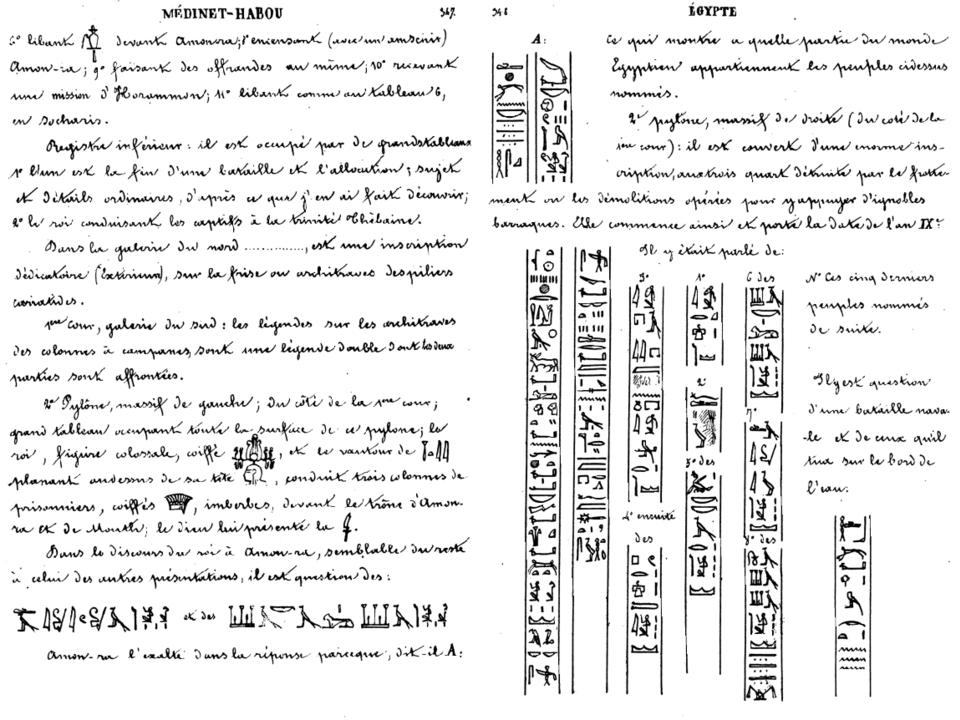
A partial description of the hieroglyphic text at Medinet Habu on the right tower of the Second Pylon (left) and an illustration of the prisoners depicted at the base of the Fortified East Gate (right), were first provided by Jean-François Champollion following his 1828–29 travels to Egypt and published posthumously.[b]
Although Champollion did not label them, decades later the hieroglyphs labelled 4 to 8 (left) were translated as Peleset, Tjeker, Shekelesh, Denyen and Weshesh, and the hieroglyphs next to prisoners 3 and 4 (second row, right), were translated as Tjeker and Sherden.[c]
Summary
The text argues that the Sea Peoples mentioned in original Egyptian records (especially from Medinet Habu) were Illyro-Pelasgian tribes, with no mention of any Greek tribes in Champollion’s early decipherments.

