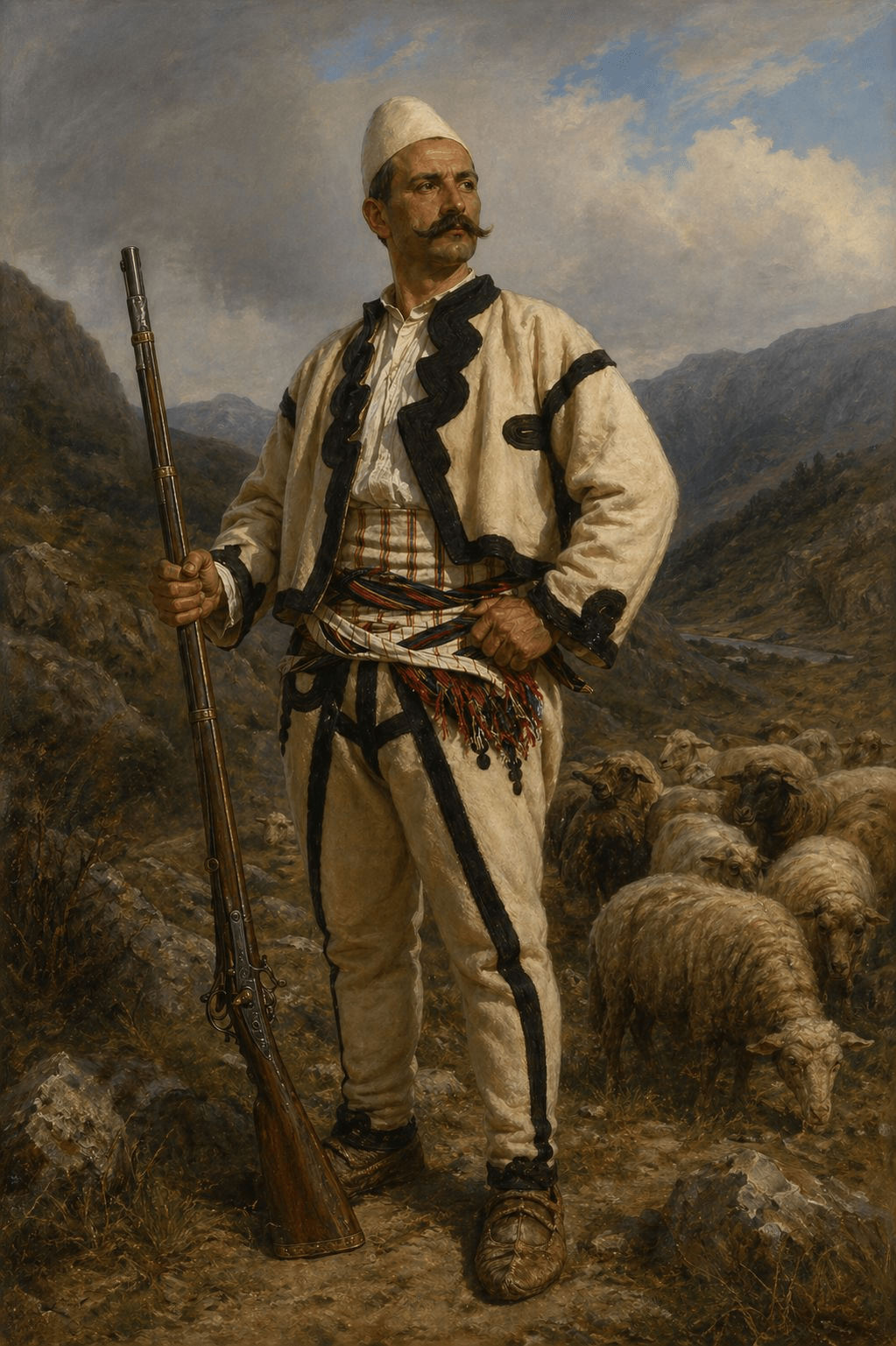

Who was Kushtrim of the Vasojevići in the 1700s? When Albanians lived as far as Smederevo.
In the book titled “Dispozitat e legjislacionit pozitiv dhe të drejtës zakonore mbi lëvizjet sezonale të barinjve në Evropën Juglindore përgjatë shekujve: një përmbledhje punimesh nga konferenca shkencore ndërkombëtare e mbajtur më 6 dhe 7 nëntor 1975 në Beograd, 1976” (“Regulations of Positive Legislation and Customary Law on the Seasonal Movements of Shepherds in Southeast Europe Across the Centuries: A Collection of Papers from the International Scientific Conference Held on 6–7 November 1975 in Belgrade, 1976”), we can find an interesting passage on the history of the Albanians of Polimlje, Grocka, Morava, and Šumadija, as well as the leader of the Albanian shepherds, Kushtrim of the Vasojevići. The Serbian author tries to Slavicize and Serbianize the mentioned Arnauts (Albanians).
A good example appears in Katanić’s 1940 article “Songs about Kushtrim of the Vasojevići.” The folk song he cites mentions Kushtrim Čobambaša, which means “Kushtrim, Head Shepherd.” The name Kushtrim comes from Albanian — it means a call to arms or a rallying cry. Nevertheless, Katanić presents it as a Serbian tribal name, erasing its Albanian roots.
“When they appeared in the Morava region, three thousand white rams — three thousand, thirty čobambašas (meaning Head Shepherd, an Albanian title)… Such shepherds are also mentioned under the name ‘Arnaut’ even as far as Greece, during the period of the Austrian occupation of Serbia (1718–1739).”
In the documents of the Serbian State Archives, there is also data related to shepherds from these regions. It is stated that in the districts of Smederevo, Požarevac, Morava, Kragujevac, and Užice there were shepherds from “Ase Gusinjske” (today’s Upper Polimlje) and “Gusinjske nahije” (today’s Gusinje).
Albanians lived as far as Smederevo.
This text highlights historical evidence of Albanian pastoral communities (often called “Arnauts”) in central Serbia during the 18th century, and critiques Serbian historiography for attempting to obscure or Slavicize their Albanian ethnic and linguistic origins. The figure of Kushtrim is portrayed as a prominent Albanian shepherd leader (čobambaša / kryeçoban) among the Vasojevići.

