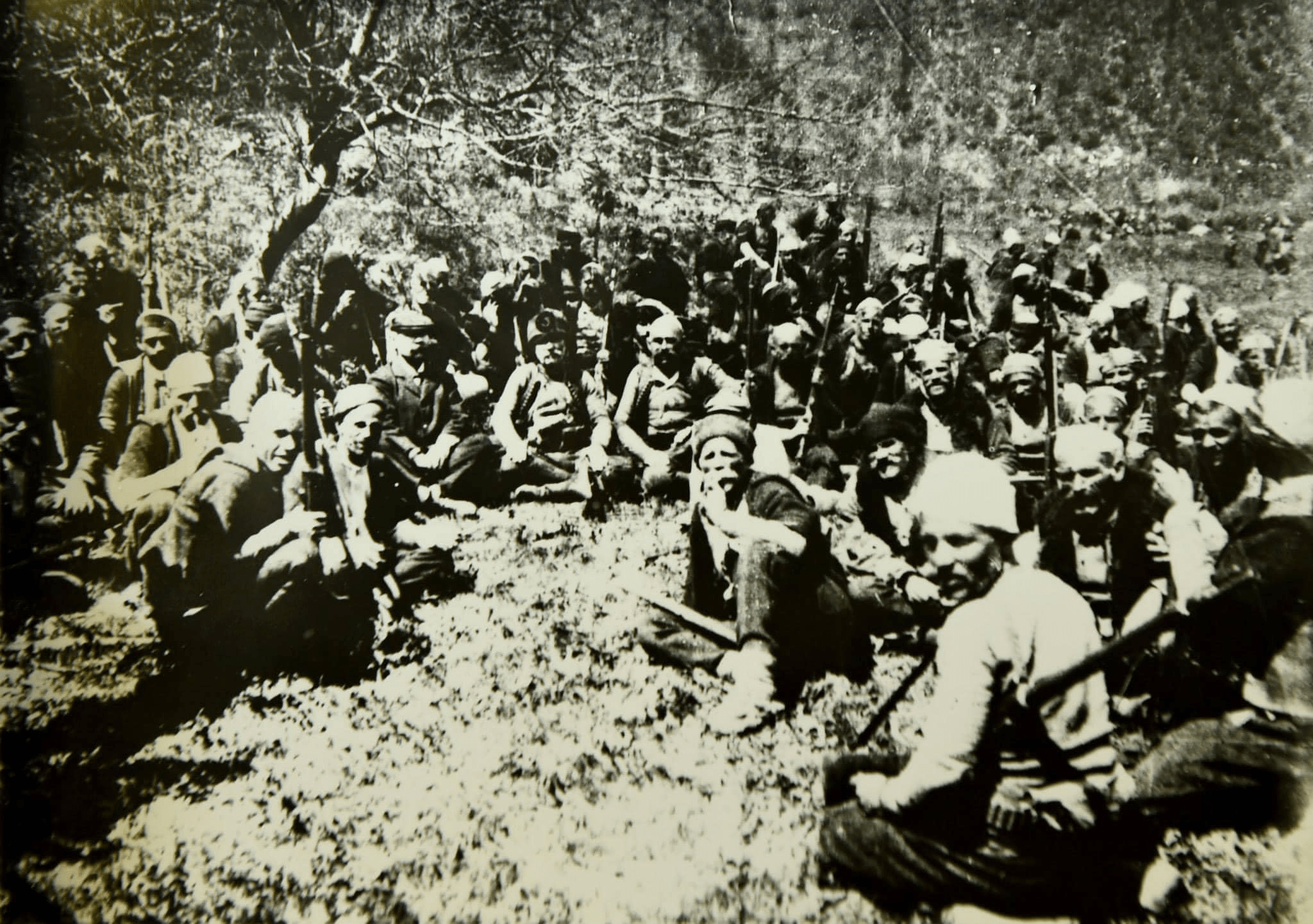

The Kaçak (Kachak) movement represented a significant form of Albanian armed resistance and outlaw activity in Albanian territories under Serb occupation following the creation of the Kingdom of Serbs, Croats, and Slovenes (later Yugoslavia) after World War I. Kaçaks were irregular fighters, often viewed by Yugoslav authorities as bandits and terrorists, while many Albanians regarded them as defenders of national and tribal interests against Serbian Yugoslav oppression and tyranny.
Leadership and Operations
One of the most prominent Kaçak leaders was Sali Rama from Rugova. According to contemporary records, he spent the most time with his men on Yugoslav-invaded Albanian territory compared to other Kaçak commanders. Kaçak bands frequently used cross-border movements, finding refuge in Albania while conducting operations inside Yugoslav territory.
A district administration report dated April 13, 1921, documented 78 Albanian Kačaks and other outlaws active in the Rugova municipality. Key leaders at that time included Sali Rama, Kera Sadri Barlov, and Minja Sokoli.
Other noted Kaçak fighters included:
Binak Ferizi, Suljo Ferizi, Fazli Rexhepi, Musli Redxhepi, Avdi Beka, Tefik Beka, Muarem Smailji, Syl Sulejmani, Luta Muharem, Alil Asllani, Elez Rama, Sadik Rama, Rexha Imeri, Sadri Azem, Suki Murtez, and many more.
Later figures active into the 1940s included Rouhani and Yusuf Rugovac, Shaban Zeynel, Sait Selimi, Idriz Ismail, Shain Beqiri, Kamber Rahman, Nezir Ramon, Ramiz Zehir, Ramadan Selim, Shaban Yusuf, Azem Rashid, Haydar Durmish, and Uk Ahmeti from the village of Palatka in the Lab region. Uk Ahmeti served as president of the municipality in 1924, became a Kaçak from 1925 to 1928, was released from prison in 1931, and was later appointed commander of the gendarmerie station in Palatka.
Political Organizing and Later Activities
In the mid-1940s, some Kaçak elements engaged in political efforts. At the end of February 1946, a meeting was held (reportedly in Shkup) to detail plans for committees on Kosovo and Macedonia. A new Central Committee was formed, headquartered in Shkup, with connections to two foreign consulates aimed at supporting anti-Yugoslav activities.
Yugoslav authorities implemented strict countermeasures. Orders stipulated that if a Kaçak or local resident crossed into Yugoslav territory, fired on the army or civilians, or committed other hostile acts, the responsible local resident’s house would be burned immediately. For known Kaçak, their houses would be burned and they would be pursued and handed over to Albanian authorities. Night guards were established in places such as Junik to monitor movements and prevent incursions.
Nature of the Movement
Contemporary Yugoslav sources often described Kaçak as merging the roles of outlaw, gangster, and political insurgent. Their actions frequently involved both armed resistance and acts of robbery or terror against institutions and civilians. Albanian governments of the period sometimes relied on Kaçak bands to exert pressure or solve border issues, though leaders like Ahmet Zogu also viewed them as a destabilizing force.
Many Kaçak leaders eventually surrendered. One group capitulated in early 1947 and received prison sentences.
Other Kachaks (fragments from various Yugoslav sources)
“… Rugovac , mostly in his own Rugova, coming from the neutral zone. In 1922, he had about 150 kachaks. The outlaws Ram Çek, Jahi Sali, Nimon Jaha, who maintained contact with Bajram Curri, Taf Hoxha and Yunuz Nahir, were also …They went to sleep in Kolare, a village above Batusha. And they also stopped in the village of Punoshevcë. Of all the Kačak leaders, Sali Rama, from Rugova, spent the most time with his Kačaks on Yugoslav territory…”
References
Balistički pokret (Google Books edition). https://www.google.se/books/edition/Balisti%C4%8Dki_pokret/SHAtAQAAIAAJ.
Bibliografski vjesnik.
Cetinje: Centralna narodna biblioteka “Đurđe Crnojević”, 1988.
https://www.google.se/books/edition/Bibliografski_vjesnik/TBlUAAAAYAAJ.

