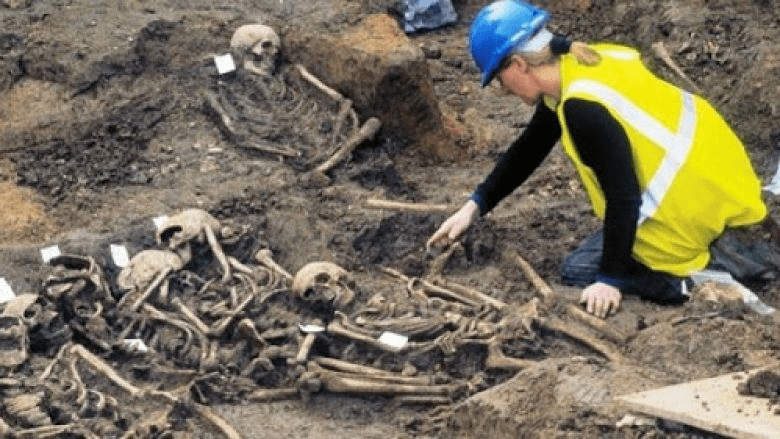

NATASHA KANDIĆ: “HOW WERE THE BODIES OF ALBANIANS BURNT IN THE MAĆKATICA Smelter in SERBIA?!”
“The burning of the bodies at the “Maçkatica” factory took place in two stages, on 16 and 24 May 1999, after midnight, under the supervision of the “Red Berets”, which at that time had their base in “Bella Voda” – near Vranje. The then commander of the “Red Berets”, Milorad Legija, according to the sources in question, had personally participated in escorting a transport to the scene of the incident and had been present when they were burned. The bodies were burned in the “open smelters” no. 4 and 5. (…)
by Sheradin Berisha, Pashtriku 21 July 2021
Despite the efforts of interested parties, the truth of recent history and the terrible shadow of the past here leaves no one at ease. After the public appearances of Natasha Kandic and the opening of the issue of the “Maçkatica case”, in southern Serbia, nothing is the same as before.
Let us recall that in the authorial text “The Restoration of Spiritual Comfort” that was published towards the end of December last year in the daily “Danas”, the director of the “Humanitarian Law Fund” accused a large number of people, mentioning their names, of the planned concealment of war crimes committed during the last war in Kosovo.
She dealt a heavy blow to the local opinion when she mentioned the name of DRAGOMIR TOMIĆ and that in the context of the implementer of the project of burning the bodies of Albanians from Kosovo, in the foundries of the “Maçkatica” enterprise in Surdulica.
Since the local opinion connects everything that has the prefix “Hague” with Carla Del Ponte, these public appearances have caused a series of reactions with the writing of denials by those who were rumored, while the “competent bodies” also became interested in the case. However, we know how events unfold in Serbia. After the loud roar of the mountain, not even a mouse moved.
– However, someone definitely needs to answer the question of whether there were war crimes here?
For now, regarding the case of “Maçkatica”, only a coalition of six non-governmental organizations from Belgrade is working towards clarifying this case, and here and there some media and almost no one else. After the first reaction, which was a weak reaction of state bodies – the police, it must be admitted, of course, that a complete silence on this matter followed. To prove the determination that the case of “Maçkatica” cannot be left in oblivion, the coalition of NGOs decided to address the Serbian Parliament, as the highest democratic body in Serbia.
INVESTIGATIVE COUNCIL
According to Natasa Kandic’s findings, “the trusted person, namely the coordinator of the project to hide the traces of war crimes committed in southern Serbia, was DRAGOMIR TOMIQI, with whose support and understanding the organized transfer of the bodies of the victims from Kosovo to the regions of Vranje and Surdulica was carried out”.
According to the data that the Humanitarian Law Center has received so far, from several independent sources, the burning of the bodies at the “Maçkatica” factory was carried out in two stages, on 16 and 24 May 1999, after midnight, under the supervision of the “Red Berets”, which at that time had their base in “Bella Voda” – near Vranje.
The then commander of the “Red Berets”, Milorad Legija, according to the sources in question, had personally participated in the escort of a transport to the scene of the incident and had been present at the time of their burning. The bodies were burned in “open smelters” No. 4 and 5.
The reception and organization of the cremation of the bodies were carried out by:
1. Zoran Stoshiqi, who was then the chief of state security for the Pcinja district;
2. Bratislav Milenkovic, head of the BIA for Vladicin Han and Surdulica;
3. Dragan Stankoviqi, chief of SUP in Surdulica since 1993;
4. Miroslav Antiqi, head of the BIA in Vranje;
5. Dragan Llakiceviqi, director of “Maçkatica” and his deputy,
6. Aca Gjorgjeviqi – writes Natasha Kandiqi, adding sufficient other details so that there is no doubt whatsoever about the veracity of the facts presented.
According to this evidence, we are talking about a well-organized criminal association, dedicated to “cleaning up the ground”, that is, hiding evidence of crimes committed in Kosovo during the NATO bombing.
Of course, no one should remain indifferent to such an issue. After the first reactions, according to official duty, the special prosecutor for war crimes had to be interested in this case, who even publicly promised to process this entire story without any delay. Immediately after this, the first official reaction followed – the dismissal of Zoran Stoshiq from the position of Inspector General of the Serbian Interior Ministry for the Pcinja district, who at the time we are talking about was the Chief of the State Security. But that was all, because there were no further moves to fully clarify the circumstances of the “Maçkatica case”, at least those that are known.
But the other side did not stand idly by either. The coalition of six non-governmental organizations from Belgrade asked the Serbian Parliament to urgently establish an Investigative Council, or in local parlance, an investigative commission, which would verify the data on mass graves in Serbia and the destruction of evidence of crimes in Kosovo, also based on the data of the Humanitarian Law Center, especially about the “Maçkatica” case.
The most important step of all those who are trying to fully clarify the truth about what happened in the “Maçkatica” case was, however, the meeting with Predrag Marković, Speaker of the Serbian Parliament, otherwise one of the members of G17 plus.
– At this moment it is very important to emphasize that so far we have managed to raise this issue to such a level that the state must definitely treat this case institutionally. Marković has promised that he will do everything to move things from zero. We are waiting, they still have some time available.
Later, pressure will follow through public actions, informal groups, but also with the support of some parliamentary parties – Milenko Dereta from the “Citizens’ Initiative” states firmly. However, he believes that the Parliament will react slowly, first of all, due to the current balance of political forces in Serbia.
“A parliamentary majority is necessary for the formation of the investigative council for the “Maçkatica” case, which is difficult to achieve against the backdrop of various interests,” says Dereta, deeply convinced that the truth will nevertheless come out.
– Such a disposition now exists, but even if it were not, we must definitely face the past. The longer such a thing is postponed, the more opportunities will be created for various manipulations – concludes our interlocutor.
Ander Nosov, from the “Youth Initiative”, also evaluates Marković’s visit as “very qualitative” and says that the Speaker of the Parliament has promised that on this occasion, using the right of an MP, he will propose a parliamentary discussion.
– We still have to insist and work on creating permanent mechanisms for dealing with the past. If the Serbian Parliament, even six years after the Kosovo war, is not ready to debate this issue, then it will be understood that all politicians and people’s deputies are deceiving us – Nosov considers. He says that there will be no happy future in these areas until the truth about the past here is recognized once and for all and with a foundation.
– The most important issue now is how to find models for institutions in Serbia – the Parliament, the police and the courts – to provide answers to all issues from the past and the consequences of today. If we have so many mass graves, so many corpses and missing people, which are not even talked about, then the question arises – how committed is this government to peace? If the government is silent about mass graves, then it is still at war – Nosov says with conviction.
Thus, the “Maçkatica case” was simply transferred from the newspaper columns to the doors of state institutions. The Speaker of the Serbian Parliament is an institution that must be trusted, but the issue of political will to shed light on all the dark secrets of the past still remains a completely open topic.
– I can say that the public is more vocal than the institutions. It seems to me that there is a part of the public that is terrified and that considers that “Maçkatica” is just one of the terrible things that testify to the darkest pogrom that the then government had undertaken here. As for the institutions, there are still people in their positions who prefer to cover up crimes and talk exclusively about Serbian victims, while not mentioning at all the criminal acts, the burning and the disappearance of traces of crimes committed against others – emphasizes Natasha Kandic.
PRESSURE
However, despite all the public pressure, for the “Maçkatica” case and other similar cases, of all state institutions, at the local levels, only the Vranje District Public Prosecutor’s Office has reacted, and that quite early, before the case was published in the media.
– This information is not new and has been discussed since the “Batajnica case”, although now we have more data. Although the information about the existence of mass graves in Vranje was quite weak, the District Public Prosecutor’s Office nevertheless reacted to that case.
At that time, we requested a detailed report from both the state security and the public sector, and we received a response stating that in our region there are no traces or evidence of mass graves or possible cremations.
After two separate reports, there were no longer any elements to initiate proceedings and the Republican Prosecutor’s Office was also informed about this – emphasizes Milan Bozhillović, District Public Prosecutor. With the formation of the special prosecution for war crimes, a body he heads, he no longer has any other powers related to the respective case.
Of course, the Hague Tribunal’s Prosecutor’s Office also reacted to the “Maçkatica” case.
-The Hague Tribunal was aware of this case from various direct and indirect sources. However, the Hague Tribunal is not the only institution that has exclusive rights to investigate war crimes. When Serbia had undertaken investigations regarding the Batajnica case, just like in this case, rumors had preceded them, which during the investigations were found to be true. So, it is the turn of the special investigator, who, through undertaking the investigation of the case, will verify the potential witnesses and the knowledge they have – said Florans Hartman, spokesperson for the Hague Tribunal Prosecutor’s Office, for “Vranjske”.
After such a stance, “a well-known strategy of The Hague to avoid certain cases”, especially after the orchestrated silence of local authorities, the burden was eased for many here. The Assembly no longer even mentions the formation of the investigative council. The Serbian Special Prosecutor’s Office is silent. It also does not publish the details of what has been undertaken in this regard, nor does it announce its further intention. For its part, the police have a classic attitude towards the public…
– The fundamental problem lies in the fact that we do not have institutions that enforce the law and that would reveal the truth about what actually happened during the NATO bombings – comments on this negligence Natasha Kandic.
In this regard, everything is clear and there is no doubt that if we had a normal state and if justice prevailed, the competent authorities would have been forced to undertake more serious investigations and in the shortest possible time would have responded to all open issues. But our institutions are silent.
In our country, the implementation of the law is usually decided by those who can easily be ascertained to have been participants and drafters of the most terrible events of Serbian history and who were in the close group of Milosevic’s collaborators at the time when he acted without hindrance. Therefore, there can be no question of any law, state and justice.
– They hope that the data will disappear in a few days and that these cases will never be talked about again. They hope that they will continue to be strong, but democratic opinion will not stop and will constantly put pressure to clarify and verify all the facts related to this case – promises Natasha Kandic.
However, unfortunately, regarding the “Maçkatica” case, clarity continues to remain unclear. No matter how much the work on shedding light on the past is being prolonged and no matter how much history is trying to be brought under the shield of national interests, in these areas, there will be no peace as long as the things related to the “Maçkatica case” are not illuminated.
Until then, the past will not be freed from us, and as such we will be its hostage. No matter how difficult the efforts to change this situation are, it must be done. The life of “yesterday” must definitely be replaced, with an eye towards “tomorrow”. Perhaps, after all these events, this does not need special comments. Or perhaps it should…
More Revelations About the Cremation of Bodies in Maçkatica
By IWPR reporters in Surdulica and Belgrade
Eyewitness accounts obtained by IWPR contain dramatic new evidence of how police working for Slobodan Milosevic burned trucks full of dead Albanian bodies at a factory in southern Serbia during the 1999 conflict. IWPR sources have presented new evidence of the chronology of the crime, how it happened and the key role the police played in both the burning of the bodies and the cover-up.
Their testimonies will increase pressure on the courts to quickly solve the mystery of who these people were and who ordered their burning.
Natasha Kandic, director of the Humanitarian Law Center, HCL, first revealed the horrific secrets of the aluminum complex in Mackatica, near Surdulica, in the Pcinj district of southern Serbia, last December.
In an article in the daily Danas on December 24, 2004, she said that the factory’s blast furnaces had been used to burn the bodies of Albanians killed in Kosovo on May 16 and 24, 1999, during NATO bombing.
An IWPR source – a factory worker – said the whole affair began with the sudden arrival of several unknown trucks at night. “Trucks with mysterious loads kept entering the factory with the lights off. The third shift workers – like myself – were sent home before entering the factory,” the source said.
The IWPR source confirmed that he had seen the bodies arriving on two separate occasions, “in mid-May and late May” 1999. “No one told us what was being transported and none of the workers had access there [to the cremation site],” he told IWPR. “But I know many people who took part, and I saw some of them myself.”
“Direct participants have confirmed to me what I saw. The bodies were brought to the factory and burned there. I am not the only one who saw this. “I was not present at the actual act of burning the bodies, but I was able to see the trucks being unloaded.”
Another IWPR source, whose status and occupation we cannot disclose, confirmed the worker’s version, saying he too had witnessed the unloading of the bodies. This source added that the bodies had been transported from western Kosovo, mainly from Prizren, Gjakova and Peja, and the surrounding villages.
“When the trucks were leaving [after the cremation] the so-called ‘cleaners’ would stand and check that no body parts or personal belongings had been left at the entrance to the factory,” he said. “Even after several days, you could still smell the burning flesh in Surdulica. I know this smell because I too was on the front lines of the war in the former Yugoslavia.”
This source said that Mackatica was chosen as the crime scene because it was close to Kosovo, only 170 kilometers from Prizren, and relatively unknown – few people outside the factory knew that the factory had blast furnaces.
Kandic’s article in Danas says that both cremations took place sometime around midnight under tight security from the Police Special Operations Unit, JSO, then based in Bele Vode, near Vranje, in southern Serbia. The article says that the then-JSO commander, Milorad “Legija” Ulemek, now the main suspect in the 2003 assassination of Serbian Prime Minister Zoran Djindjic, had accompanied a convoy of bodies to the scene and was present during their cremation in “ovens number four and five.” According to HCL, senior police officials – some of whom still hold their posts – organized the cremations, while other trusted Milosevic officials organized the “subsequent clearing of the area.”
NEW INFORMATION ABOUT THE ROLE OF MILOSEVIC’S POLICE IN THE CRIME
A third IWPR source, a former inspector in Milosevic’s secret police, was active at the time of the Mackatica events, and assured IWPR that the police have “precise and systematized information” about how the bodies were burned in Mackatica. “There is clear information on this matter in the local police archives, marked as “strictly confidential,” the source said, referring to the two burnings. “The people who took part in this action stayed at the Theranda Hotel in Prizren. Such a job had been prepared for a long time and could not have been carried out in a day or two.
“The local public and secret police know everything, but it is being hidden because current and former police officers and ordinary agents were involved. “Everything is included in the police documentation – from the code name of the operation to the list of people who stayed at the Theranda Hotel and worked on ‘terrain sanitation’, to those who loaded the trucks and drove them to the Mackatica factory, this Legija and his team then took over the job.”
“It is also known exactly who drove and escorted the trucks, who was responsible for covering the operation at the factory and who directly handled the furnaces during the burning.” “The names of those who were later tasked with erasing traces at the factory and those who were tasked with hiding the truth from the local police are also known. Finally, there is a list of names of politicians who were aware of all this while the operation was being planned.”
The former police officer says he knows most of these names but is afraid to reveal them publicly.
Along with all those who had direct knowledge of these burnings, he had been under intense pressure not to speak out. “All those who are in one way or another connected to the events in Mackatica in May 1999 are exposed to threats, pressure and blackmail,” he said. “I fear for my safety and that of my family,” he said. “The participants in the Mackatica crime would know that I have revealed the secrets that they are trying so hard to hide.”
IWPR’s first source, a factory worker in Mackatica, says that several other witnesses who saw the trucks with bodies entering the factory are still living in Serbia. “Other people know what happened, although everything was done to keep the operation very secret,” he said.
All were threatened and blackmailed, he added, to prevent further disclosure of the incident. However, this source says he is willing to testify publicly. IWPR also spoke to a fourth source directly involved in the events in Mackatice. This source would not reveal his location or occupation but insisted that he had been present at both burnings in May 1999. “Everything was done after midnight, but I remember the sky was clear and there was moonlight,” he said. “I saw, for a few minutes, from a distance of ten meters, bodies being unloaded from a truck and transported on a large factory cart towards the part of the factory where the ovens were located.” This source said he “knew for sure” that some of the bodies were children and women. He insisted that he had not participated in the burnings.
None of IWPR’s sources were able to provide an exact or approximate number of those unloaded and burned in Mackatica, although one of them said they were transported in “more than ten trucks,” indicating a large number.
LIST OF NAMES BEHIND THE BURNS
In her article in Danas, Kandic cites some of Milosevic’s most trusted associates as key figures behind the operation. She named former Police Minister Vlajko Stojilkovic; former Deputy Minister Nikola Sainovic; then-head of public and state security Vlastimir “Rogja” Djordjevic; and Radomir Markovic, former head of the secret police.
Šainović, indicted by the Hague War Crimes Tribunal for crimes committed in Kosovo in 1999, voluntarily surrendered to the authorities in the spring of 2003. He was released in April 2005, awaiting trial. Marković is currently in the central prison in Belgrade, facing trial for criminal acts. Stojilković, also on the Hague list of persons indicted for crimes in Kosovo, committed suicide on 11 April 2002. Of all the names mentioned by Kandic, the most interesting was that of Đorđević. One of the four generals wanted by the Hague for war crimes in Kosovo in 1999, he was born in Koznica, just a few kilometres from Mackatica. Đorđević is known to have been one of the most influential figures in the circles whose word was considered almost law. He controlled all local government structures, especially the police. After the fall of the Milosevic regime on October 5, 2000, Đorđević is said to have fled the country and is believed to be hiding in Russia.
SPECIAL PROSECUTOR STARTS INVESTIGATION
For months after the publication of the exclusive article in Danas, neither the authorities nor the courts in Serbia reacted publicly to the serious allegations that the article raised. However, in mid-April 2005, Vladimir Vukcevic, the special state prosecutor for war crimes, visited Surdulica. Acting at Vukcevic’s request, the investigating judge of the Vranje district court, the deputy special prosecutor, and a team of specially trained judicial experts also visited Mackatica.
Vukcevic told B-92 radio that he had spoken to witnesses, but stressed that many things were still in the stage of “complete secrecy, considering the serious nature of the proceedings.” The prosecution was awaiting the results of the forensic reports, he said.
Giving more detailed information on the progress of the investigation, he added, “The blast furnaces in the Mackatica complex have been inspected, and the places where the waste is deposited as well.” He stressed that only the conclusions of the experts could confirm whether there were traces of human remains in the waste. Vuckević did not hide the fact that his decision to personally supervise the process implied a lack of confidence in the ability and willingness of the local police to investigate the case. He also said that he regretted that a special police unit had not been created to investigate such war crimes and to assist the prosecution team.
An IWPR source close to the Pcinj district police confirmed that the start of field work by the special war crimes prosecutor had unsettled members of the local police force. “The Pcinj police are still operating with the same principles and with the same people as in 1999,” the source said.
IWPR also understood that this case would never have come to light if a former agent and an active agent from the Intelligence and Security Agency, BIA, – the successor to the State Security, DB – had not sent evidence to Kandic.
Zoran Stoshic, head of the regional DB at the time of the Mackatica case, was dismissed from his post as inspector general of the Pcinj district police a month ago and replaced by Vujica Veličković, also a key figure in the regional police over the past decade. A third IWPR source, a former undercover police inspector, reiterated that the local police had accurate information about the entire affair. “All that is needed is the political will to reveal it.”
THE WALL OF SILENCE IN SURDULICA
Surdulica is a small town, about 10,000 people, about 10km off the highway connecting Belgrade and Skopje. It is less than an hour’s drive from Bulgaria or from Macedonia or Kosovo. People in Surdulica whom IWPR interviewed either refused to talk about the burnings or defended them. No one denies that something happened, but in the town, where the extreme nationalists of the Serbian Radical Party are in power, there is a conspiracy of silence.
In a café in the city center, a large graffiti reads “Serbia for Serbs.” “So what if they burned ‘Shiptar’ [a derogatory name for Albanians]?” said one man. “They didn’t deserve anything better. Why don’t you write about the crimes being committed against Serbs in Kosmet [the Serbian nationalist name for Kosovo] today?”
A saleswoman was more accommodating. “Almost no one dares to speak publicly about it,” was all she said of the grim events at the nearby factory. But the arrival in Surdulica of the special state prosecutor for war crimes shows that despite the local population’s desire to cover up and forget the affair, the judicial authorities are determined to confront this painful issue.
Whether justice will ever be served for what happened in Mackatice remains to be seen. Bruno Vekaric, a spokesman for the war crimes prosecutor, said it would not be easy. The fact that the crimes were committed a long time ago and that the police and justice ministry were far from cooperative were just some of the obstacles they faced, he told IWPR.
Source

