
By Sami Arifi – 01/05/2026
Summary
The article examines the Serbian “Agrarian Reform” (1918–1941) as a systematic colonization project in Kosovo. It states that under this policy, the Kingdom of Yugoslavia violently expelled 90,000–300,000 Albanians and confiscated over 129,000 hectares of land to settle approximately 60,000–70,000 Serbo-Montenegrin colonists in around 600 villages. Detailed focus is given to the villages of Upper Sllatina, Mirosalë, and Zllatar, where dozens of specific Serbo-Montenegrin families were implanted on seized Albanian properties. The author describes the reform as a deliberate tool of ethnic engineering aimed at breaking Albanian demographic dominance in Kosovo.
The Agrarian Reform in Kosovo – the Serbian Colonization Project
According to the well-known English historian Miranda Vickers, the number of Albanians violently expelled by the Kingdom of Yugoslavia between 1918 and 1941 ranges from 200,000 to 300,000. Historian Noel Malcolm, based on researched documents, estimates the number of those expelled at between 90,000 and 150,000. Albanian historian Hakif Bajrami states that around 240,000 Albanians were violently expelled from Kosovo from 1918 to 1941.
Thousands of Albanians were killed in Kosovo, Macedonia, and Montenegro during the interwar period. Over 500,000 were liquidated solely during the Balkan Wars by Serbo-Montenegrin armies, at a time when Albania declared independence with a population of 700,000. Approximately 60,000–77,000 Albanians were killed between 1918 and 1921. According to Haki Demolli, 80,000 Albanians had been killed by 1940. Between 1919 and 1921 alone, around 1,694 people were massacred in the municipality of Ferizaj.
The most glaring method of violent terror employed by the Kingdom of Yugoslavia in Kosovo and other Albanian territories was the colonization with Slavic elements and the seizure of Albanian properties under the pretext of the so-called “Agrarian Reform” Program. Changing the national structure was the main goal of the colonization of Kosovo — that is, breaking up the compactness and homogeneity of the Albanian population, since Albanians constituted the absolute majority of the inhabitants. The secondary goal was to implant the Slavic element into Albanian lands.
The state apparatus of the Kingdom of Yugoslavia carried out systematic terror against the Albanian people, especially Albanian farmers, in order to force them to emigrate to Turkey and Albania. This created space for colonization and the implementation of the so-called “Agrarian Reform Project,” which aimed to settle Serbo-Montenegrin colonists on properties violently seized from Albanians.
As a result of the state violence of the Kingdom of Yugoslavia in Kosovo, more than 70,000 colonists were settled in approximately 600 settlements. Through the so-called “Agrarian Reform Project,” 129,212.94 hectares of land were confiscated from Albanians.
Such goals of the Serbo-Montenegrin occupier were also realized in the Anamorava region, particularly in Upper Sllatina (Sllatina e Epërme). The residents of this village suffered the most during the implementation of this so-called “Agrarian Reform” Project.
In the territory of Upper Sllatina, on their own lands and in surrounding villages, the Kingdom of Yugoslavia colonized a large number of Slavic colonists, primarily Serbo-Montenegrins from Herzegovina and many other regions.
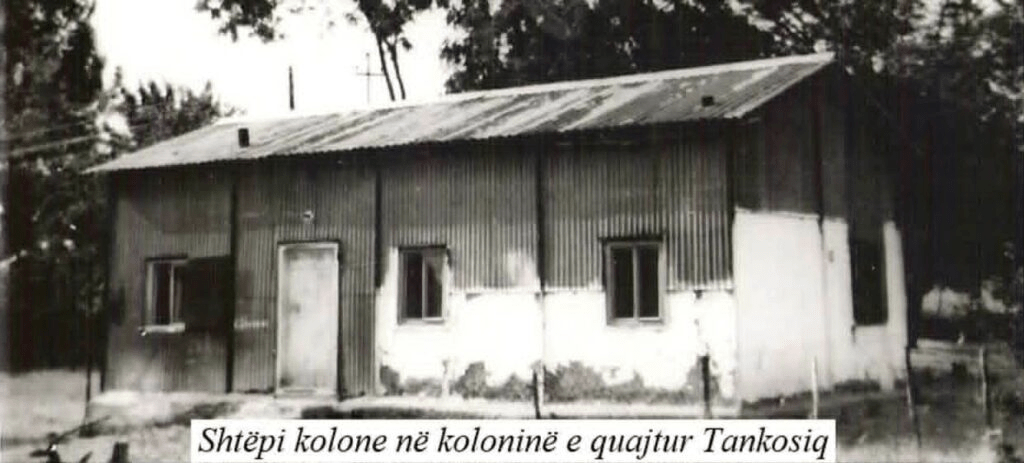
Between 1914 and 1925, in Upper Sllatina, near the Zotërive Bridge, on the lands and in the houses of the village owners who had been violently expelled to Turkey, 17 Serbo-Montenegrin colonist families were settled.
The first colonists arrived in 1914 from the village of Orahovcë — the Deretić family (three houses). They were settled on the lands of the Jakupovi neighborhood, whose owners had been violently expelled to Turkey. In 1919, other colonists were settled in Sllatina, such as the Kapor family (one house) from Millanovac near Bileća in Herzegovina.
That same year, the Pacel family (four houses) arrived from Rankovc, Ljubinje in Herzegovina, followed by the Millojević family (one house) from the same area. Also in 1919, the Sheshlia family settled from Podosoje near Bileća, along with the Perisić family from Goranci near Bileća, the Millenić family from Goranci near Bileća in Herzegovina, and others. In 1920, another Perisić family (one house) from Ramljan near Split settled, followed by several other families.
In 1922, the Krstić families (three houses) arrived from Kordevac near Vranje. In 1925, the Cvetković family (one house) settled from Lipovac near Vranje.
In 1926, the village of the colonists was named after the Chetnik leader Voja Tankosić, a Chetnik from the First World War. Starting from 1919, the colonization of Albanian lands continued uninterrupted according to the “Agrarian Reform” Project.
In Tankosić (today’s Dardani village), on lands seized mainly from Sllatina and other nearby villages, colonists were settled and the village was named Tankosić (now Dardani). In Dardani, 130 colonist families were settled: 38 from Bosnia, 82 from Serbia, 5 from Montenegro, 1 from Albania, 1 from Italy, 1 from Croatia, 1 from Slovenia, and 3 from Macedonia.
In the village of Mirosalë, 16 colonist houses were mainly settled in 1924. The following colonist families were settled there:
- From Montenegro: Vishnjević Radomir, Vishnjević Shpiro, Vishnjević Velo.
- From Serbia: Aleksić Petar, Krstić Dragomir, Krstić Vlajko, Jovičić Atanas, Pešić Aleksa, Pešić Nedelko, Pešić Stojko, Pešić Stojan, Pešić Vasko, Petković Ljubomir, Stojan Stojan, and Stoilković Dobrivoje.
It should be noted that some of the Pešić families later moved to Lower Pojata (formerly Skuliq). Other families from Mirosalë moved to Tankosić (today Dardani) and to the village of Pozheran in Vitia.
In the village of Zllatar, which held an important geographical position in the Ferizaj municipality, the village was heavily affected by the political project called “Agrarian Reform” of the bloodthirsty state directed by Serbo-Montenegrins. Serbo-Montenegrin colonist families were settled there and given lands divided from the confiscated properties of the Albanians of this village.
The total number of Serbo-Montenegrin colonists settled during the period 1918–1941 was around 60,000 to 65,000, of whom over 90% were Serbo-Montenegrins. (Source: Dr. Millovan Obradović, Agrarna Reforma i Kolonizacija na Kosovu (1918–1941), Prishtina, 1981, pp. 339–344).
The colonists took Albanian lands in Kosovo and elsewhere for free and by force. They sold these same lands back to Albanians — sometimes multiple times. Thanks to God and the determination of the Albanian people, who for centuries have loved their ancestral lands so deeply, these lands have now returned — after great sacrifices — to their rightful owners, the legitimate title holders of the properties for centuries.
References and sources
Bajrami, Hakif. Deportimet e Shqiptarëve nga Kosova gjatë periudhës 1918–1941. Prishtinë:
Demolli, Haki. Masakrat serbe në Kosovë.
Malcolm, Noel. Kosovo: A Short History. New York: New York University Press, 1998.
Obradović, Millovan. Agrarna Reforma i Kolonizacija na Kosovu (1918–1941). Prishtina: [Publisher], 1981.
Vickers, Miranda. Between Serb and Albanian: A History of Kosovo. London: Hurst & Company, 1998.
Arifi, Sami. “Reforma Agrare në Kosovë – projekti serb i kolonizimit.” Gazeta Destinacioni, May 1, 2026. https://gazetadestinacioni.al/kolonet-serbo-malazez-te…
“Kolonet Serbo-Malazez të Vendosur nga Serbia në Tokat dhe Shtëpitë e Fshatarëve të Sllatinës, Zllatarit dhe Mirosalës.” Info-Plus, [Date if available]. https://info-plus.tv/kolonet-serbo-malazez-te-vendosur…
Prointegra. “253216-2.” Accessed May 3, 2026. https://prointegra.ch/253216-2/

