
by Dina Fetahu
Summary
100-word summary:
In 1389, the Battle of Kosovo pitted a multi-ethnic Balkan Christian coalition (including Serbs, Albanians, Bosnians, and others) against the Ottoman Empire. The Ottomans achieved a strategic victory, though both leaders—Prince Lazar and Sultan Murad I—were killed.
Serbian historiography transformed this shared battle into the Kosovo Myth, centered on Vidovdan (June 28). It portrays Lazar’s defeat as a divine choice of the “heavenly kingdom,” sanctifying sacrifice and justifying territorial claims over Kosovo. Historians Muhamet Mala and Durim Abdullahu argue this mythologization serves political nationalism, elevating one battle above others and using religious symbolism to support Serbian identity and rights in the region.
“Vidovdan” – The Serbian Myth That Fuels Balkan Conflicts: What Really Happened 635 Years Ago?
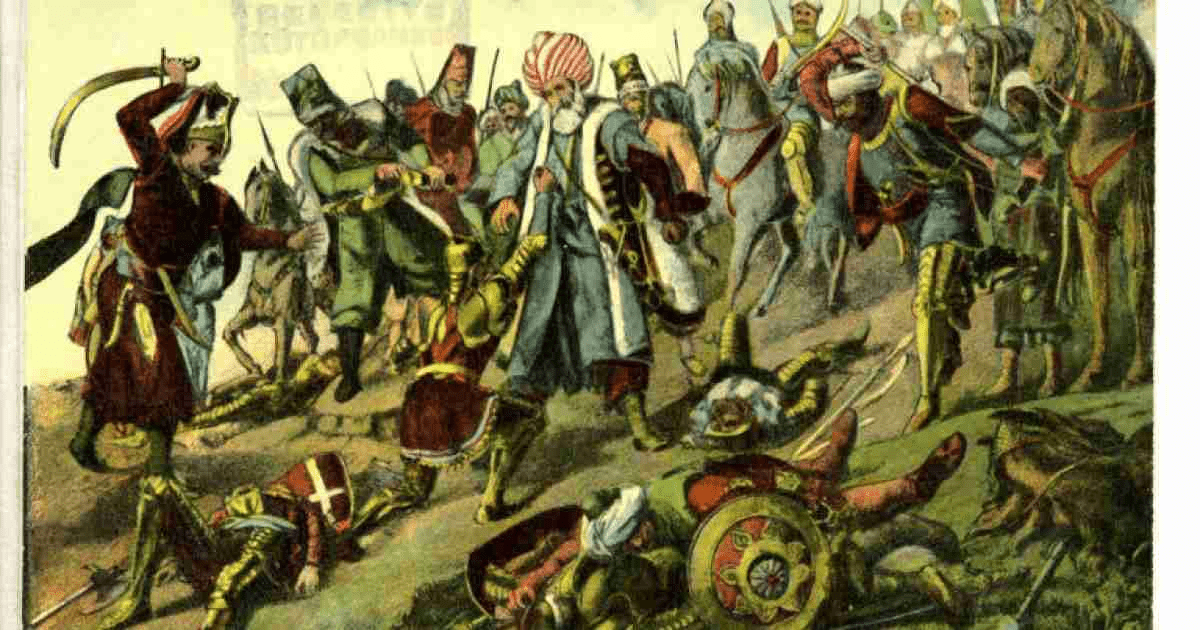
The Battle of Kosovo took place in 1389 on Kosovo Field. It was fought between a Balkan Christian coalition and the Ottoman Empire, ending with an Ottoman victory. Although the Balkan forces had formed a multi-ethnic alliance, Serbian historiography has long tried to appropriate the battle as exclusively Serbian.
To increase its importance, Serbia made June 28 — known as Vidovdan — an official national holiday for the Serbian people, using it to support their narrative of historical rights over Kosovo.
However, according to historians Muhamet Mala and Durim Abdullahu of the University of Pristina, the Battle of Kosovo does not hold the decisive importance or exclusive context that Serbian historiography claims.
How Did the Battle Happen and Why Do Serbs Mythologize It?
Professor Durim Abdullahu states that, in the chronology of Ottoman military campaigns in the Balkans, the 1389 Battle of Kosovo was neither the largest nor the most important. Battles such as Maritsa (1371) and Savra (1385) were far more decisive for Ottoman expansion westward.
Professor Muhamet Mala agrees, describing it as “a common battle” of average importance compared to other engagements of the era. He notes that Serbian historiography has mythologized the event, shifting it from the historical to the mythical and religious sphere, turning it into a divine narrative detached from reality.
Mala emphasizes that the battle was not solely between Serbs and Ottomans, but a collective effort by a Balkan coalition that included Albanians, Bosnians, Croats, Hungarians, and Vlachs — all peoples who felt threatened by Ottoman expansion.
How the Battle Unfolded
The battle occurred in the summer of 1389 on Kosovo Field. The Ottoman army, led by Sultan Murad I in the center with his sons Bayezid and Yakub on the flanks, also included vassal troops of Serbian lords Marko Kraljević and Konstantin Dejanović.
The opposing Christian coalition was led by Serbian Prince Lazar Hrebeljanović, with Vuk Branković on his right, and Albanian lords Gjergj II Balsha and Dhimitër Jonima, along with Bosnian troops under Vlatko Vuković (sent by King Tvrtko I of Bosnia) on the left.
Although contemporary sources are limited, it appears that despite a slight initial advantage for the Christians, a counterattack by Bayezid caused panic and retreat. While King Tvrtko I claimed victory in letters to Florence, the Ottomans achieved a political victory. Both leaders — Prince Lazar and Sultan Murad I — were killed during the battle.
The Creation of the Myth
Following the battle, Serbian religious texts such as “Tales about Prince Lazar” by Patriarch Danilo III and other works transformed the event into a national myth. In 1892, the Serbian Orthodox Church linked the battle to Vidovdan (St. Vitus Day). After Serbia’s occupation of Kosovo in 1912–1913, it became a central religious and national holiday.
The myth portrays Prince Lazar as choosing the “heavenly kingdom” over the earthly one, presenting the defeat as a moral and divine victory. This narrative was powerfully revived in the 20th century, notably by Slobodan Milošević in his 1989 Gazimestan speech.
Why the Mythologization?
According to Professor Mala, Serbs have used the battle for political purposes because they have historically been a minority in Kosovo. By turning a shared battle into an exclusively Serbian event and a sacred defeat, they created a narrative of historical and divine right over the territory. The Serbian Orthodox Church has played a major role in maintaining and promoting this myth.
Source

