
Since ancient times, the Albanian people have been known under different names, gradually evolving into the modern nation of today. At the foundation of this long history stands the ancient Pelasgians (also called Leleges), the pre-Greek inhabitants of the Balkans and the wider Mediterranean.
The Pelasgians: The First Civilizers
Before the peoples known as Greeks appeared, the land was inhabited by the Pelasgians or Leleges. From them sprang many tribes: the Avantes, Curetes, Achaeans, Ionians, Aeolians, Dorians, and many others. Beyond the borders of present-day Greece, other peoples such as the Phrygians, Thracians, Dardanians, Illyrians, Paeonians, Carians, Lydians, Lycians, and even the Sea Peoples and Etruscans were also identified as Pelasgian or Lelegian.
Although they shared a common language (“homoglossoi”), customs, and religion, they were organized into independent city-states. This system of city-states was later inherited by the classical Greeks and eventually absorbed into the Roman Empire.
The Pelasgians are credited with fundamental contributions to civilization:
- Teaching humanity how to cultivate the earth and ending nomadic life.
- Founding permanent settlements.
- Establishing the worship system of the 12 Olympian gods and naming them.
- Introducing the Nine Muses and giving value to learning and the arts.
- Creating the “Pelasgian letters” (Pelasgika grammata).
- Developing early metallurgy.
- Laying the foundations of philosophy, rationalism, and the sciences.
- As a seafaring people, influencing distant cultures, including that of ancient Egypt.
Greeks as Evolved Pelasgians
According to Herodotus and Apollodorus, the Greeks themselves were previously Pelasgians. They did not arrive as outsiders who displaced the Pelasgians but rather evolved from them. Consequently, the language of Ancient Greek literature is considered an evolution of the Pelasgian mother tongue.
Many place names, toponyms, and names of gods that remain uninterpretable in both ancient and modern Greek find clear explanations in the Arvanite (Arvanitika) language. This makes Arvanitika not a simple dialect, but a living remnant of the ancient Pelasgian language.
Arvanites: Direct Descendants of the Mycenaeans and Pelasgians
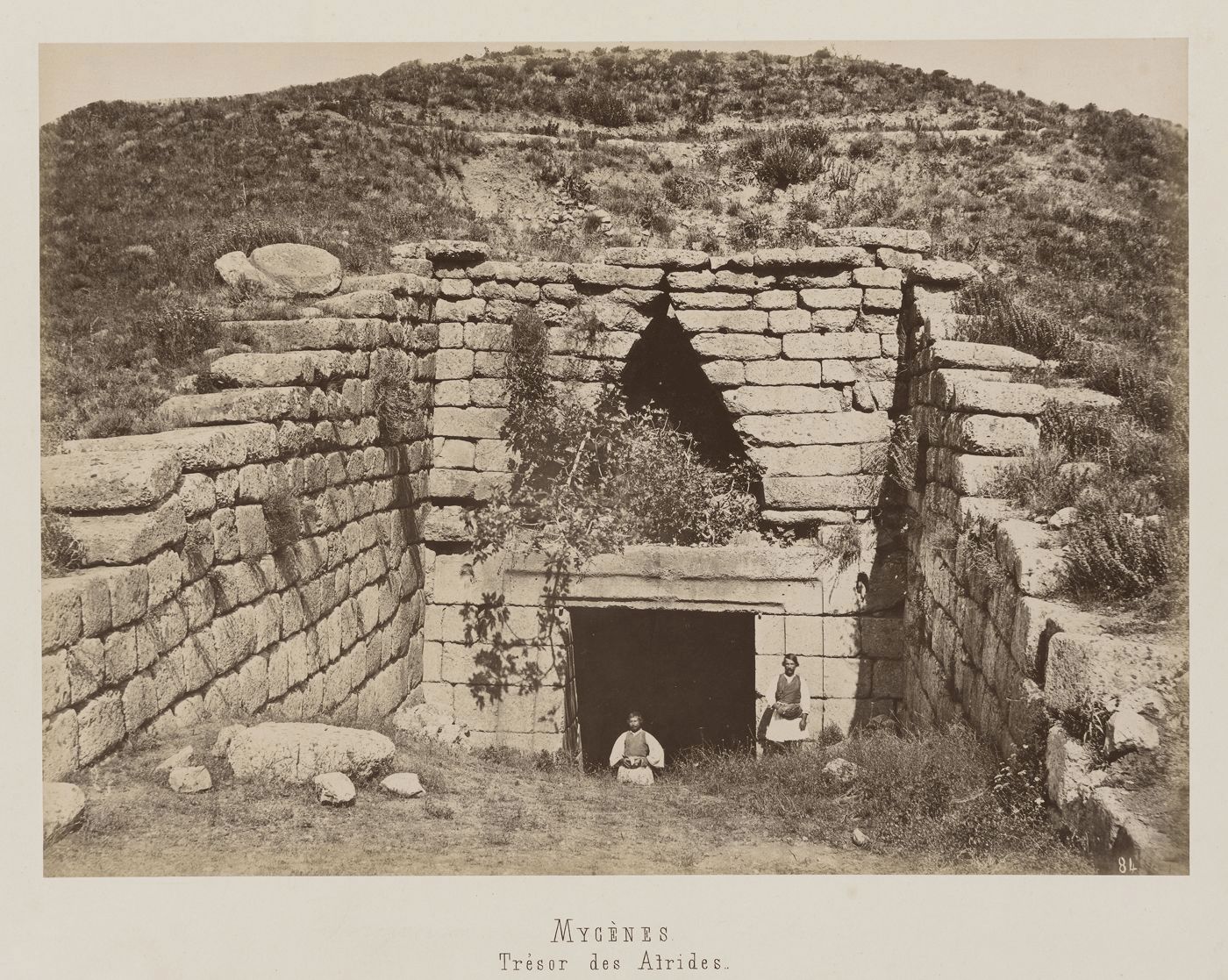
The ancient inhabitants of Mycenae were Pelasgians. Their descendants are the Arvanites who still live in Argolida today. DNA studies showing continuity between ancient Mycenaeans and modern inhabitants of the region are cited as supporting evidence.
In “Old Greece” (Rumeli, Peloponnese, Euboea, and the islands), at the beginning of the 19th century, the majority of the population in villages surrounding ancient city-states spoke Arvanitika. Many of the most fertile lands, best-preserved ancient monuments, and areas without Slavic toponyms were precisely those inhabited by Arvanites.
Shared Heritage: Maniots, Cretans, and Aegean Islanders
The warrior customs, bravery, blood feuds, hospitality, and traditional ethics found among Maniots, Cretans, and Aegean islanders strongly resemble those of the Arvanites. Ancient sources identify the Leleges in these exact regions (Laconia, Crete, Cyclades, etc.). This leads to the conclusion that these populations are also Arvanitogenes — of Arvanite origin.
Linguistic Evidence: Parnassos, Parnitha, Parnon
The names of the mountains Parnassos, Parnitha, and Parnon are pre-Greek. In Arvanitika, the root “Par” means “first.” Thus, these names signify the highest or foremost mountain in their respective regions — a clear linguistic link between the ancient Pelasgians and today’s Arvanites.
The Leleges: Identical with Pelasgians and Carians
Ancient writers frequently mention the Leleges in Boeotia, Locris, Laconia, Euboea, the islands, and Asia Minor. They are often identified with the Carians and, through linguistic and cultural evidence, connected to the Illyrian-Arvanite people.
From Pelasgians to Illyrian Emperors
The same ancient spirit reappeared in the 3rd century AD when the Roman Empire was saved by Illyrian military leaders. Emperors of Illyrian origin — Aurelian, Diocletian, and Constantine — restored order during a time of chaos. Constantine, an Illyrian, adopted the Christian symbol Chi-Rho and shifted the empire’s center eastward.
Later Byzantine emperors of Illyrian descent attempted to preserve elements of the ancient worship of Wisdom (Athena/Sophia) through the construction and dedication of Hagia Sophia.
Conclusion: A Living Ancient Nation
The Parthenon and Hagia Sophia stand as monuments of this continuous heritage — from Pelasgian wisdom to Illyrian-Byzantine greatness. Albanians and Arvanites are not newcomers but the direct indigenous descendants of the ancient Pelasgians and Leleges, who shaped European civilization long before recorded history.
Their language, customs, toponyms, and historical role in Rome and Byzantium prove that the Albanian people carry one of the oldest living heritages in the Balkans.
References
Herodotus. The Histories. Translated by Aubrey de Sélincourt. Revised by John Marincola. London: Penguin Classics, 2003.
Pausanias. Description of Greece. Translated by W. H. S. Jones. Loeb Classical Library. Cambridge, MA: Harvard University Press, 1918–1935.
Sakellariou, Michael B. 1974. Linguistic and Ethnic Groups in Prehistoric Greece. Athens: Ekdotike Athenon.
Sakellariou, Michael B. 1977. Peuples préhelléniques d’origine indo-européenne. Athens: Ekdotike Athenon.
Jacques, Edwin E. 1995. The Albanians: An Ethnic History from Prehistoric Times to the Present. Jefferson, NC: McFarland.
Barnes, Timothy D. 1982. The New Empire of Diocletian and Constantine. Cambridge, MA: Harvard University Press.
Southern, Pat. 2001. The Roman Empire from Severus to Constantine. London: Routledge.
Watson, Alaric. 1999. Aurelian and the Third Century. London: Routledge.

