
by Luljeta Rakipi
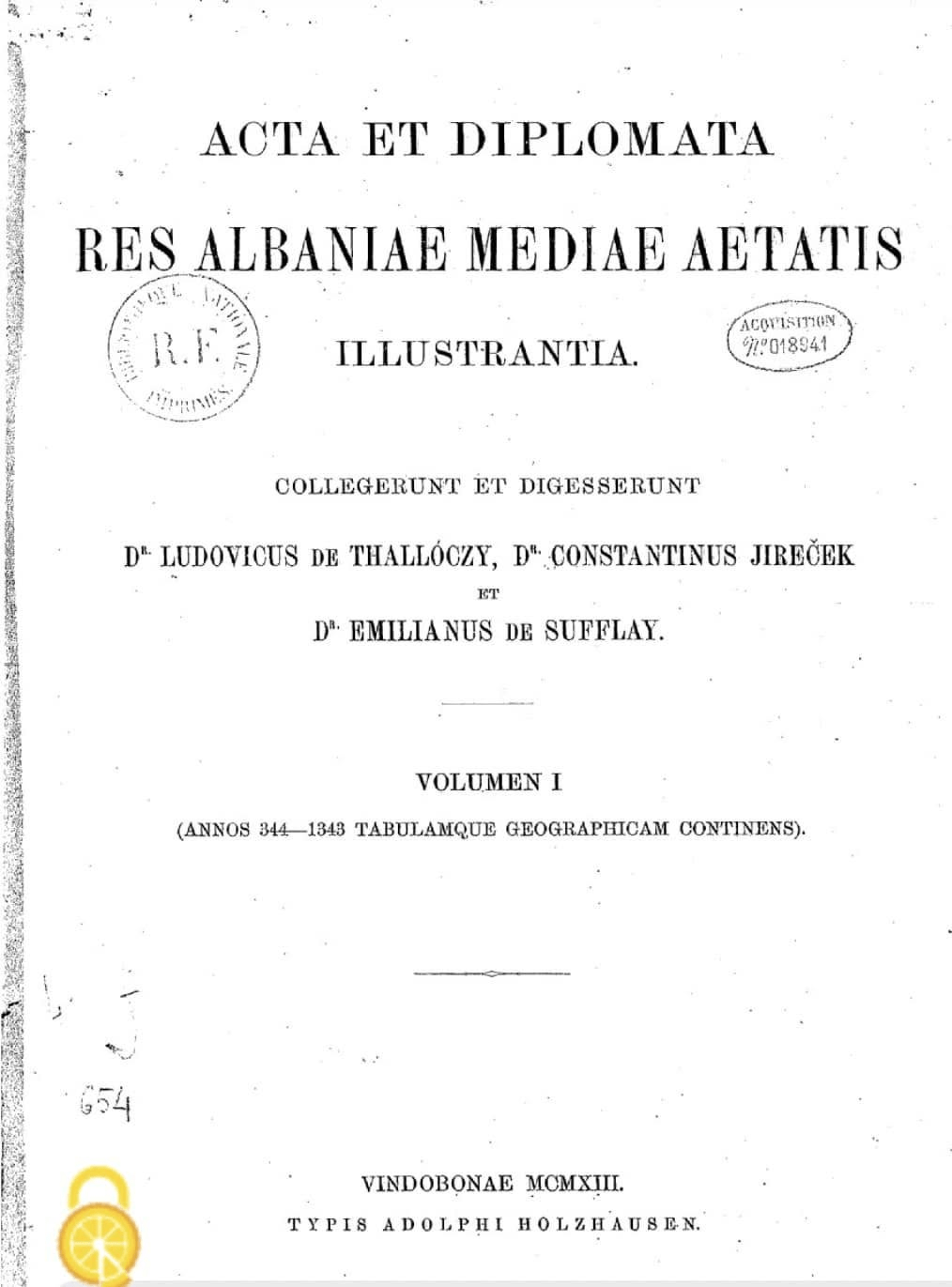
Volume One. Period: 344–1343
The bishops of Dyrrhachium (Durrës), Ragusa, and Antivari (related to Albanit/Albanus), the bishop of Croia (Kruja), Justinian Prima (Ohrid), and ancient Epirus (including areas linked to Euboea and Heraclea) were among the prominent Catholic figures associated with the Albanian territories.
Efforts were made to gain influence over Albanian lands through the Church.
Albanian bishops also established another settlement not far from Kruja, in the village of Korbin, where the temple of Saint Veneranda is located. In 1487 it was known as Venera of Korbin.
Dyrrhachium (Durrës) had 12 Albanian bishops.
In the period around 691 (September 1) to 682 (December 31), Dyrrhachium had 15 bishops, including “Sisinnius, Metropolitan Bishop of Dyrrhachium.”
In the dioceses of Katerini or Roza, Buduana, Avaris, Licinatesi, and Skodra (Shkodër), this area appears to have seen significant changes following the arrival of Slavic populations who integrated into the religious structures among the local people.
Dalmacia is presented as part of ancient Albanian or Illyrian territory.
Accurate historical records on these matters are preserved in Venetian archives.
Regarding Ternova, Prizren, and Peja, the author notes that parts of their ancient history have been subject to later alterations or reinterpretations.
The name of Berat was changed to Beligrad (“White City” in Bulgarian/Slavic), after Bulgarian forces entered the Church of Berat at that time.
The history of Zaharia has also undergone significant changes in documentation.
The main archbishop of Pasaro was Andrea; documents in Ragusa omit or alter references to him.
In the early period, around the year 680, all bishops were under the jurisdiction of the See of Rome. Pope Nicholas instructed the bishop of Thessaloniki as in ancient times, covering regions including Old Epirus, New Epirus, Illyricum, Macedonia, Thessaly, Achaia, Dacia Ripensis, Mediterranean Dacia, Moesia, Dardania, and Praevalitana.
There is a connection through faith.
On April 6, 878, Pope John VIII, in relation to the Bulgarians, addressed issues involving church properties and bishops.
On April 16, 878, Pope John VIII ordered the Bulgarians to leave Berat within a 30-day period.
The Church of Marmiroi in Glavinitsa (today related to Gumenitsa) was located in Old Epirus.
In 1897, Serbia took over the monasteries of Smederevo, Neprobishta, and Mamusha in the Prizren region. The church was known as the “White Church.” The author suggests that historical records in these areas have undergone changes.
In May 1020, Basil II appointed the archbishop of Ohrid; in those years the monastery was known as Heraclea.
Translated from Latin to Albanian by: Luljeta Rakipi
The text discusses various historical interpretations and potential alterations to ecclesiastical records in the Balkans through religious and political influences.
Source
Acta et Diplomata Res Albaniae Mediae Aetatis Illustrantia
Volume I (Annos 344–1343 tabulamque geographicam continens). Ludovicus de Thallóczy (Lajos Thallóczy), Constantinus Jireček (Konstantin Jireček), Emilianus de Sufflay (Milan Šufflay)Publication: Vindobonae (Vienna), 1913. Typis Adolphi Holzhausen

