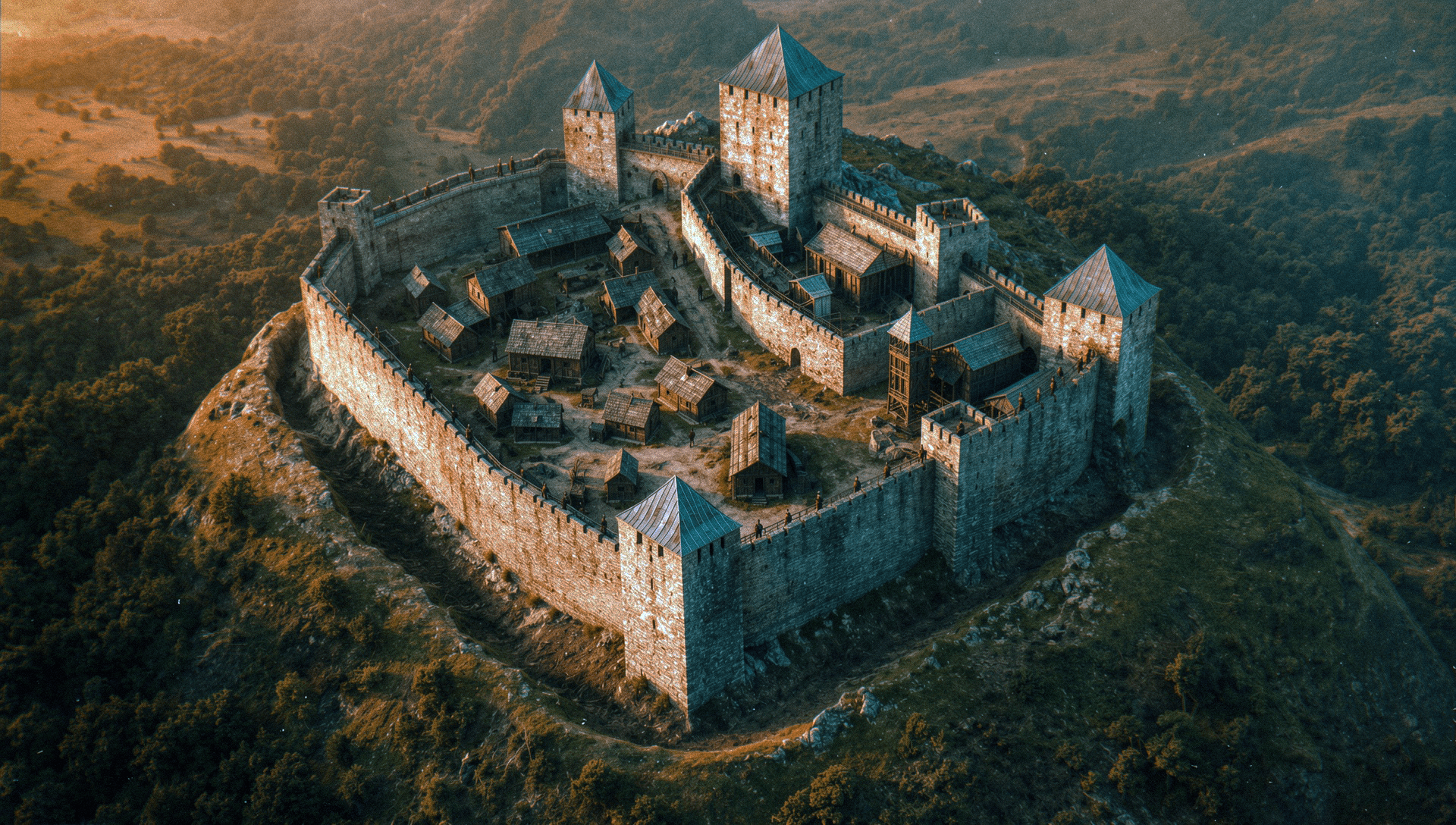

In the hilly and mountainous terrain surrounding the historic city of Nish (Nish) in present-day Serbia, traces remain of old settlements and fortifications that once formed part of a vibrant Albanian-inhabited region. One such site is the Fortification or Castle of Koprani (Koprani/Keshtjella e Kopranit), a strategic stronghold that served as a defensive and residential center for local Albanian communities until the dramatic events of the late 19th century.
Historical Background
During the Ottoman period, the Sanjak of Nish encompassed large areas including the districts of Toplica, Jablanica, Prokuplje, Leskovac, and surrounding regions. These territories were home to a significant Albanian population — often referred to as “Arnauts” in contemporary sources — who lived in hundreds of villages alongside Serbs and Turks. Many place names in the area reflect Albanian or Illyrian-Albanian linguistic roots.
Koprani was one of these Albanian settlements. Its fortification (kështjellë), situated in a commanding position overlooking valleys and routes, provided protection for inhabitants during times of unrest. Like many Balkan highland fortifications, it combined elements of medieval defensive architecture with Ottoman-era adaptations, serving both as a military outpost and a community refuge.
The Eastern Crisis and the Expulsion of 1877–1878/80
The Great Eastern Crisis (1875–1878), particularly the Serbo-Ottoman War of 1877–1878, brought catastrophic changes to the region. As Serbian forces advanced, Albanian and Muslim populations in the Sanjak of Nishh faced widespread violence, destruction of villages, and forced displacement. Tens of thousands of Albanians were expelled from areas such as Toplica, Jablanica, and the surroundings of Nish. Many fled toward Kosovo, seeking safety in the Ottoman vilayet.
According to local tradition and historical accounts, the inhabitants of Koprani remained in their settlement until around 1879–1880. Following the war and the Treaty of Berlin (1878), which confirmed Serbian control over these territories, the remaining Albanian population was displaced. The residents of Koprani and similar villages migrated and resettled primarily in the Malësia e Prishtinës (the mountainous and hilly regions around Pristina in Kosovo), where many of their descendants still live today.
This mass exodus dramatically altered the demographic map of southern Serbia. What had been a mixed but heavily Albanian rural landscape in the valleys and hills around Nish was largely emptied of its original inhabitants.
Legacy and Memory
Today, physical remains of the Koprani fortification may be modest or overgrown, yet it stands as a symbol of a once-thriving Albanian presence in the heart of the central Balkans. The image of a majestic hilltop castle evokes the defensive spirit of these highland communities, who for centuries safeguarded their homes, families, and identity amid shifting empires and conflicts.
The story of Koprani is part of the broader history of the Albanian muhaxhirë (refugees) who rebuilt their lives in Kosovo after 1878. Their descendants carry the memory of these lost villages — including family names, oral histories, and traditions that link them to the lands around Nish.
Places like the Fortification of Koprani remind us of the complex, layered history of the Balkans: a region where cultures coexisted, clashed, and ultimately shaped the modern map through migration, resilience, and remembrance. Preserving such sites and stories is essential to understanding the full tapestry of South-Eastern European heritage.
Sources
- Bruqi, Flori. Triumfi Shqiptar. Tetovë: [Publisher details vary; often self-published or local editions], n.d. (Lists Koprani explicitly among Albanian villages in the Jablanica district of the Sanjak of Niš.)
- Jagodić, Miloš. “The Emigration of Muslims from the New Serbian Regions 1877/78.” Balkanologie (Revue d’études pluridisciplinaires) 2, no. 2 (1998).
https://journals.openedition.org/balkanologie/ (Detailed academic study on the expulsion of Albanians and Muslims from the Niš region.) - Xharra, Fahri. Lists of Albanian toponyms and villages in the Sanjak of Niš, including Koprani, Konxheli, Korbevci, etc. (Referenced in multiple Albanian historical compilations and online archives of muhaxhir settlements.)
- “Vendosja e popullatës muhaxhire në Gallapin e Prishtinës.” ResearchGate publication (2023).
https://www.researchgate.net/publication/378045807 (Discusses resettlement of refugees from Niš-area villages in the Pristina highlands.)

