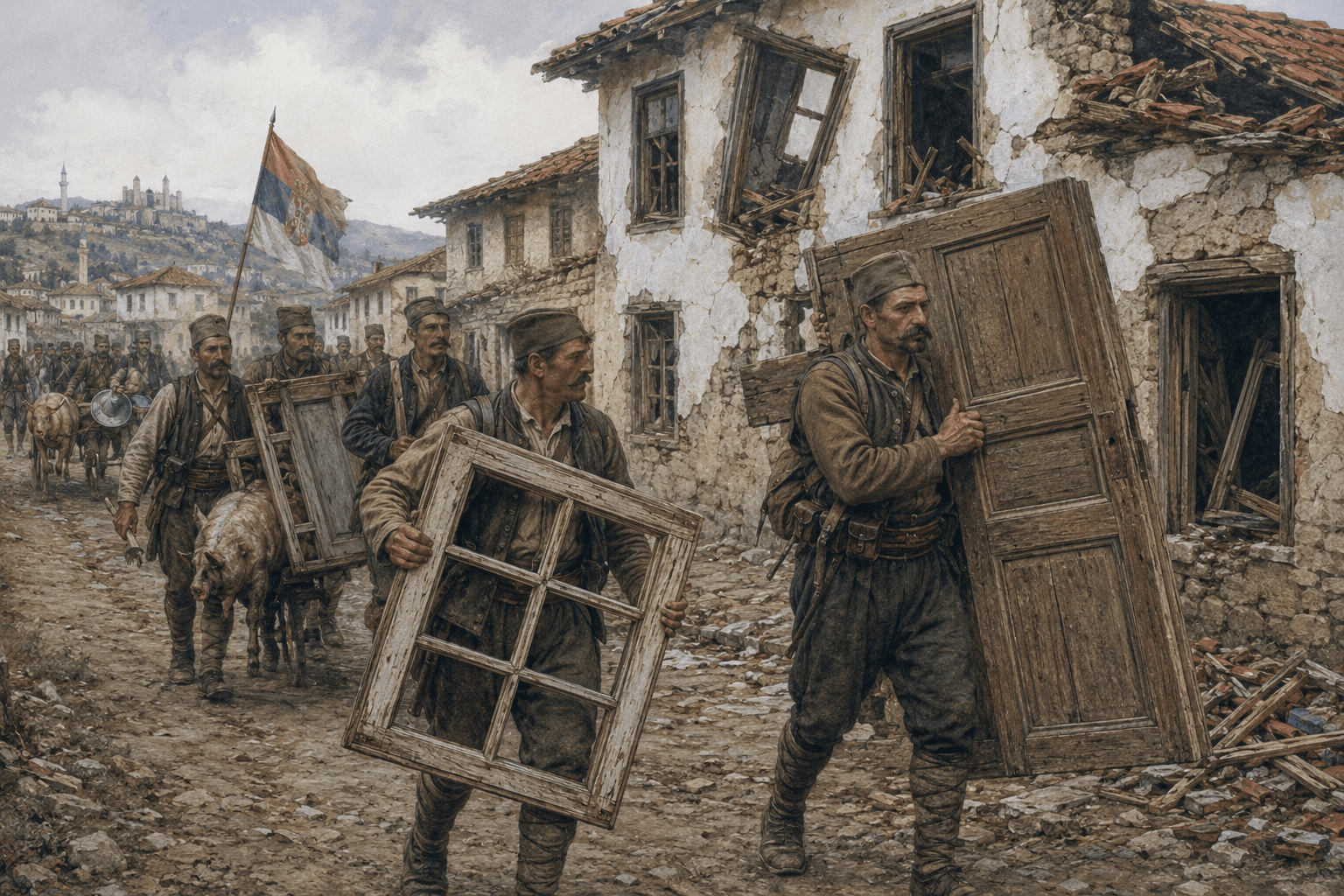

During the First Balkan War in autumn 1912, after Serbian forces captured Skopje (Shkup) from the Ottomans, the city turned into a military camp filled with Serb peasant soldiers. According to a Serbian officer’s eyewitness account relayed to Russian correspondent Leon Trotsky, these troops engaged in widespread looting of Albanian homes and villages.
The peasant levies seized food, livestock, oxen, horses, and other possessions. They stripped houses of doors and windows, carrying the materials back to Serbia. Women reportedly followed the soldiers, hauling away looted household goods. Albanian villages along the advance were burned, and systematic pillage occurred in occupied areas as soldiers lived off the land and enriched themselves. Heaps of Albanian corpses appeared daily under Skopje’s main bridge, amid nighttime raids by irregulars and plundering by regular troops.
This behavior reflected the harsh realities of early 20th-century Balkan warfare, where poorly supplied peasant conscripts from rural Serbia treated captured territory as a source of wealth. The account highlights the scale of plunder against the local Albanian population during the Serbian occupation.

