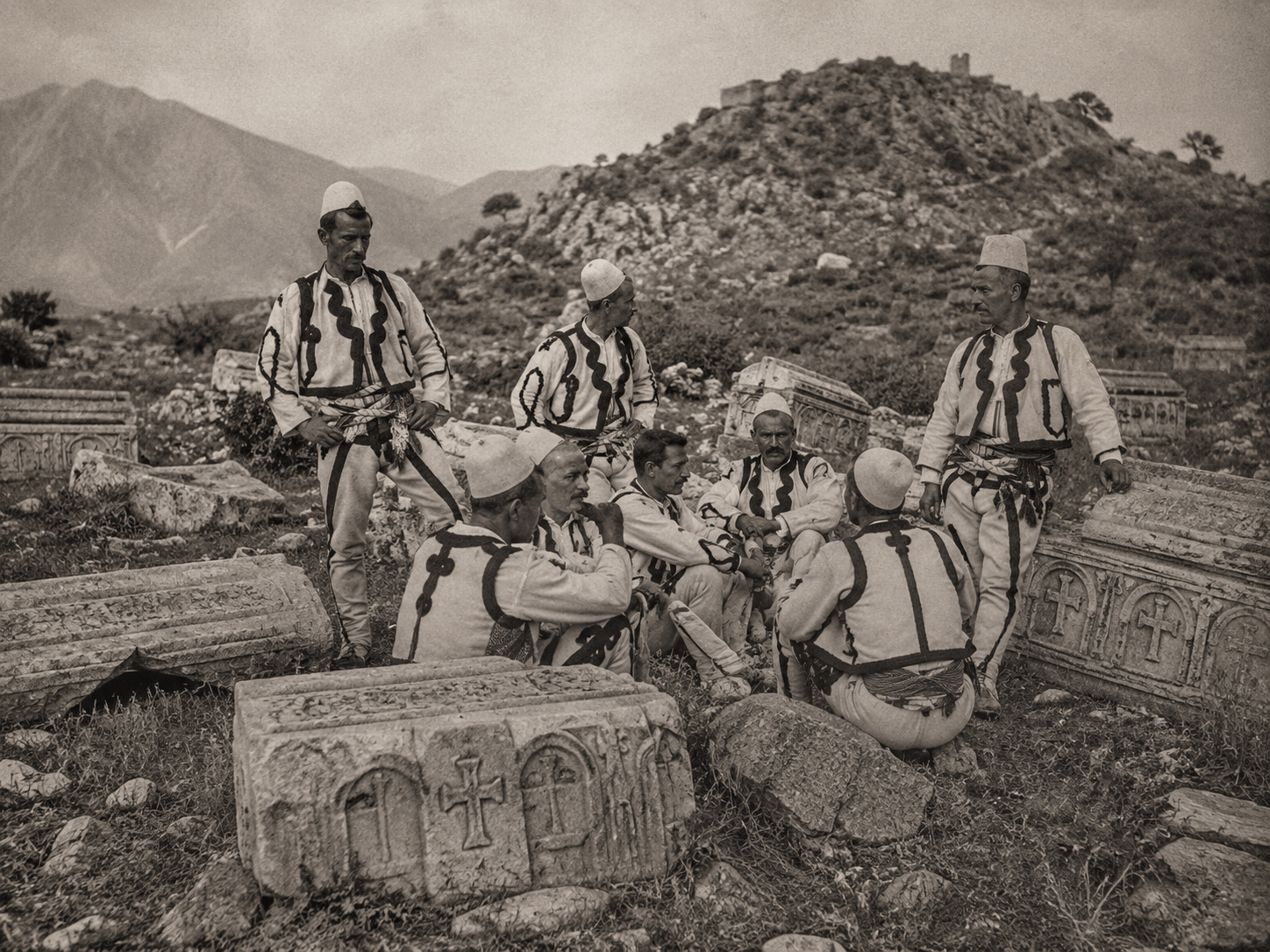

One of the most significant archaeological sites in northern Albania lies near the village of Komani (Koman), just east of Shkodra (Scutari). In this area, a remarkable “city of graves” from Roman and early Christian times has been preserved for centuries.
These ancient burial grounds contain numerous tombs dating from the late Roman period through the early Christian era. The site is of great historical importance, as it provides valuable evidence of continuous settlement and cultural transition in the region during the decline of the Roman Empire and the spread of Christianity in the Balkans.
The Attitude of the Malësorë
19th-century travelers noted that the local Malësorë (Malissori) — the fierce, traditional highland Albanian tribes — were extremely reluctant to allow any disturbance of these ancient graves. Despite being deeply superstitious and holding strong beliefs in spirits and the supernatural, the Malësorë were also highly distrustful of outsiders. They firmly refused to permit the opening or excavation of these tombs.
This protective stance likely stemmed from a combination of traditional respect for the dead, fear of disturbing ancestral spirits and a deep-rooted suspicion toward foreign archaeologists and authorities.
The Komani necropolis remains one of the most important but still relatively under-explored archaeological sites in Albania. It continues to intrigue historians and archaeologists today, offering potential insights into the Roman, Illyrian, and early medieval history of the region.
Source:
Die Reise durch Albanien und andere Prosastücke (Travel through Albania and other prose pieces), 19th-century travel literature referencing the Malissori and the graves near Komani.

