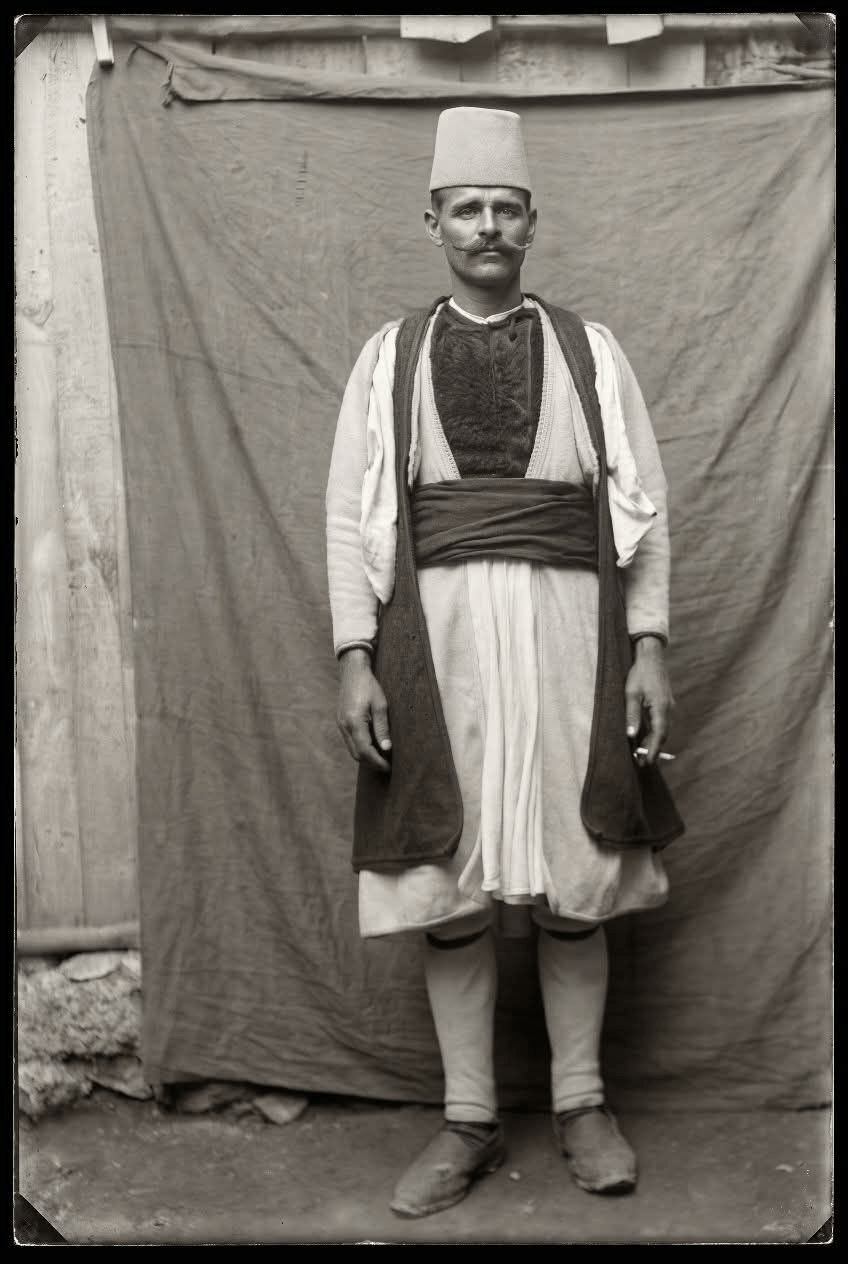

One of the most persistent challenges faced by Albanians during the 19th-century Rilindja Kombëtare (National Renaissance) was systematic Hellenization, particularly targeting Orthodox Albanians in the south. The great Albanian intellectual and nationalist leader Sami Frashëri sharply criticized these efforts in his writings.
Frashëri described a coordinated dual strategy employed by Greek nationalists:
“Therefore, the Greeks, on the one hand from Athens with schools, with teachers, with libraries, with nurses and with many other things and with excessive money, paid again by crazy Albanians and traitors to the Greeks; and on the other hand from Constantinople with the sides of the patriarchate, the despots, the priests and the church, using the aphorisms and the excommunications from the church, as if Christ were Greek and as if, even to be an Orthodox Christian, everyone must invariably be Greek or Grecomanic; from these two sides, we say, the Greeks are trying day by day to turn the Albanians Orthodox and make them Greeks…”
Two-front strategy
From Athens
The Greek state and private organizations invested heavily in schools, teachers, books, and cultural institutions across southern Albania and among the Orthodox communities. Significant sums of money were channeled to promote Greek language, culture, and national consciousness, often with the cooperation of local Albanians who had been drawn into the Greek national project.
From Constantinople
The Ecumenical Patriarchate of Constantinople played a powerful religious role. Greek bishops, priests, and church institutions used spiritual authority — including threats of excommunication — to equate Orthodoxy with Greek identity. Albanian-language education and liturgy were discouraged or suppressed, reinforcing the idea that to be a true Orthodox Christian, one had to become culturally Greek.
Context
This Hellenization pressure was especially intense because many Albanians (particularly the Arvanites and Orthodox Tosks) had played a significant role in the Greek War of Independence earlier in the century. Despite this contribution, the newly formed Greek state pursued policies of ethnic and cultural assimilation toward Albanian-speaking populations within and near its borders.
Sami Frashëri saw these efforts as an existential threat to Albanian national identity. He and other Rilindja leaders worked tirelessly to promote a secular Albanian nationalism that transcended religious divisions, encapsulated in the famous motto: “The faith of the Albanians is Albanianism.”
Frashëri’s critique remains a key primary source illustrating how Albanian nationalists perceived Greek cultural and religious imperialism during a critical period when Albanians were struggling to assert their own distinct national existence against multiple competing influences.
Bibliography
Frashëri, Sami. Excerpt from writings on Hellenization, quoted in Albanian nationalist literature of the Rilindja period.

